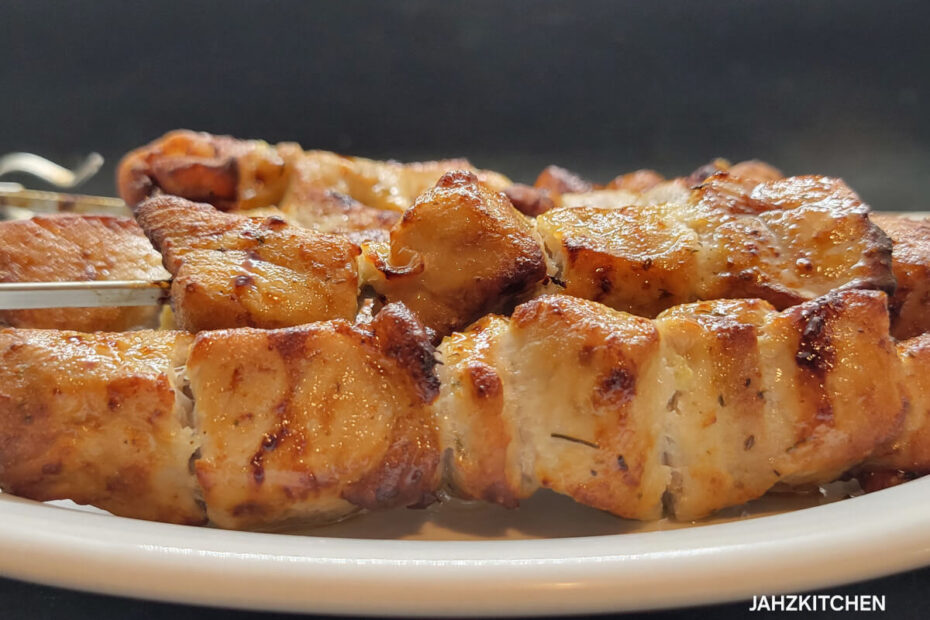
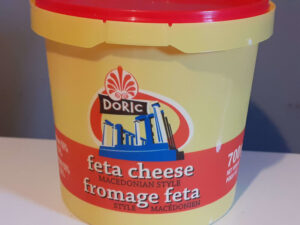
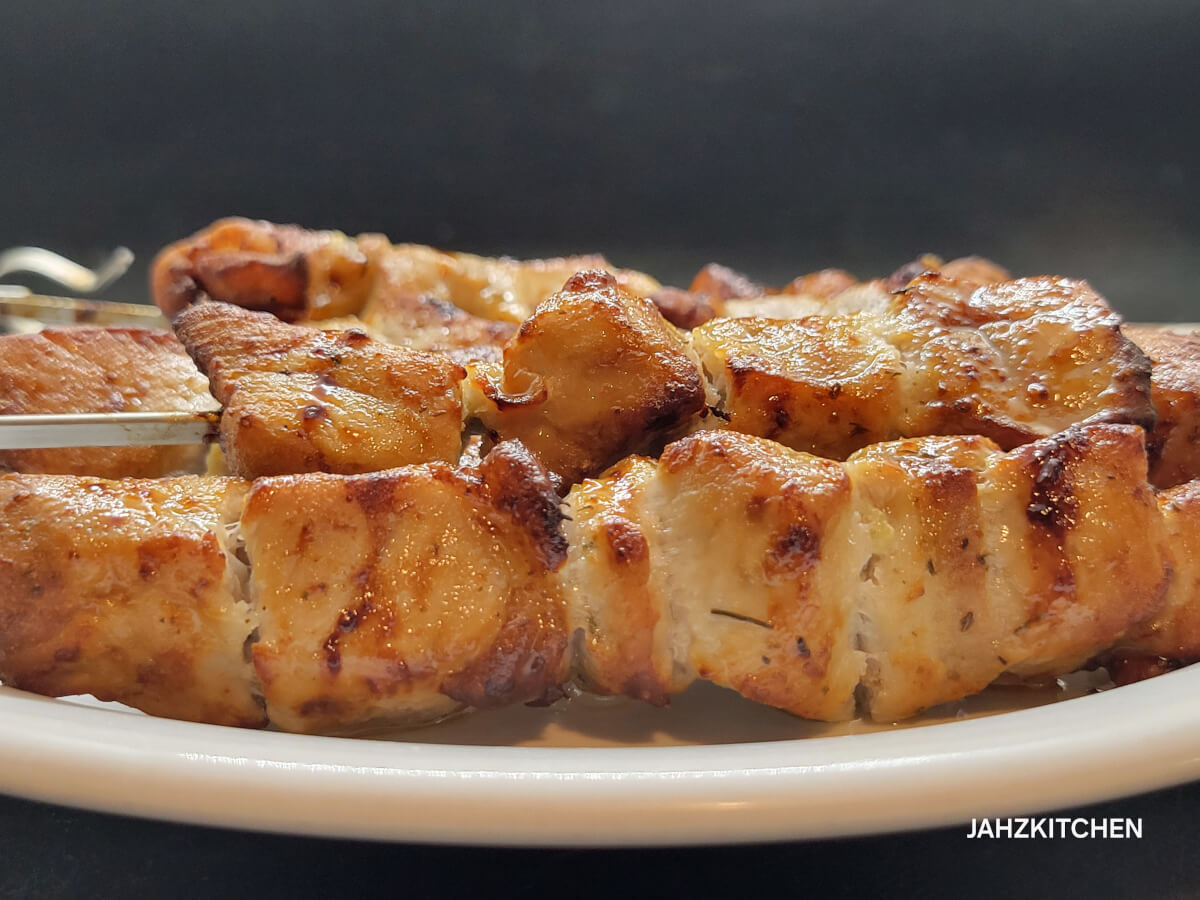
Greek Souvlaki with a unique key ingredient used in the souvlaki marinade. Quite possibly the best souvlaki you will ever have. Whether you’re making Greek souvlaki with pork, chicken, beef, mutton, or lamb, this recipe starts with a unique and versatile souvlaki marinade that can be adjusted to perfectly complement each type of meat. The secret ingredient that really brings a little something special is the use of feta cheese brine straight from the tub. This, added with Greek ladolemono, creates a tangy, savory depth of flavor you haven’t experienced before. But once you do, nothing else will do. I call it the Greek feta marinade, and it really is something else.
Better yet, the feta cheese itself is used to make the Greek salad served alongside the meal, ensuring nothing goes to waste. Once marinated, the meat is grilled or cooked until beautifully charred and juicy. Then enjoy it straight off the skewer, wrapped in warm Greek pita with creamy tzatziki and fresh vegetables, or served as a hearty Greek souvlaki rice bowl with Greek lemon rice, Greek salad, and tzatziki for a complete Mediterranean feast.
What is Souvlaki
Souvlaki is a Greek name given to any type of meat that is diced, skewered, and cooked. It is the Greek equivalent of kebabs. This means technically it can be any kind of meat, in any kind of marinade or not, with practically any kind of seasoning. As long as it is skewered and cooked, it’s a souvlaki or a Greek kebab. With “souvlaki” literally translating to “little skewer.” Referring to small pieces of meat, sometimes with vegetables, grilled on a skewer.
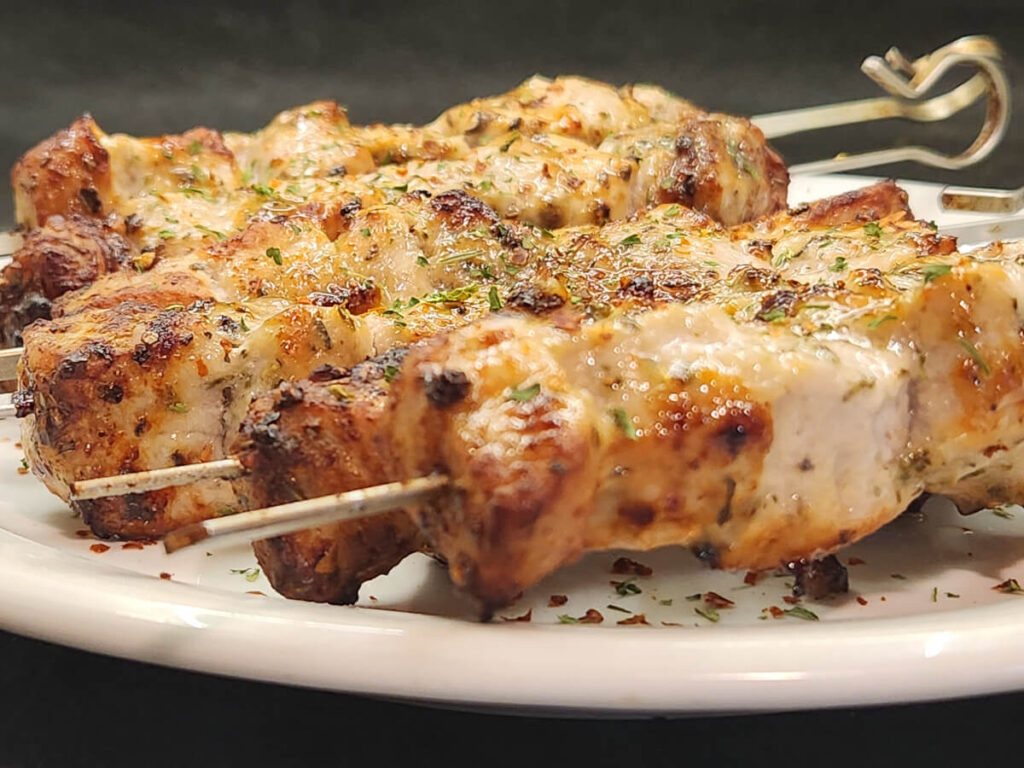
Original Greek Souvlaki
The original Greek chicken souvlaki wasn’t even marinated. Instead, it was diced, skewered, and seasoned with salt & pepper, and lemon juice was squeezed over it with paprika for color. Over time, this evolved to marinating it prior to cooking with all kinds of herbs & spices added in. Even additional ingredients are added to serve the purpose of tenderizing the meat, adding more flavor, or achieving other effects. Today, there are countless versions of Greek souvlaki.
Souvlaki Ingredients
Protein (pork, chicken, beef, mutton, or lamb); Greek Feta Marinade (Ladolemono & Feta Cheese Brine); and Seasoning of Choice.
With Parsley & Aleppo for garnishing. Optionally served with a lemon wedge.
Souvlaki Meat
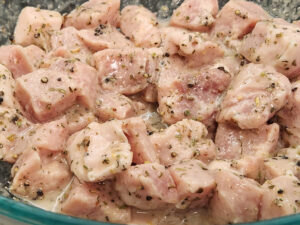
Souvlaki can be made with practically any type of meat. Although chicken or pork are the most common ones. Depending on the choice of meat, additional ingredients can be added to the ladolemono or souvlaki marinade (Greek Feta Marinade) to get a desired effect. Most commonly, yogurt or milk for its tenderizing properties or wine when making souvlaki.
No matter the type of meat, dice it at about 1 inch or at about equal size and marinate it. With some meat you will want to marinate overnight for a better outcome. Especially with tougher cuts, where milk or yogurt can be included to assist in tenderizing the meat.
When skewering, allow for 5-7 pieces per skewer based on size.
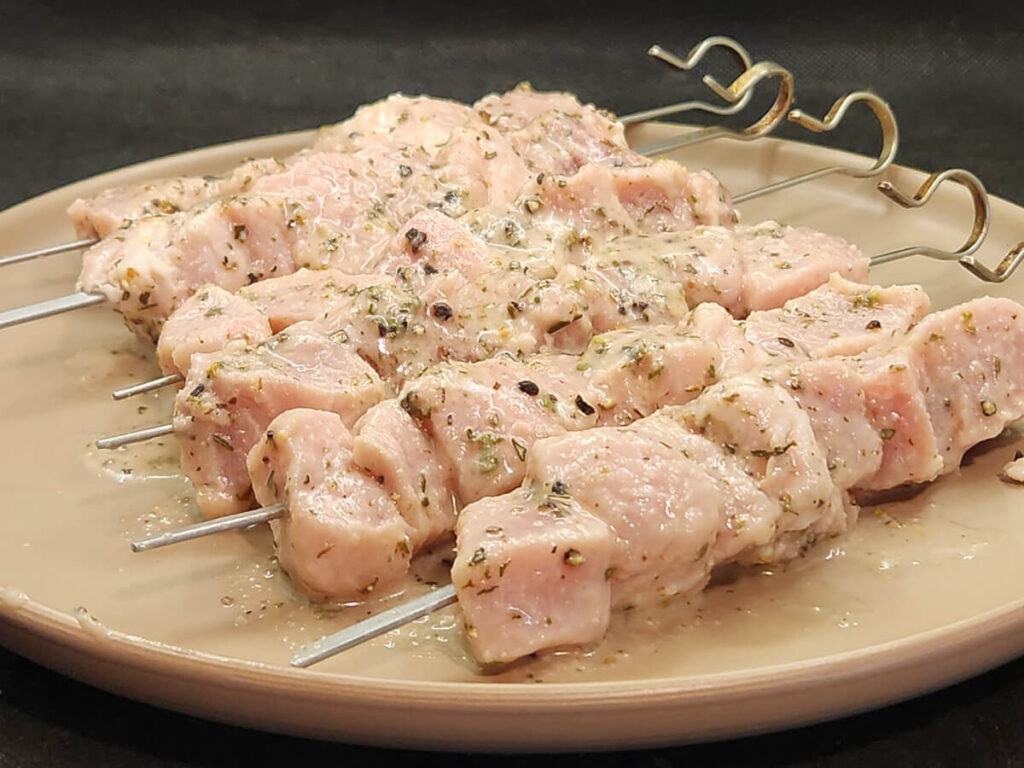
Chicken Souvlaki
Chicken only really needs a few hours to marinate. The chicken souvlaki skewers can be cooked at a high heat until done since the chicken will already be pretty tender. So no need for a slow cook and then browning. The internal temperature should register 157°F for breast or 175°F or higher for dark meat.
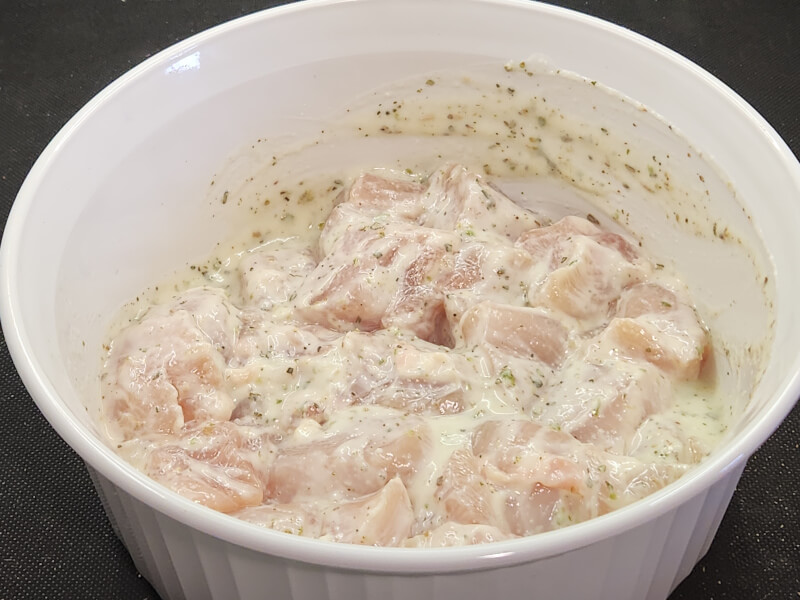
Pork Souvlaki
Pork is a bit tougher than chicken, so it benefits from a longer marination time or a low and slow cook or both. While it can be cooked at a high heat just the same as chicken souvlaki, with an internal temperature of 145°F. I find much better results are when they are cooked low and slow until tender before coloring at a high heat.
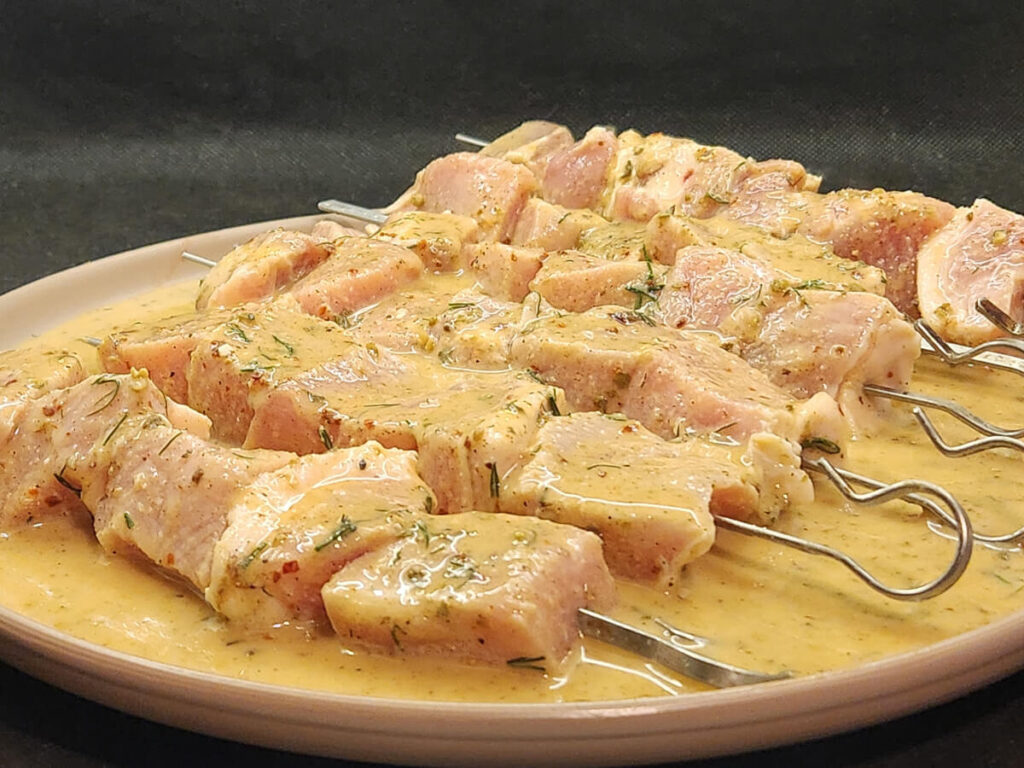
Made with Ladolemono & Feta Cheese Brine (1/2 cup each) for 2 lbs of meat. Additional herbs and spices can be added as you like. This is an area where you can explore quite a bit.
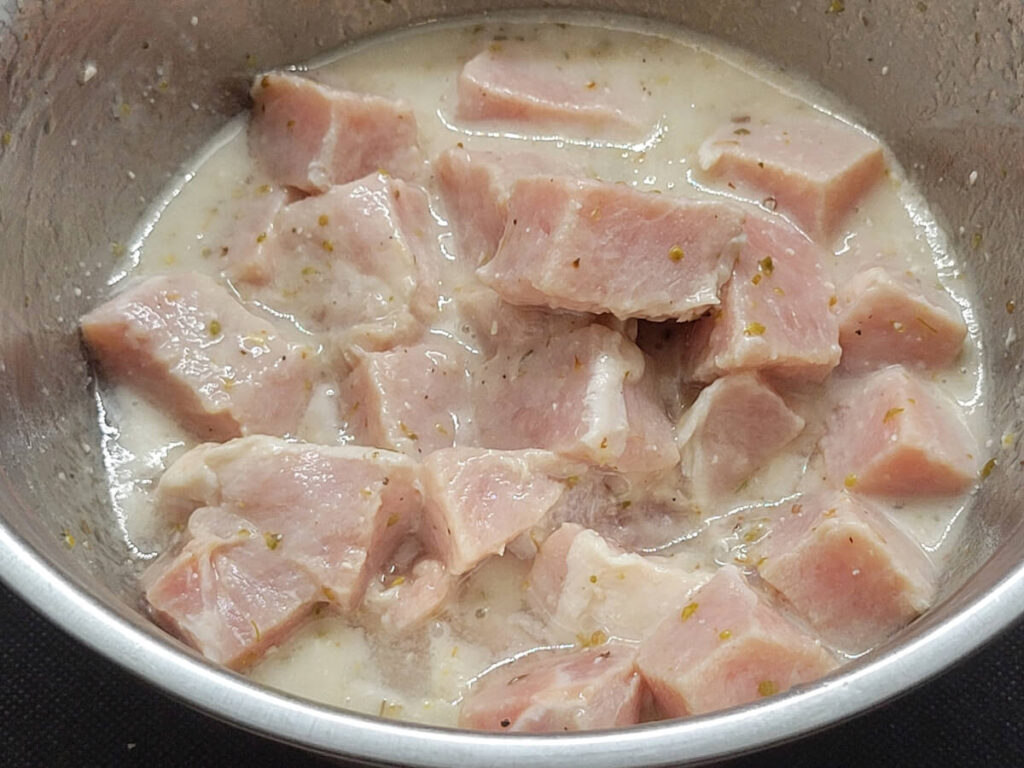
Made with Greek feta marinade, yellow mustard, chicken bouillon, black pepper, onion powder, garlic powder, Aleppo, and dill.
Beef Souvlaki
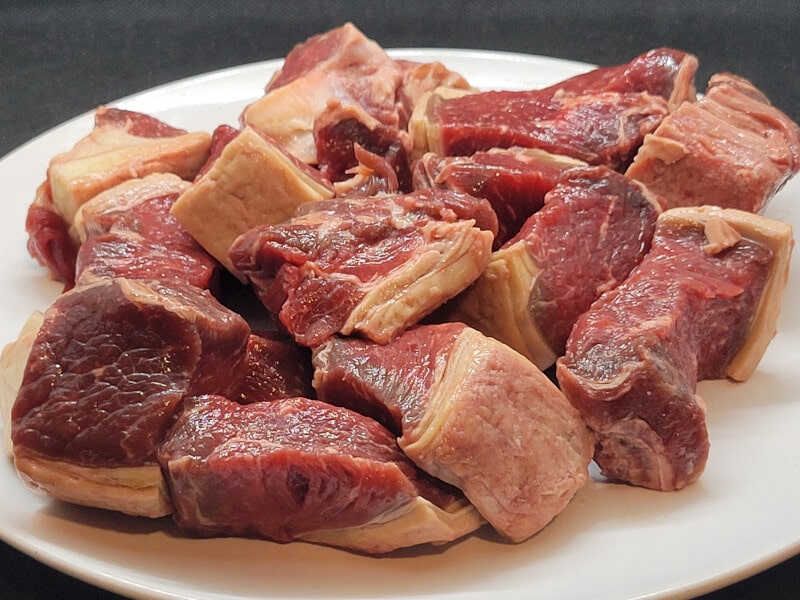
Trim off any fat. The fat can be saved and rendered for other dishes. Marinate the trimmed beef overnight or for at least 4 hours. Add yogurt or milk to assist in tenderizing.
Lamb Souvlaki
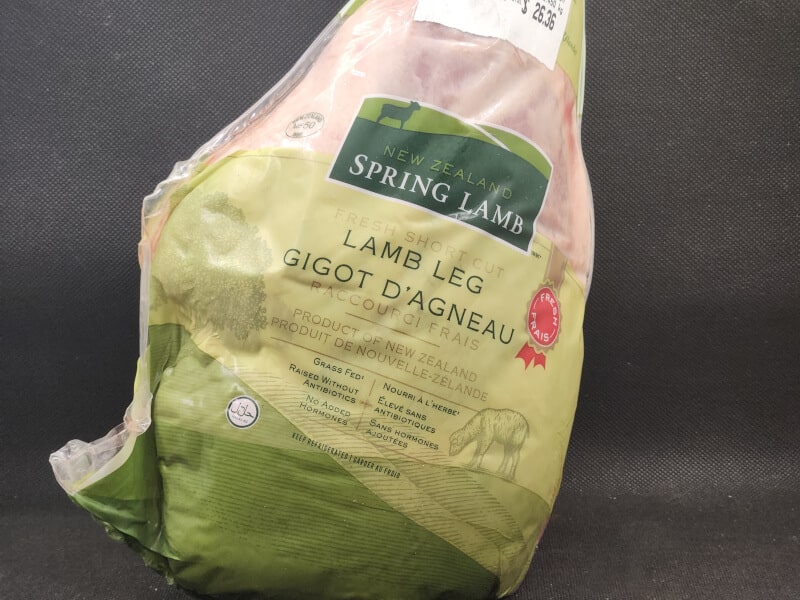
Debone and trim off any fat, as it can be used to render out for other dishes. Marinate the lamb overnight or for at least 4 hours. Add yogurt or milk to assist in tenderizing.
Ladolemono
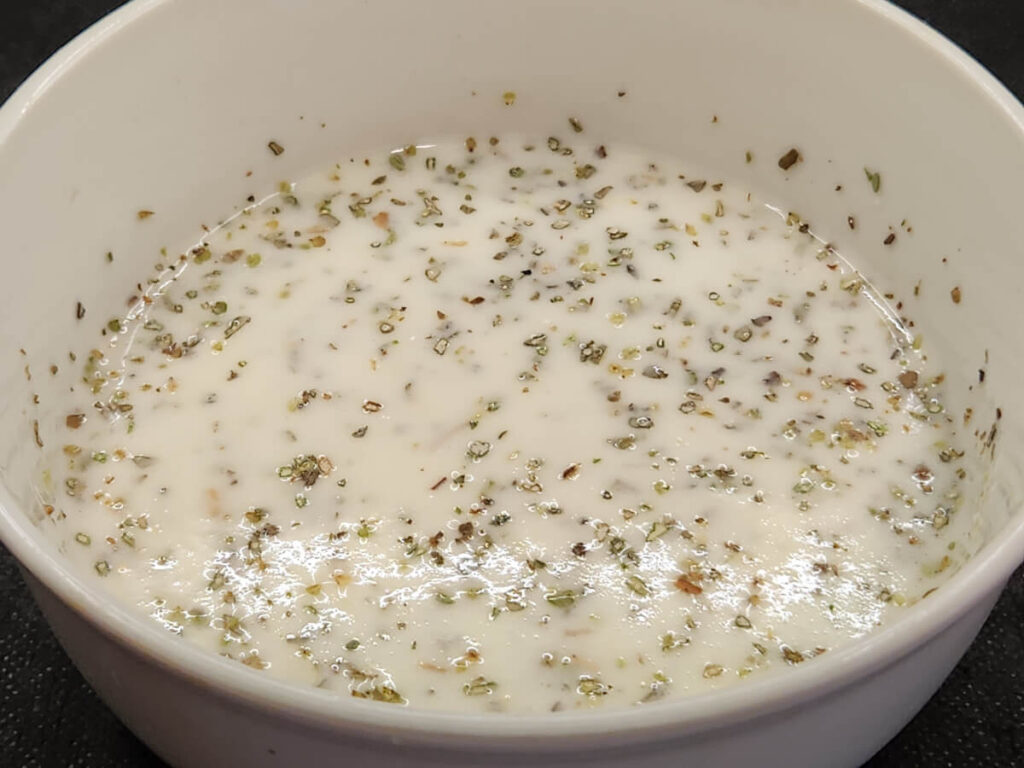
A souvlaki marinade consists of Greek Ladolemono (olive oil, lemon juice, garlic, oregano, salt & lemon pepper or the zest of a lemon with black pepper). These were and are the original ingredients used to make souvlaki when Greek cuisine started marinating the meats. Well, except for the lemon pepper, which was originally just a heat source, most likely black or white pepper. But it could have easily just included lemon peel with black pepper, in effect making lemon pepper. Either way, the addition of lemon pepper is really quite nice. Ladolemono can be used by itself as a souvlaki marinade. With the addition of salt to season the meat. Then, depending on the meat, certain seasonings can be added.
Ladolemono Ingredients
- EVOO
- Lemon Juice
- Garlic
- Sea Salt
- Lemon Pepper
- Oregano
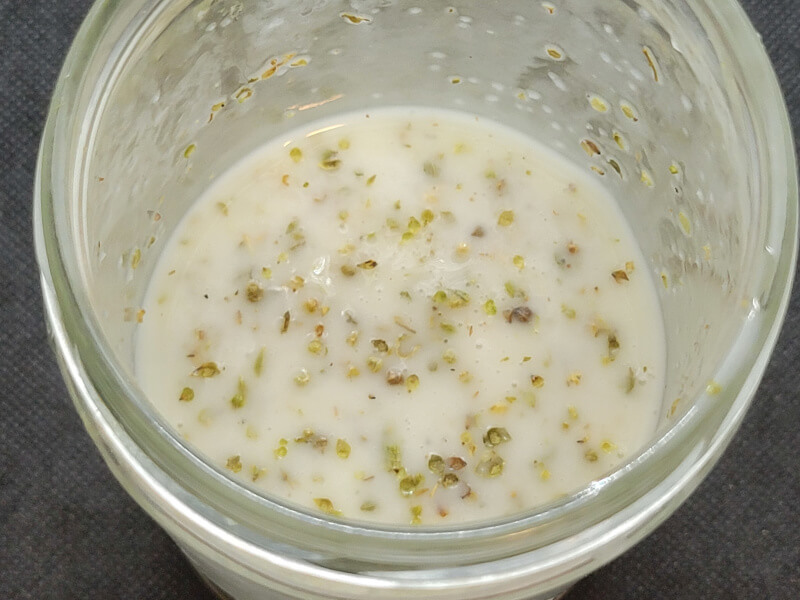
Jar Ladolemono
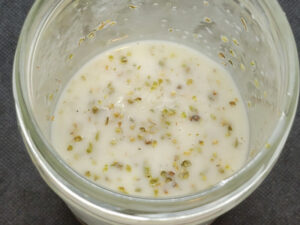
The jar method for making ladolemono is really simple, easy, and convenient. Just throw everything together and purée with an immersion blender. Empty into a marinating bowl and add the Greek seasoning along with the meat you are marinating and optionally other ingredients. Cover and refrigerate a few hours or even overnight.
Feta Cheese Brine
The Greek ladolemono makes up one part of the souvlaki marinade or the Greek feta marinade. The other part is leftover feta cheese brine. This brings to the souvlaki marinade salt and cheese flavors as well as assists in browning the meat to that beautiful color.
Use 1/4 cup each of feta cheese brine & ladolemono per 1 lb or slightly more meat.

Souvlaki Marinade Seasoning
Older Greek recipes used a small amount of Dijon mustard for pork souvlaki, typically with herbs fitting for pork. While chicken souvlaki is almost always sprinkled with paprika while cooking or included in the marinade, both savory and sage are excellent choices for chicken. The seasoning should include some source of heat (black pepper, chili flakes, or cayenne pepper) for a nice hit of spiciness.
Below are some seasoning ideas based on the meat being used, but feel free to explore here. The souvlaki marinade of ladolemono and feta cheese brine will establish the base flavor. To which all sorts of ingredients can be added to shape the overall flavor.
Choice of Seasoning: You can go with what your heart desires on this with a source of heat. Some common herbs and spices to use depending on the meat are listed below:
- Beef, Lamb, or Mutton Seasoning: Allspice, Bay Leaf, Cinnamon, Coriander, Cumin, Garlic Powder, Nutmeg, Onion Powder, Oregano, Paprika, Parsley, Rosemary, Sumac, and Thyme.
- Chicken Seasoning: Bay Leaf, Chicken Powder, Dijon Mustard, Dill, Garlic Powder, Onion Powder, Oregano, Paprika, Parsley, Poultry Seasoning, Sage, Savory, and Thyme.
- Pork Seasoning: Borrows from either one, but typically Dijon mustard is always included.
- Sometimes tomatoes, peppers, and onions are included and pureed with the marinade.
Souvlaki: If using as a souvlaki marinade, then wine can be added, which is quite common. If using tougher meats like beef, mutton, or lamb, add yogurt or milk to assist in tenderizing.
Salt Content
The salt content is already present in the feta brine, and using 1/4 cup per 1 lb is a good guideline. However, if additional salt is needed, then this can be added through additional salt in the marinade or a bouillon cube or powder included in the marinade. Salt & pepper can always be added to taste after cooking to season the meat, if needed.
Heat
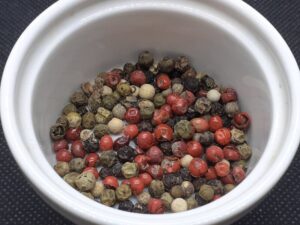
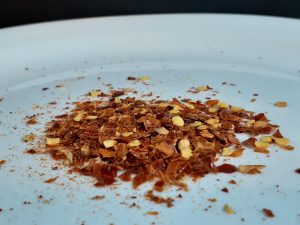
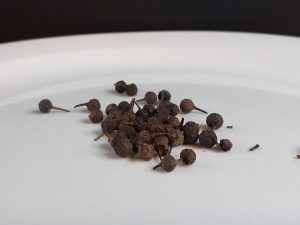
You will want to include some kind of heat through black pepper, chili flakes, Aleppo, etc. How much or the type of heat depends on your preference. Use either or a combination of the following.
- Black or White Pepper
- Peppercorns
- Chili flakes (bukovo) or red Chili Flakes to substitute
- Cubeb Peppers or Black Pepper & Allspice to substitute
- Cayenne Peper
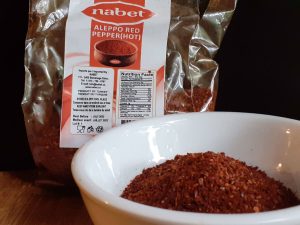
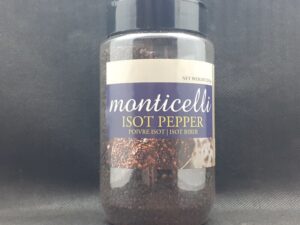
- Pul Bibers (Aleppo, Isot, or Ufra)

Pork Souvlaki Seasoning
Pork Souvlaki marinated in ladolemono may include
- Dijon or Yellow Mustard is quite common when using pork
- Sweet Paprika, more oregano, thyme, savory, rosemary
- Optionally, along with red or green chilies, onions & tomatoes pureed with the Ladolemono.
Greek Feta Marinade with 1 tsp Crushed Black Peppercorn, 1 tsp Oregano, and 1/2 tsp Thyme.
Chicken Souvlaki Seasoning
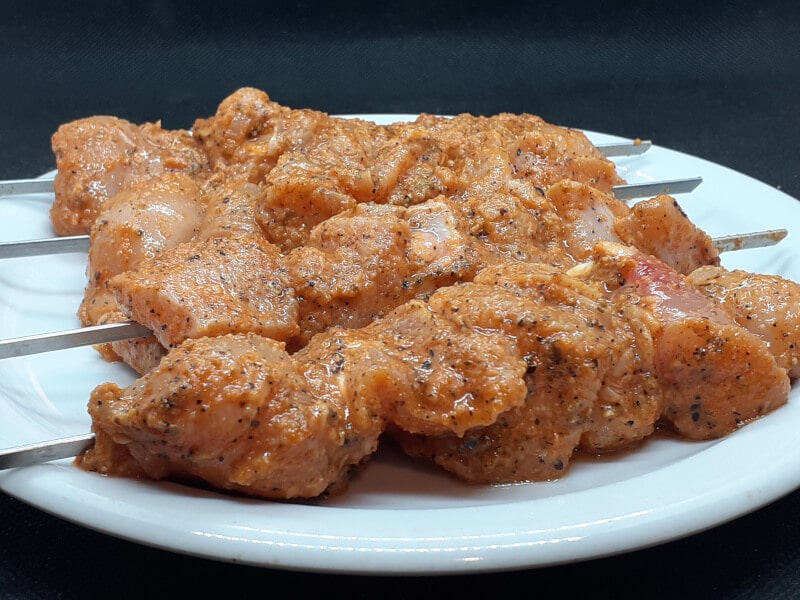
Chicken souvlaki seasoning may include the following with ladolemono: savory, sage, paprika, black or white pepper, mustard, thyme, powdered sugar, and red peppers (Florina) pureed with the ladolemono or pimento paste.
Made with Greek feta marinade and the standard Halifax donair spice, omitting the salt in the standard donair spice.
Beef Souvlaki Seasoning
Beef souvlaki seasoning may include the following with the ladolemono: black pepper or chilies/chili flakes, rosemary, paprika, thyme, parsley, onion, long sweet red pepper, or sweet pimento paste blended with the ladolemono.
Lamb Souvlaki Seasoning
A lamb souvlaki seasoning may include the following with the ladolemono: rosemary, peppercorns, black or white pepper, chili flakes, parsley, thyme, and marjoram.
Souvlaki internal temperature
- Chicken breast should be cooked to 157°F and dark meat to 175°F or higher.
- Pork should be cooked to an internal temp of 145°F or slightly higher.
- Beef, Mutton or Lamb should be cooked to an internal temperature of
- Rare – 120 F – 125 F
- Medium – 140 F – 145 F
- Well Done – 160 F and above
- There are various degrees in between as well, with medium-rare at 130 F – 135 F and medium-well at 150 F – 155 F.
After cooking allow the souvlaki to rest 3-5 minutes.
How to Cook Souvlaki
Souvlaki can be cooked in numerous ways. Which includes cooking in a rotisserie unit, BBQ, grill, in the oven, or pan searing. With either the rotisserie unit, the BBQ, or grilling as the best way to cook souvlaki. Chicken souvlaki can be cooked up rather quickly. So can pork, beef, mutton, or lamb souvlaki, but I much prefer low and slow with these meats for better flavor and texture. Followed by a high heat for color.
Rotisserie Souvlaki
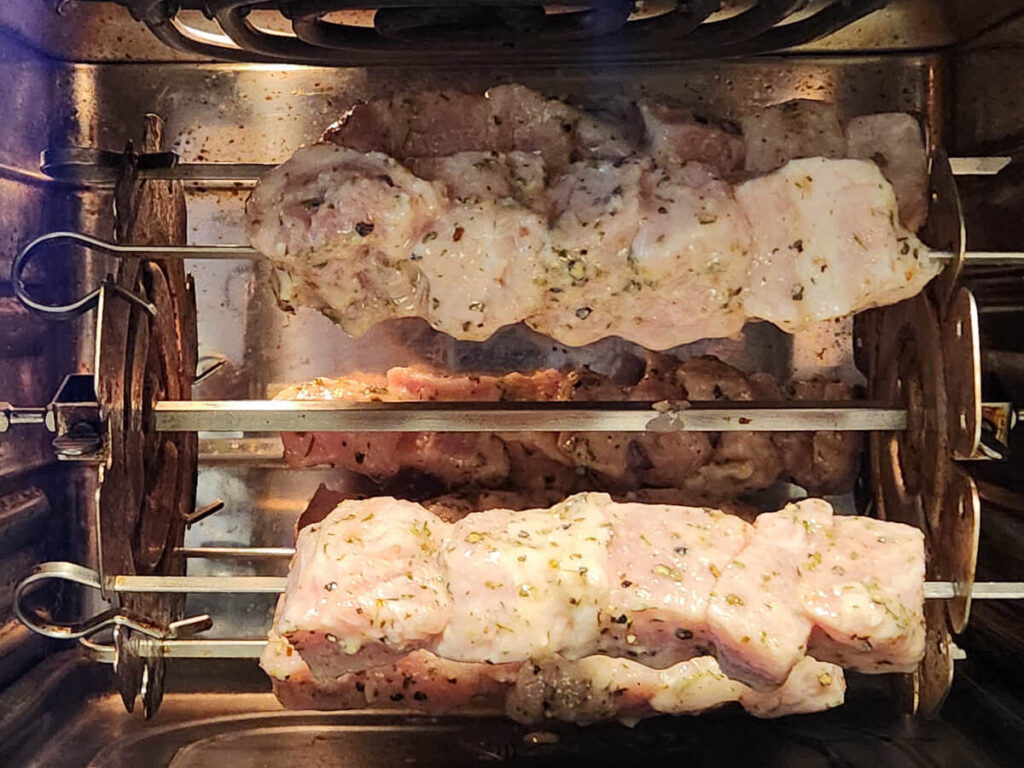
If you have a rotisserie unit, then this is the way to go for indoor souvlaki. Simply skewer the meat and set into the rotisserie unit.
- Chicken Rotisserie Souvlaki: Cook at 400°F–430°F for about 13–15 minutes.
- Pork Rotisserie Souvlaki: Firm; Cook at 400°F for about 15 minutes or until an internal temperature of 145°F. Tender; at 250°F for 50 minutes to an hour. Then cook at 400°F for color, about 8-12 minutes.
- Beef, Mutton or Lamb: Firm; Cook at 400°F for about 10 minutes or until desired internal temp. Tender; at 250°F for 50 minutes to an hour. Then cook at 400°F for color.
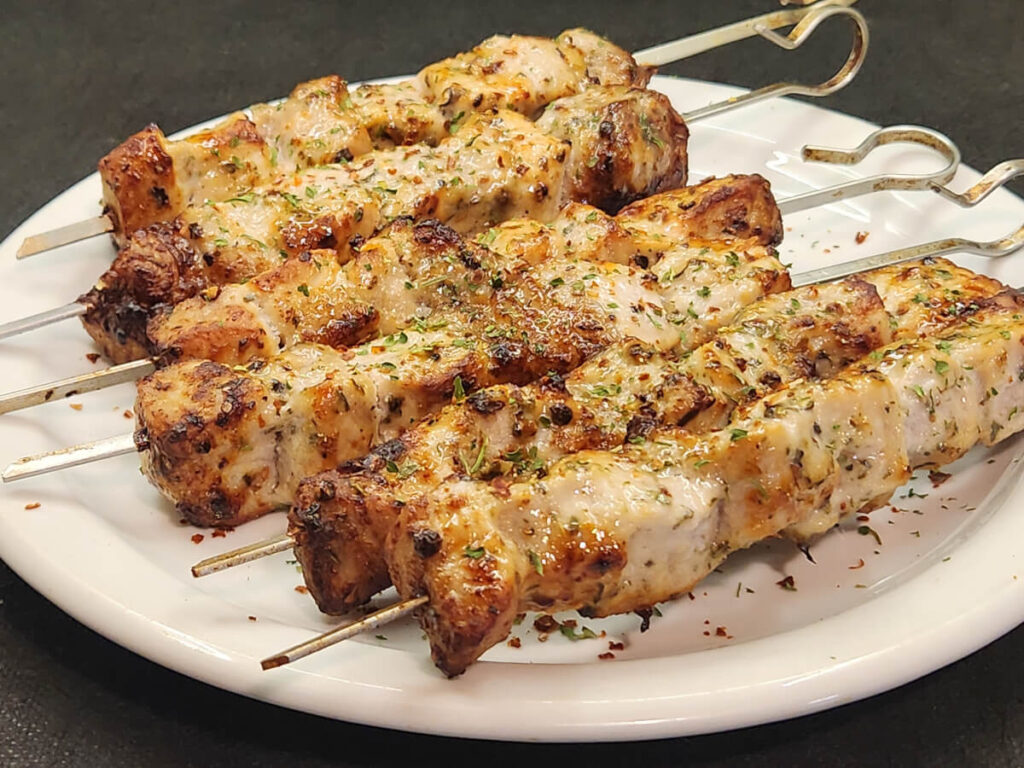
Oven Souvlaki
Place skewered meat into a thick-bottomed pan. When boiling for color, place the oven rack at the bottom or one notch higher for better control and to prevent drying the meat out.
- Oven Chicken Souvlaki: Cook at 450°F for 13 to 15 minutes, turning halfway through. Then optionally broil to develop color or charring if needed.
- Oven Pork Souvlaki: Cook at 450 F for about 15 minutes, turning halfway through. Or cook low and slow at 250 F for about 1 hour. Then broil for color.
- Beef, Mutton, or Lamb Oven Souvlaki: Cook at 450°F for 13-15 minutes, turning halfway through or until meat reaches the desired doneness. Optionally cook low and slow at 250 F for about 1 hour. Then broil for color.
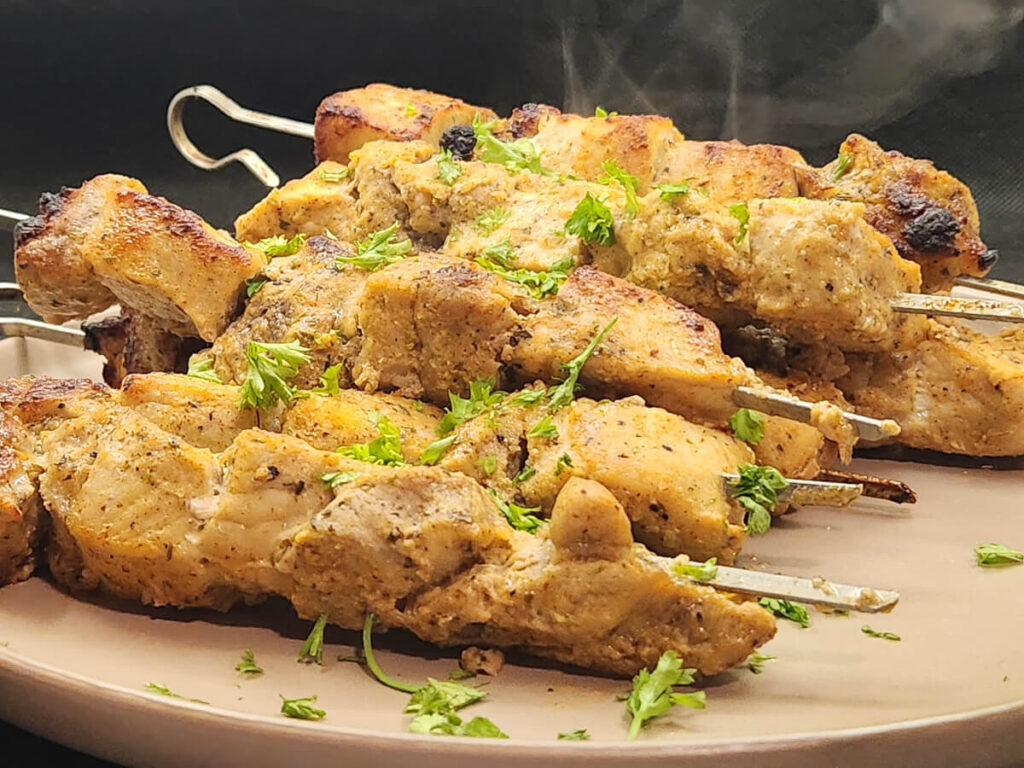
Pan Seared Souvlaki
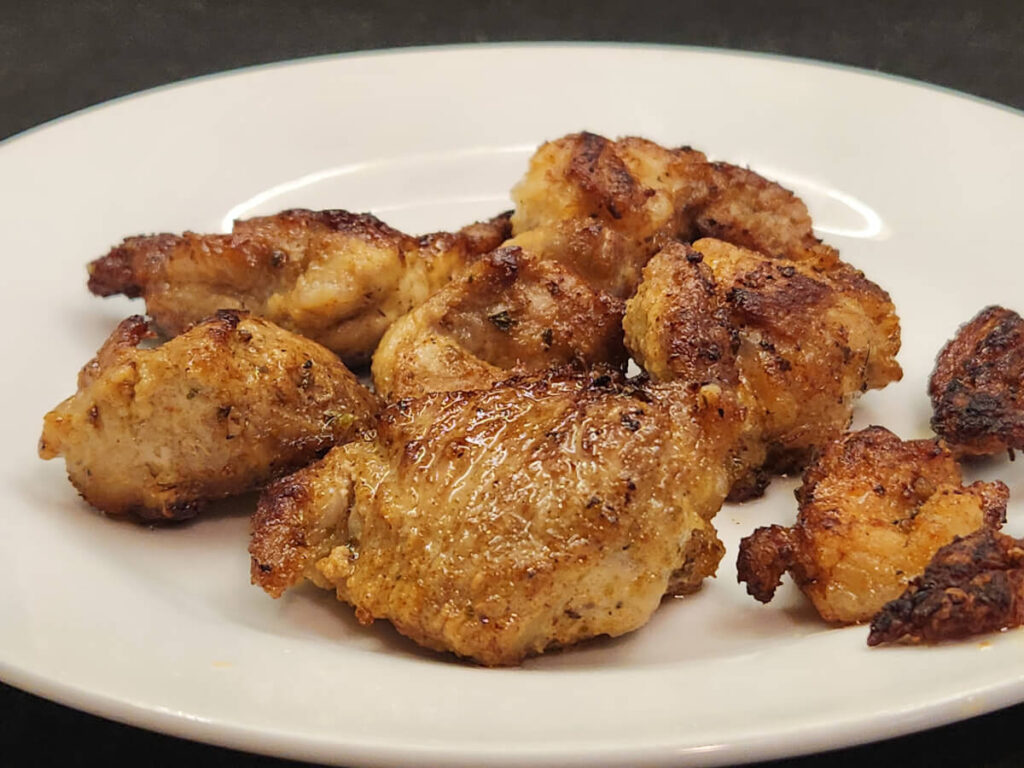
Heat a pan up over medium-high heat with fat and wait until it gets hot. Then sear for about 2-3 minutes per side or until the desired internal temperature is reached. With this method you don’t have to have the meat skewered. You can instead just sear the chunks of meat, same with the oven method.
Grilled Souvlaki
- Grilled Chicken Souvlaki: Grill over medium-high heat for 2-3 minutes per side or until the internal temperature reaches 157°F for breast or 175°F or higher for dark meat.
- Grilled Pork Souvlaki: Grill over medium-high heat for 2-3 minutes per side or until the internal temperature reaches 145°F.
- Beef, Mutton, or Lamb Grilled Souvlaki: Grill over medium-high heat for 2-3 minutes per side or until the desired internal temperature is reached.
- Low and slow: Use with any meat. Cook in indirect heat (about 250F) for about 45 minutes to soften the meat. Then place over medium-high heat to char and color the souvlaki.
Hali Souvlaki
Hali Souvlaki uses JAH Halifax Donair Spice as the seasoning for an incredible marinade for souvlaki, shawarma, gyros, and doners. In fact, whenever making Greek gyros, the Halifax donair spice is my go-to. The standard donair spice is listed below. The salt is omitted because the Greek feta marinade will contain sufficient salt.
- 1 tsp of the following per 1 lb of meat
- Oregano
- Garlic
- Onion
- Paprika
- Black Pepper or less
- 1/8+ tsp Cayenne Pepper
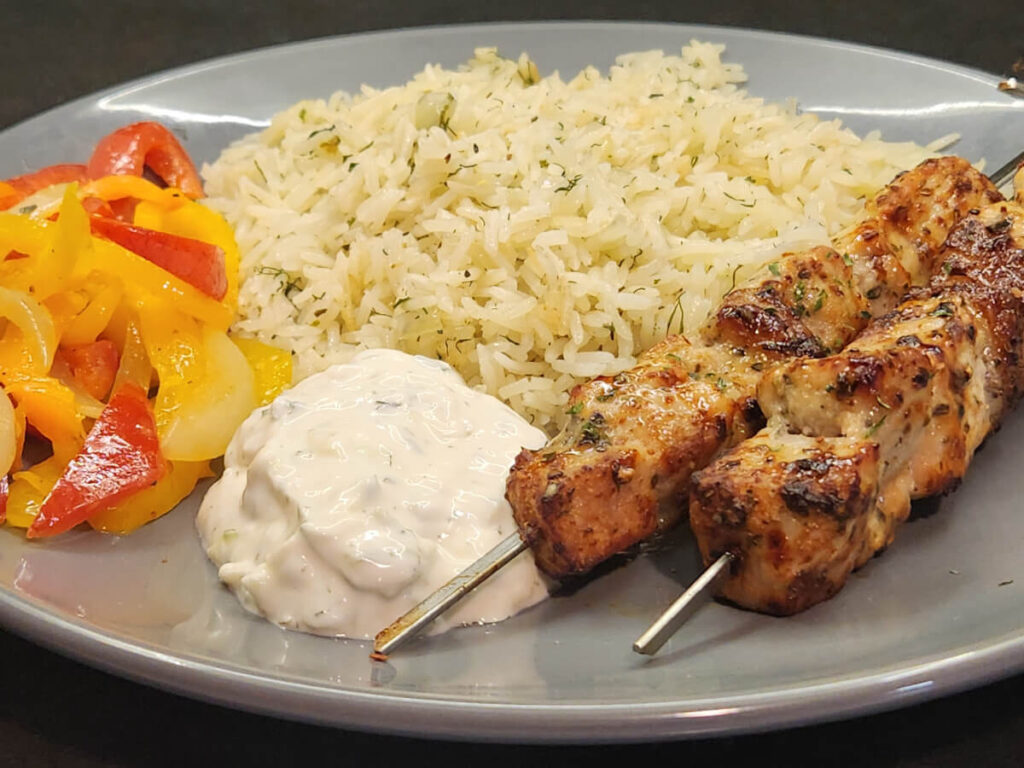
Souvlaki Platter
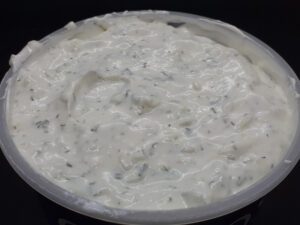
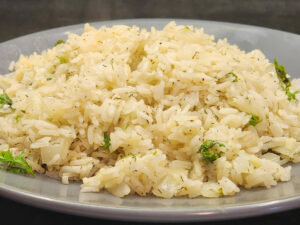
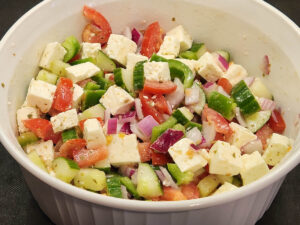
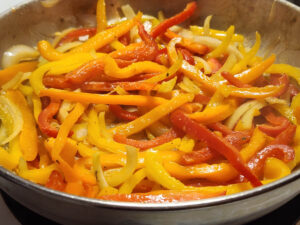
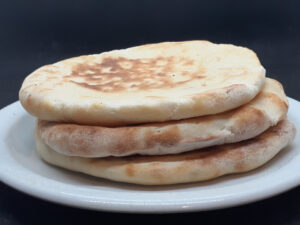
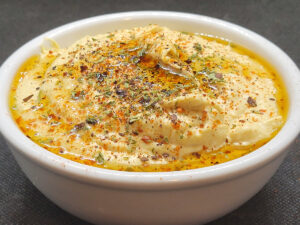
Serve 1-2 skewers of souvlaki with a side of Tzatziki, Greek Lemon Rice, Greek Salad, or ladolemono onions & peppers.
Ingredients
- 2 lb Chicken, Pork, Beef, Lamb, or Mutton - Diced 1 inch
Souvlaki Marinade
- 1/2 C Ladolemono
- 1/2 C Feta Cheese Brine
- As Desired Choice Herbs & Spices - with heat source, see notes for ideas
- 1/4 C Yogurt or Wine - or more, optional
Instructions
- Marinade: Place all ingredients for the Ladolemono into a glass jar and purée with the immersion blender. Empty 1/2 cup into a marinating bowl and add 1/2 cup feta cheese brine with the diced meat and seasoning of choice. Cover and refrigerate for a few hours for chicken or pork, or even overnight for pork, beef, or lamb.
- Skewer: Skewer the meat while you preheat the oven, grill, or rotisserie unit. Use about 5-7 pieces of meat per skewer.
- Cooking Souvlaki: Cooking at a lower heat, especially when making pork, beef, mutton, or lamb souvlaki, is recommended, as it softens the meat and fat much more and renders out some of the fat. Finish with a high heat for char and color. For pork, beef, mutton, or lamb, cook at 250°F for 50 minutes to an hour, then at high heat until good char and color. Rotisserie Unit: Cook at 400°F for about 15 minutes for chicken. With pork, beef, mutton, or lamb, cook at 250°F for 50 minutes to an hour. Then cook at 400°F for color. Or cook until the desired internal temp for beef, mutton, or lamb. Oven: Cook at 450°F for about 15 minutes, turning halfway through or until meat reaches the desired doneness. Optionally cook low and slow at 250 F for about 1 hour. Then broil for color.Grill: Cook at medium-high heat for 2-3 minutes per side or until the desired internal temperature is reached. Optionally cook in indirect heat (about 250°F) for about 45 minutes to soften the meat. Then place over medium-high heat to char and color the souvlaki.Pan/Griddle: Set a pan over medium heat with fat and wait for it to get hot. Then sear the souvlaki for about 2-3 minutes per side or until the desired internal temperature is reached.
- Rest: Set the souvlaki aside to cool, about 5–10 minutes. These can be served while still on the skewer with rice and vegetables or removed from the skewers on Greek pita bread or pita bread with a pocket and dressed with tzatziki and vegetables. To remove the meat from the skewers, nudge the meat down the skewer to loosen it and then away from the skewer to remove the meat.
Notes
Souvlaki internal temperature
- Chicken breast should be cooked to 157°F and dark meat to 175°F or higher.
- Pork should be cooked to an internal temp of 145°F or slightly higher.
- Beef, Mutton or Lamb should be cooked to an internal temperature of
- Rare – 120 F – 125 F
- Medium – 140 F – 145 F
- Well Done – 160 F and above
- There are various degrees in between as well, with medium-rare at 130 F – 135 F and medium-well at 150 F – 155 F.
Browse More Recipes!
Adana Kebabs
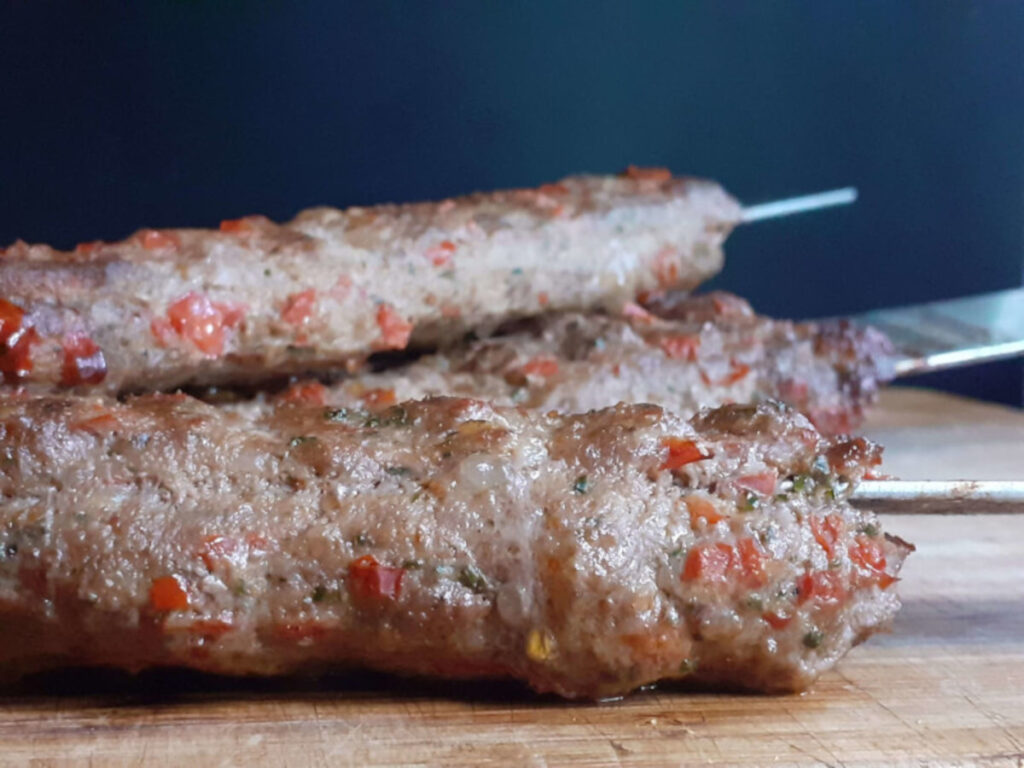
Mild or Spicy Turkish Adana Kebabs! Served with Lavash Bread, Roasted Peppers & Tomatoes with a Fresh Salad on the side,…
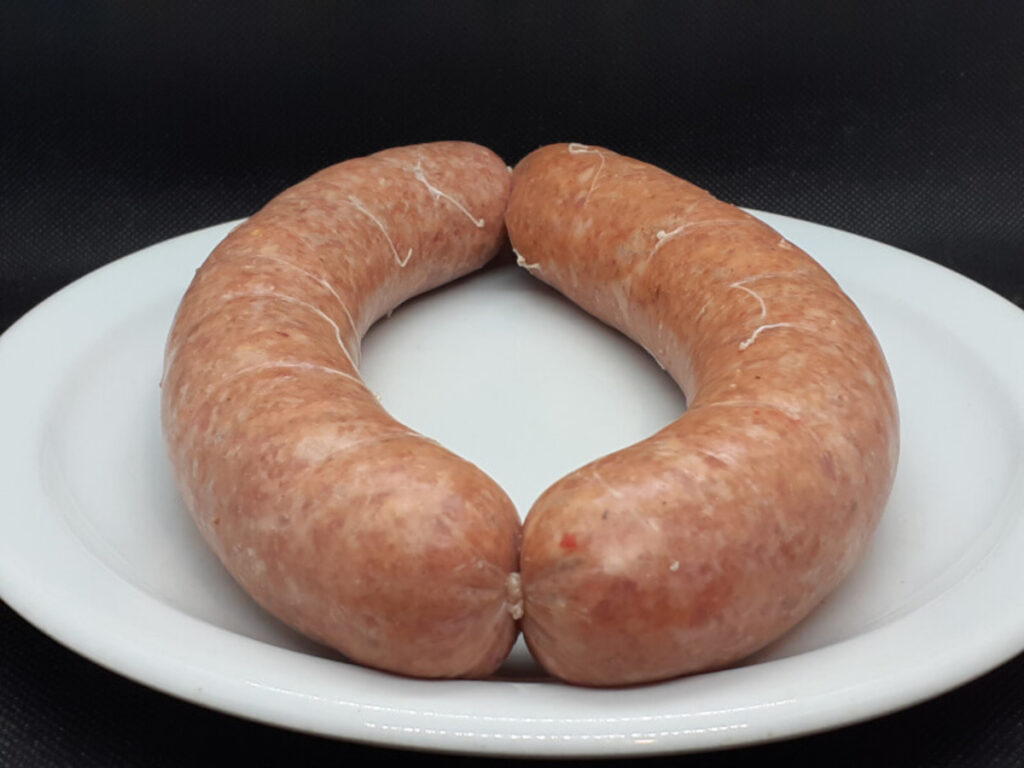
Homemade Italian Sausage
Homemade Italian Sausage Meat that can be shaped and used in numerous ways for a variety of dishes. The Italian Sausage…
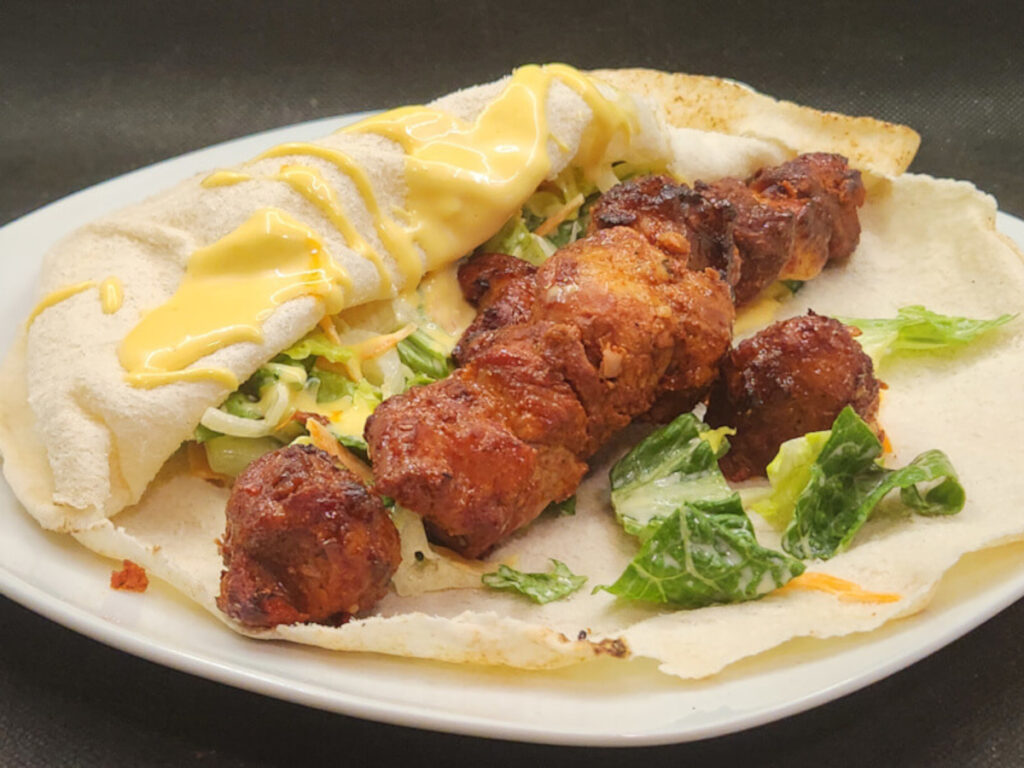
Chourico Kebab Wrap
Oh my, yes indeed, this is a Sandwich Wrap you definitely need! You don’t even know. This is a Chourico Kebab…
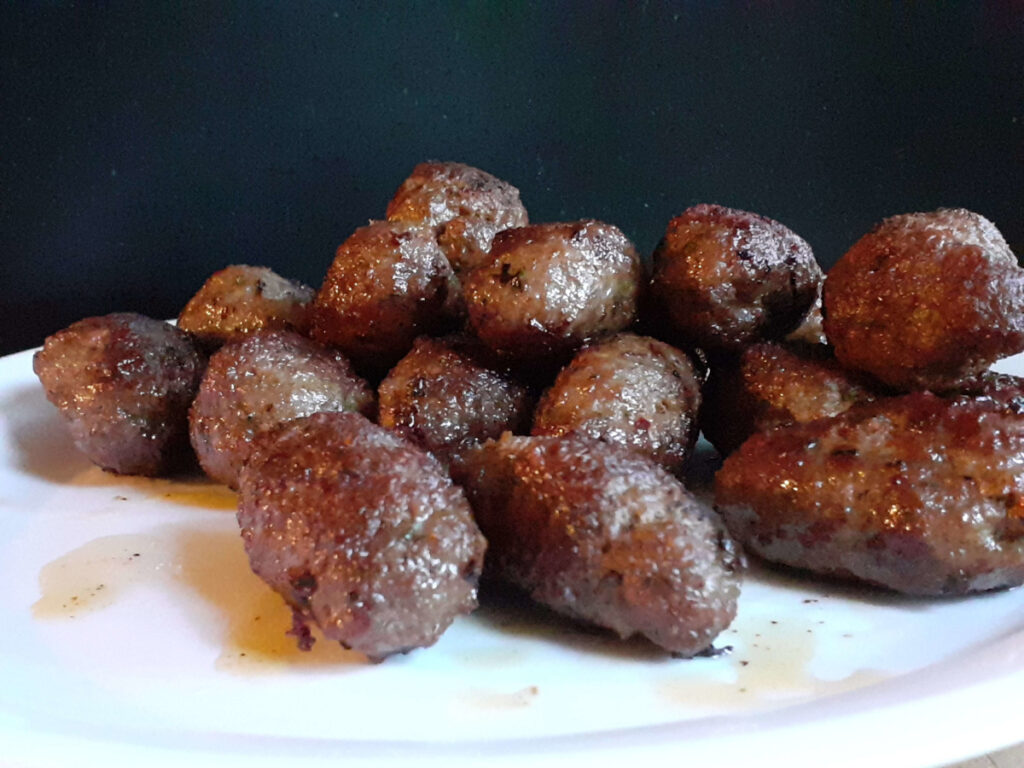
Cevapi
Cevapi are Finger size meatballs, well not meatballs but elongated pieces of meat about the size of a finger, more like…
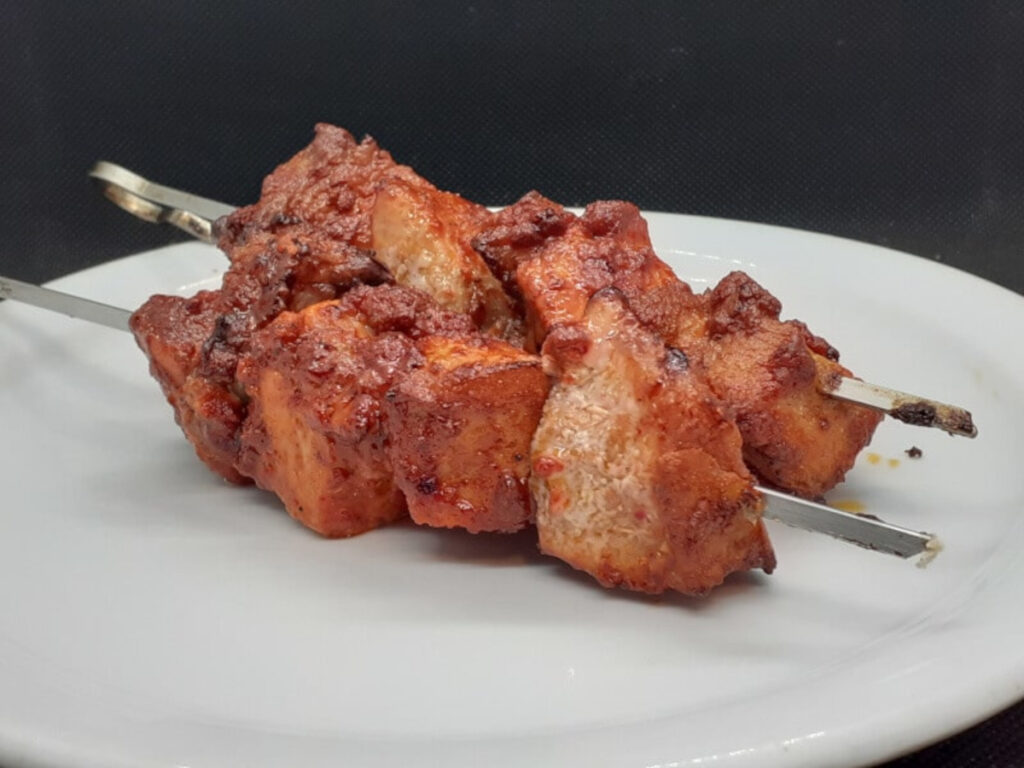
Tandoori Pork Kebabs
Tandoori Pork Kebabs are just the same as Tandoori Chicken Kebabs, using Pork instead of Chicken. Just dice the Pork, Marinate…