

This How To post is all about how to make pizza toppings at home, just the same as pizzerias. Use them to top a variety of pizzas, include in pasta bakes, or more specifically, the Pizza Pasta Bake, Pizza Pasta Melts and Pizza Ovensubs. While the vegetables are pretty straightforward. The types of meat and how you prepare them take center stage here, along with all kinds of delicious toppings you can pile onto your homemade pizzas!
We will also get into how many toppings to place on a pizza and why, how much sauce for a pizza, and what toppings to place first. There’s a lot of information here, but when you execute these small steps properly, they come together to create top-quality pizzas at home.
Makeline Pizza Topping Codes
Your typical make line in a Pizzeria contains the following Pizza Toppings, and all of these have codes within the software that is used to display at the make line with what to top the pizza with. I believe the codes below are for Domino’s Pizza, but could be a mix of Pizzerias. Either way, the below illustrates the use of short codes for topping a pizza and is what JAHZKITCHEN uses to describe our Pizza. Such as PKS for the Pepperoni, Bacon, and Italian Sausage Pizza.
The ordering of the toppings is how they are placed on the Pizza. Starting with flat toppings first, followed by bulkier toppings as you go. I go with Cheese last, but you can place this down first if you want the toppings on last.
- Pepperoni – P
- Salami – Sa
- Ham – H
- Bacon Bits – K
- Italian Sausage – S
- Beef – B
- Onions – O
- Green Peppers – G
- Mushrooms – M
- Tomatoes – T
- Green Olives – V
- Black Olives – R
- Pineapple – N
- Banana Peppers or Jalapeños – Z or J
- Mozzarella Cheese – C
- Cheddar Cheese – Q
How much Pizza Sauce
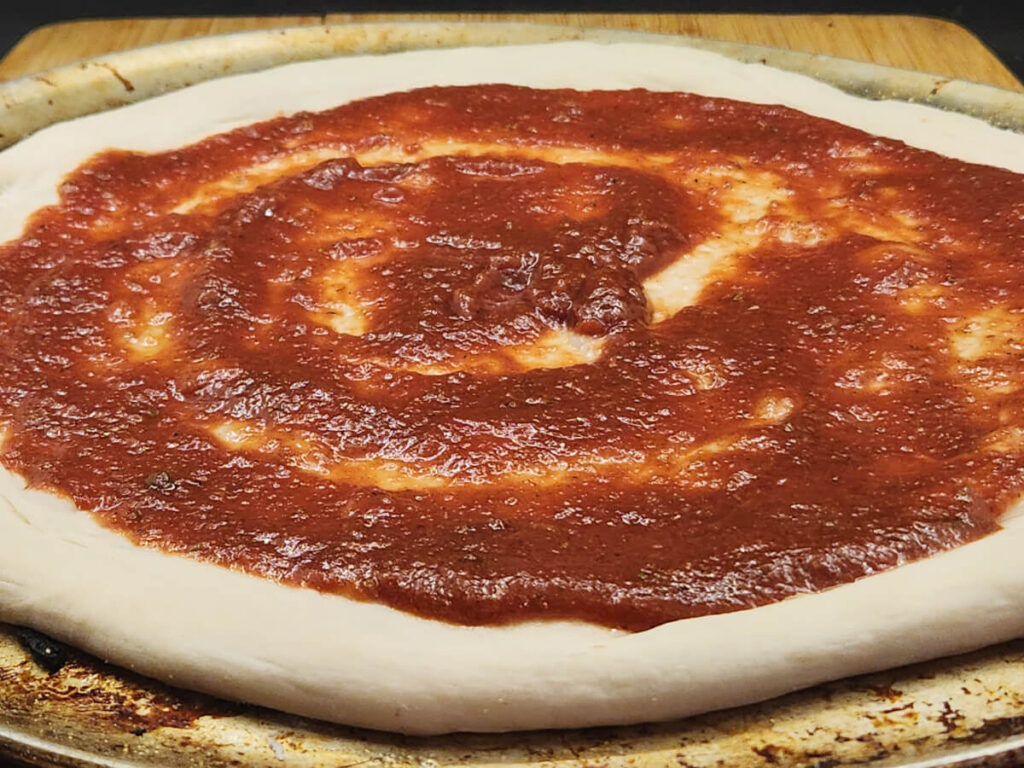
The amount of pizza sauce added depends on the thickness of the dough being used. Your classic hand Tossed Pizza Dough is sauced with a full 4 oz. hotel ladle of pizza sauce, or just about 1/2 cup. Anywhere between 1/3 cup to 1/2 cup is good for a 12-inch pizza.
The sauce should be proportionate to the amount of dough. For a thin crust, it’s less, and for a thick crust or deep dish or a large pizza, it is more. Add another 1/2 to 1 four-oz hotel ladle for extra pizza sauce.

How to Sauce Pizza
In pizzerias, the pizza sauce is ladled right into the center of the dough. With a circular motion moving from the center and outwards to push the sauce to fill the pie right out to the crust.
For a Thin Crust, Deep Dish, Pita or Pitza Pies. The whole surface is covered with pizza sauce, no crust. The deep dish can have a little lip of a crust or be sauced all the way.
Pizza Sauce Seasoning Shake
This refers to a base pizza sauce that has a pizza shake sprinkled over the sauce to flavor it. It allows you to create numerous flavored sauces from a single base pizza sauce by adding the desired pizza shake. You can also use the pizza shake after baking to add even more flavor to the finished pizza.
Start with a simple pizza sauce made from a tomato base (passata), oil, salt, and garlic. Once you spread the sauce over the pizza, sprinkle on a pizza shake seasoning. You can build this dry seasoning blend with any one or combination of the following:
- Basil
- Oregano
- Thyme
- Marjoram
- Parsley
- Italian Seasoning
- Chili Flakes or Aleppo
- Black Pepper
- Parmesan cheese, Parmigiano, or a three-cheese blend of parmesan, asiago, and romano
- Onion Powder
- Garlic Powder
- Fennel Seeds
You can also skip the seasoning shake and simply sprinkle your preferred herbs and spices over the pizza sauce. Want a stronger oregano flavor? Just sprinkle oregano over the sauce.
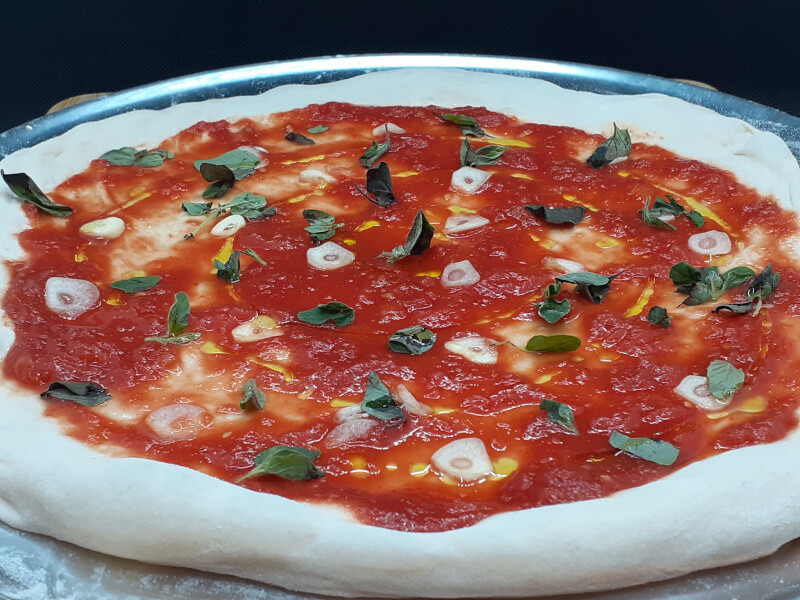
In the image below, a Neapolitan pizza sauce forms the base for a Neapolitan Marinara Pizza. Thinly sliced garlic and fresh basil add extra flavor. Use the same approach with any combination of herbs and spices. Simply sprinkle them over the pizza sauce to shape and customize its flavor.
Pizzeria Cheese
Quality mozzarella cheese at about 52% moisture is needed to make pizzeria pizzas, also known as pizza mozzarella or mozzarellissima. This is a higher moisture percentage than your standard Mozzarella blocks, which are at about 42% moisture or less.
Even better is the addition of shredded Provolone cheese for optimal melting, stretch & flavor. At a ratio of 3 parts shredded mozzarella & 1 part shredded provolone. To this, other specialty cheeses can be added for a three-cheese blend.
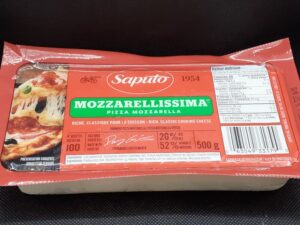
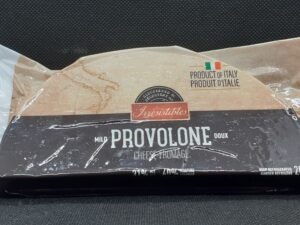
3:1 Shredded Mozzarella to Provolone Cheese
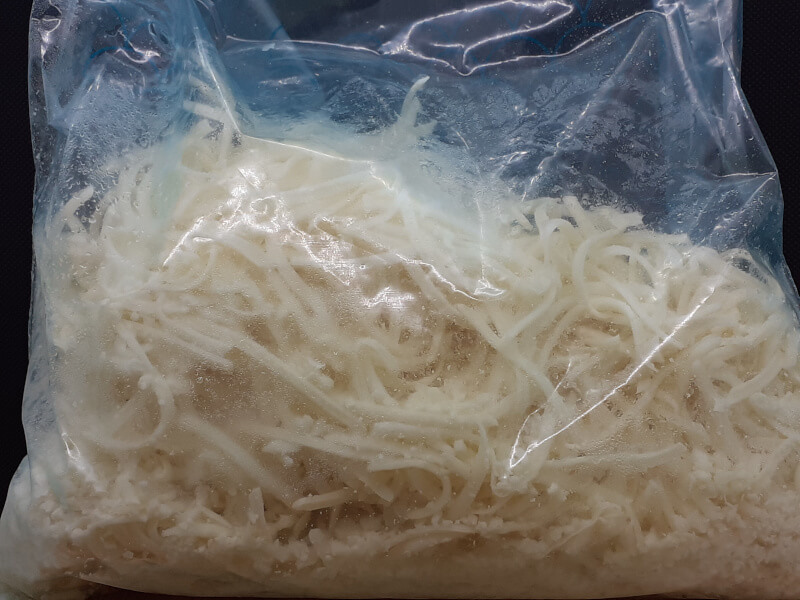
Run the mozzarella cheese through a food processor with the shredder attachment to quickly shred the mozzarella cheese. Repeat for the Provolone Cheese. Any leftover mozzarella can be placed in its own freezer bag to freeze, and the same for provolone.
Then combine 3 cups of shredded mozzarella cheese with 1 cup of shredded provolone cheese into a freezer bag and toss to mix well. Keep in the freezer and use this blend to top your pizzas, pizza pasta melts, garlic fingers, calzones, and ovensubs.
Specialty Cheeses
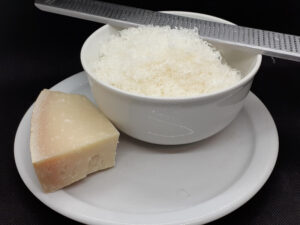
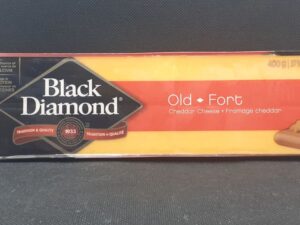
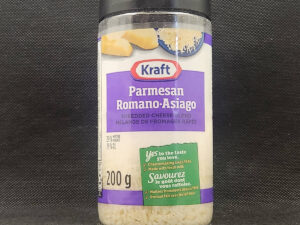
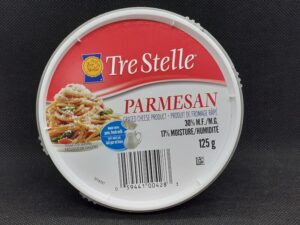
You can add small amounts of other cheeses, such as cheddar, white cheddar, Asiago, Parmesan, Parmigiano Reggiano, Romano, and Pecorino, to build more flavor.
Mix soft cheeses into the mozzarella and provolone blend. Finely grate hard cheeses over the pizza, or combine them with herbs and spices to create a pizza shake that you can sprinkle over the cooked pizza.


How much Cheese on Pizza
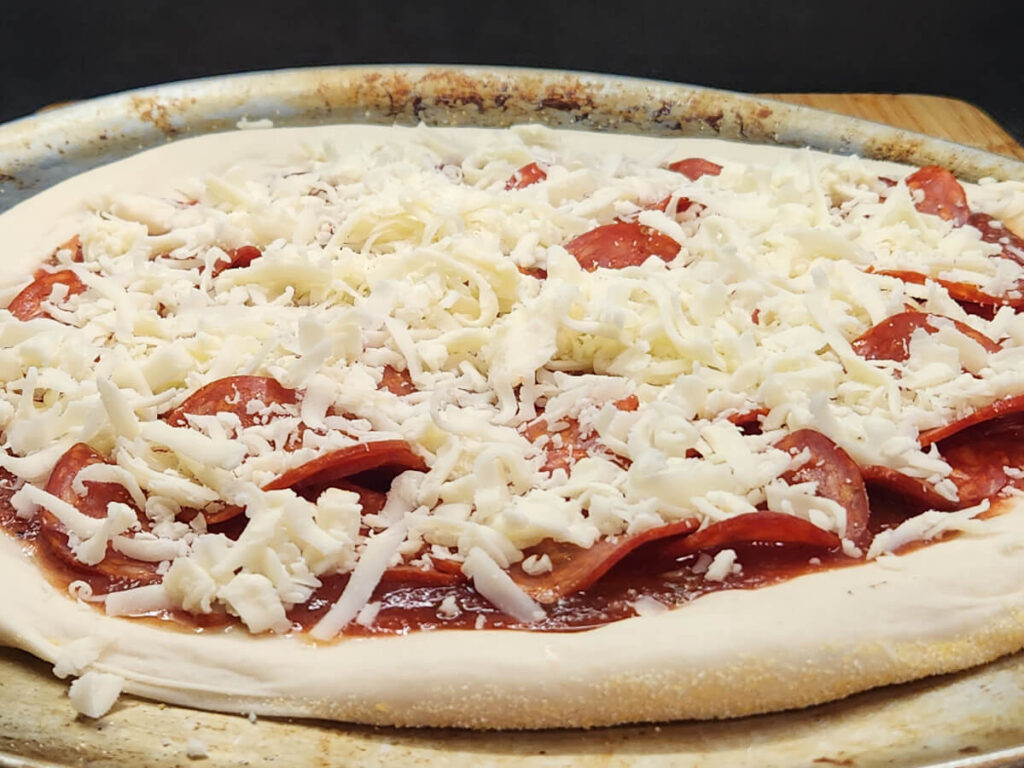
This really comes down to personal preference, but a couple of key points can help you find the right balance. Avoid piling on so much cheese that it overwhelms the other flavors. You want the sauce, toppings, and cheese to complement one another rather than compete. Of course, a cheese pizza makes an exception; you can load it up with cheese!
There should be an adequate amount so that the cheese can melt with spots of browning. To little cheese, and you won’t get this. Instead, the pizza sauce will bubble through and separate the cheese; no good.
A 500 g block of mozzarella cheese should be good for about 4 medium pizzas at about 112 g of mozzarella cheese per pizza or 3 large pizzas at about 166 g per pizza. The 690 g of Saputo’s Cheese usually found at the Superstore in my area is the best bang for your buck. Cut this with provolone, and you increase the cheese yield.
As a guideline: Use 4-5 oz or 112 g to 140 g of Mozzarella Cheese Blend for a 12-inch pizza and about 5-6 oz or 140 g to 168 g for a large pizza.
Pizza Toppings
Good-quality toppings on pizza really matter here. You can’t go with cheap stuff if you want to create restaurant-quality pizza at home.
Pepperoni
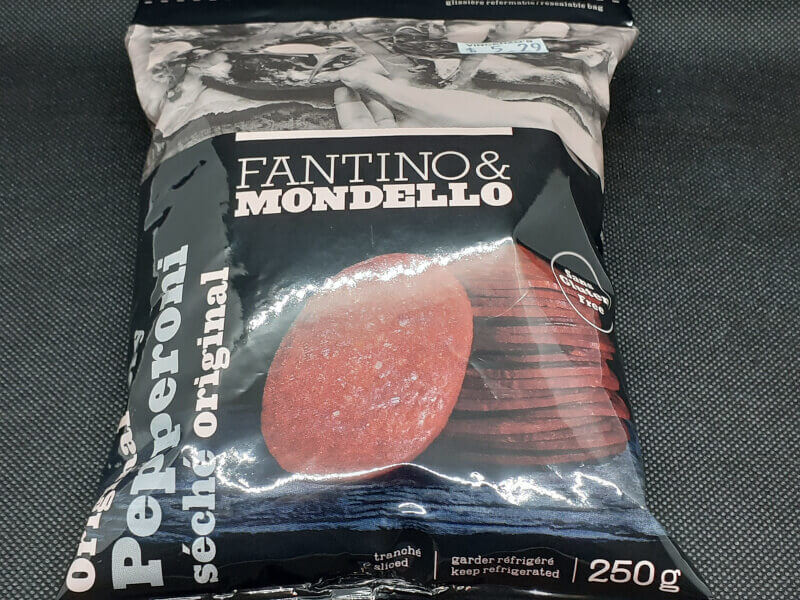
Dry-cured pepperoni is the best, hands down. Don’t pick up pepperoni that doesn’t have a skin to it. For good-quality pepperoni, use a dry-cured pepperoni. Fantino & Mondello is one of the best brands out there.
Sliced Ham
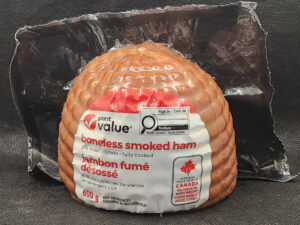
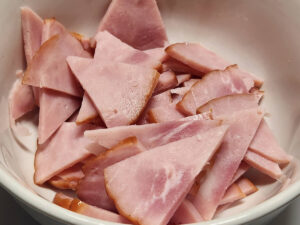
Pizzeria ham starts with deli ham. Slice it about as thick as pepperoni or salami, or slightly thicker, and cut the slices into triangles. For thicker slices, dice or julienne the ham instead.
Salami
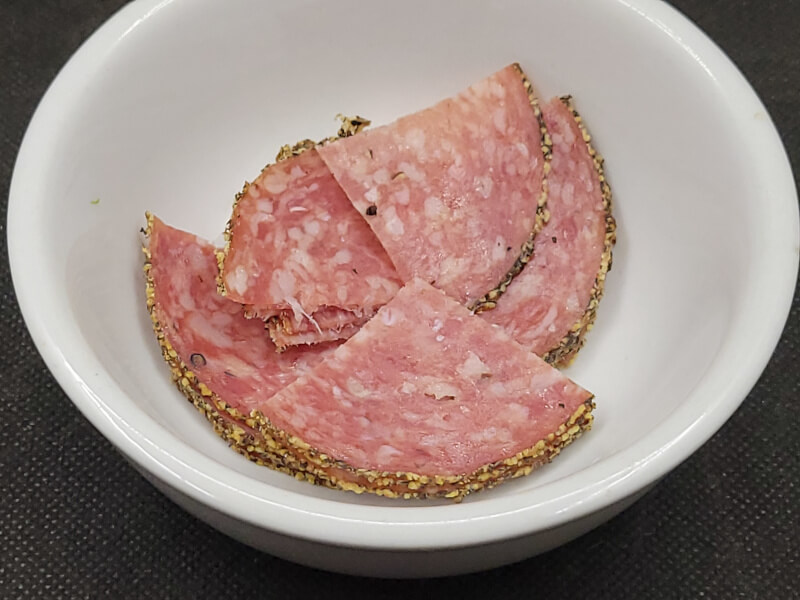
Use a good quality salami with bits of fat & black pepper you can see throughout the meat. I couldn’t find this, but close enough was a salami with a black peppercorn crust. Slice this into triangle pieces the same as ham.
Pizzeria Italian Sausage
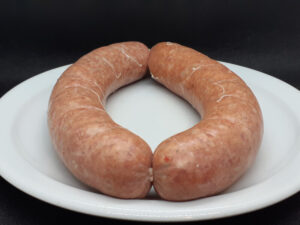
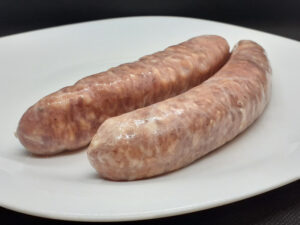
Pizzeria-style Italian sausages should have fennel seeds in them, with a mild, medium, or spicy heat. Quality really matters with Italian sausages. Either a Homemade Italian Sausage can be made, or a good quality store-bought Italian sausage can be used.
Pizzeria style Italian Sausage
Once you have the Italian sausages, either homemade or store-bought. Use 1/2 tsp portions to create tiny elongated sausage meatballs to precook. With store-bought Italian sausages, remove the skin and use 1/2 tsp portion to create the nodules of Italian sausage, just the same as a pizzeria.
Cook these in a skillet over medium heat until just cooked through, or cook them in the oven while it preheats for the pizza. If you use the oven, shake the pan occasionally to promote even browning. I cooked these in the oven while preheating it for the pizza, shaking the pan occasionally until they were just cooked through.

Coarse Ground Italian Sausage
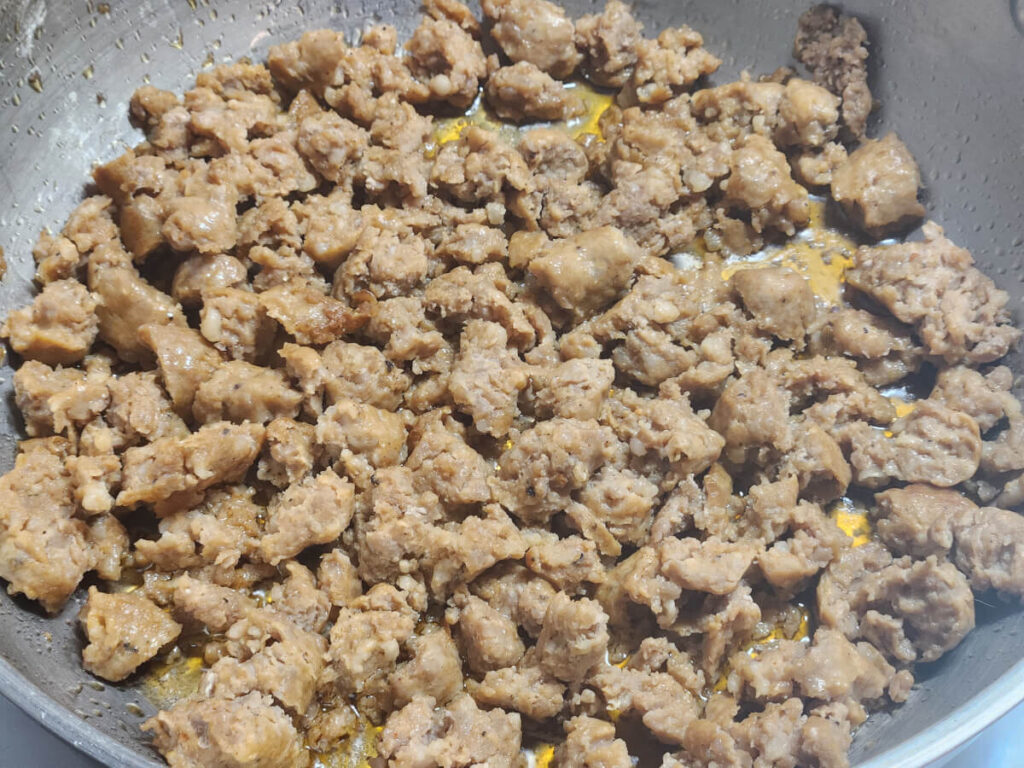
An even faster, no-fuss way is to remove the skin from the Italian sausages and cook them over medium heat. Breaking them into chunks as they cook. Not too much, but roughly the same size as you get in pizzerias.
Pizzeria Ground Beef
Handle the ground beef much like Italian sausage. I use the ground beef seasoning below to flavor it. You can cook the beef in a skillet, breaking it into small chunks as it cooks, or shape it before cooking. Shape Italian sausage into elongated meatballs, but roll the ground beef into round meatballs.

Ground Beef Seasoning
- 1 lb. Ground Beef
- 1 Tbl Worcestershire Sauce
- 1 tsp Beef Powder
- 1/2 tsp MSG
- 1/4 tsp Baking Powder
Pizzeria Style Beef
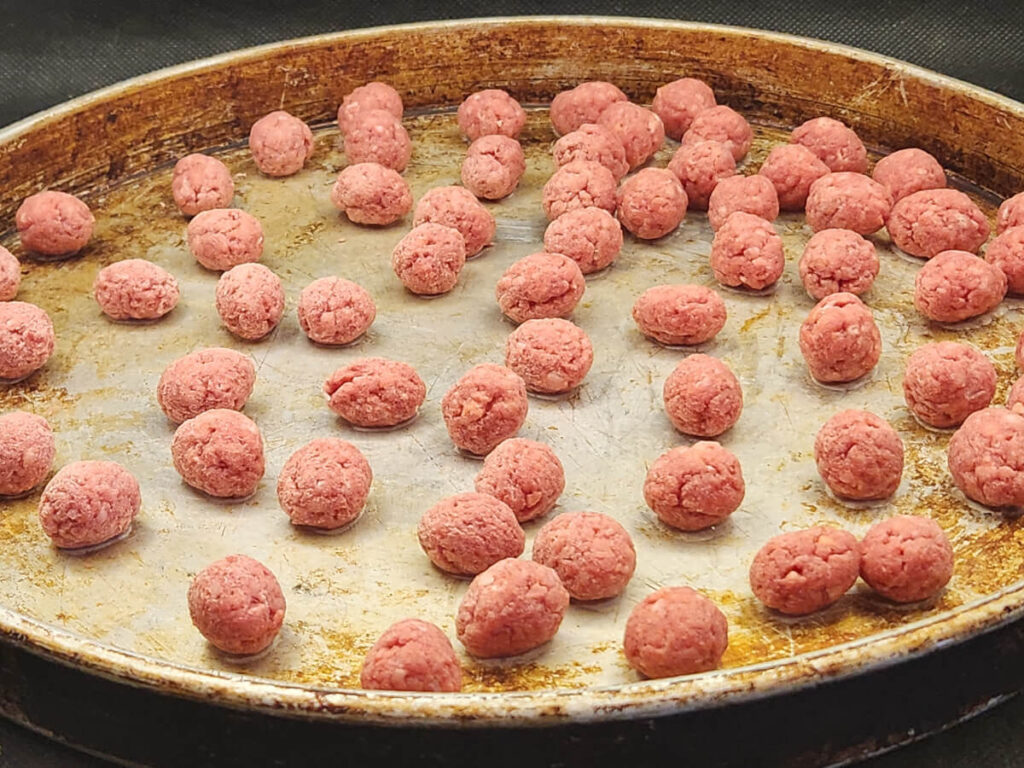
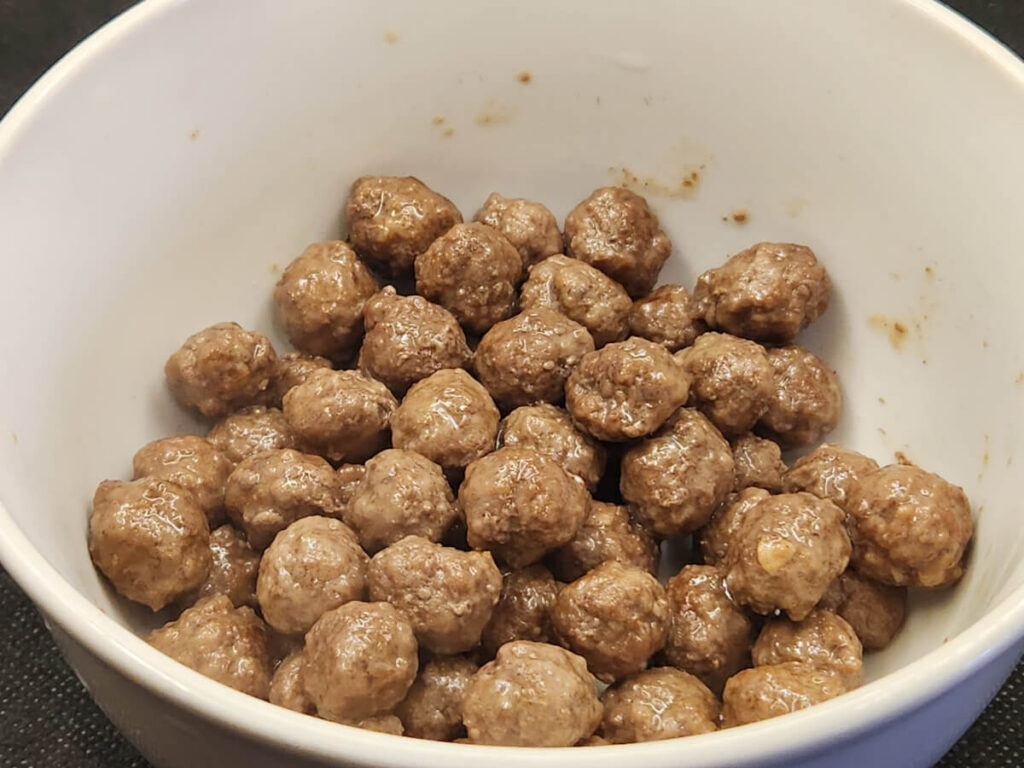
If you are going for the same as the Italian sausage, which is very common in pizzerias nowadays, then use the standard Burger Mixin to create the nodules or meatballs of beef using 1/2 tsp portions.
Shape into tiny meatballs just the same as Italian sausages. Except with beef, you want these round and Italian sausages elongated like a tiny sausage. Cook them in the oven while preheating it for pizzas. shaking the pan back and forth every once in awhile for even browning.
Old Style Pizzeria Ground Beef
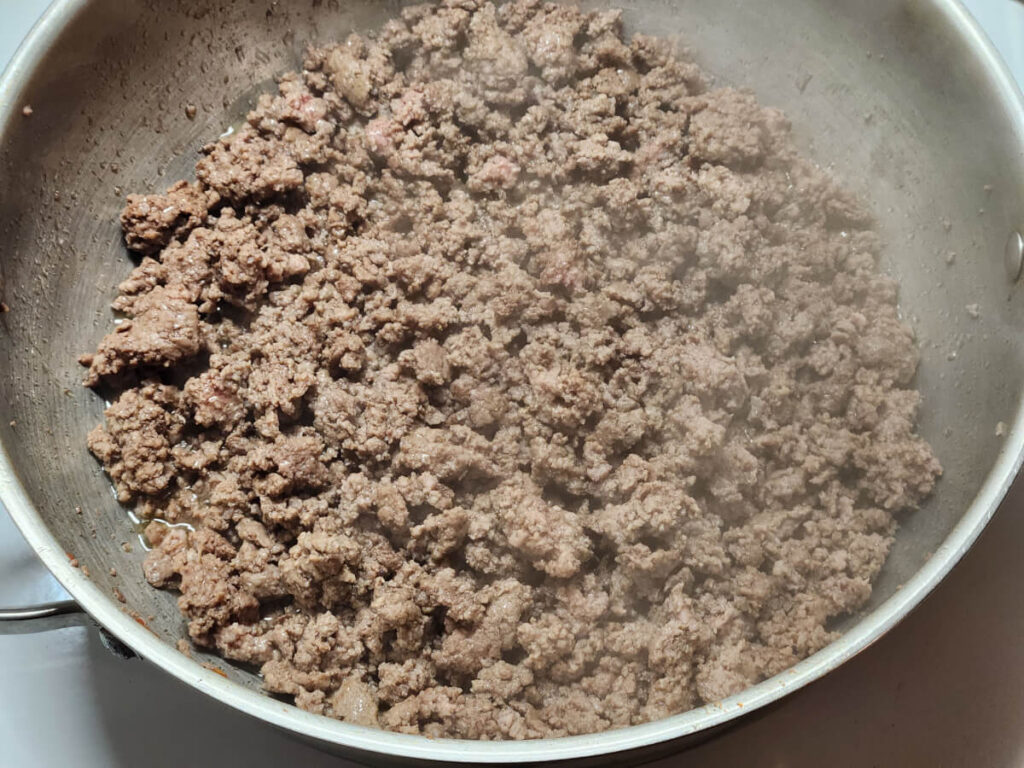
The old-style pizzeria ground beef used straight ground beef with a bit of Worcestershire sauce. Crumbled and cooked until browned. This is the fastest and most convenient way of making ground beef for pizzas.
Cook ground beef over medium heat and chop it up after it has cooked to keep the ground beef chunky. Don’t overcook it; just until browned is good enough.
Pizzeria Bacon
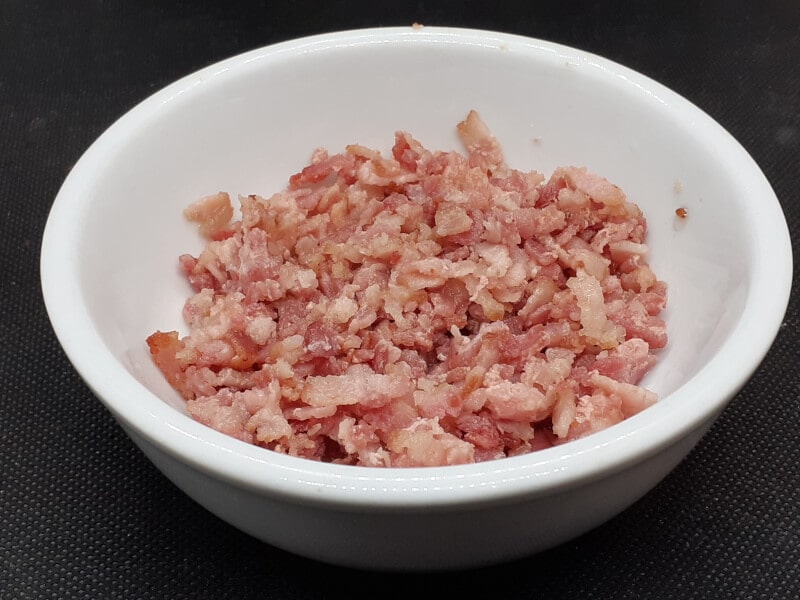
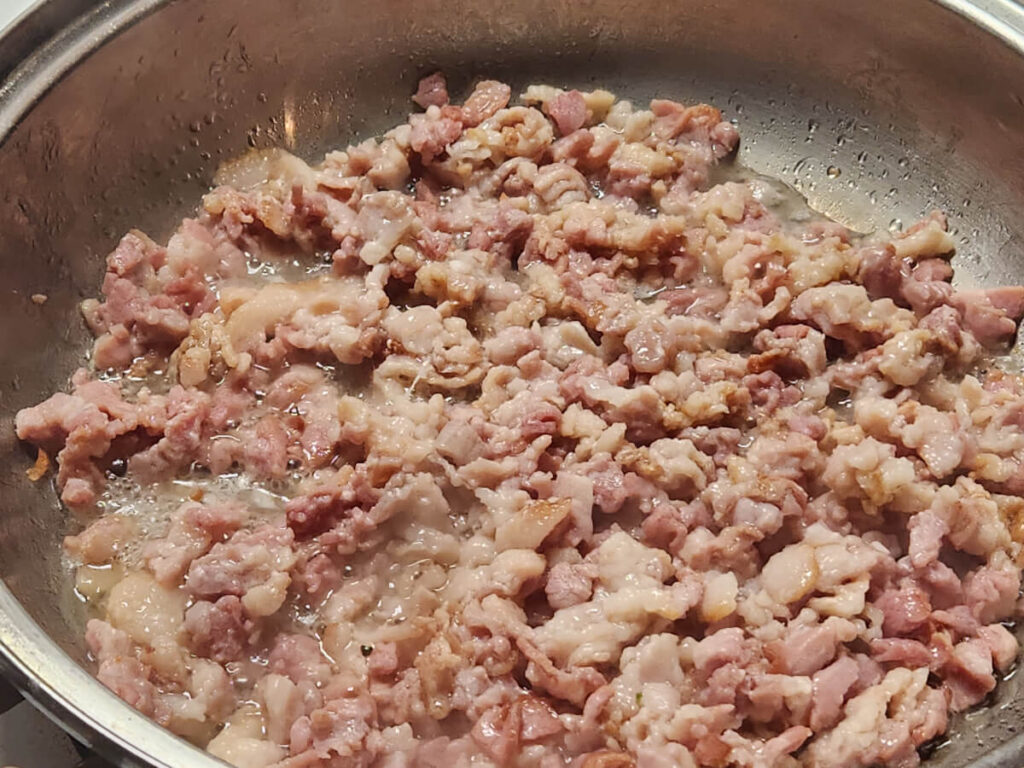
The old way was to cook up bacon slices and then chop them into 1/2-inch sections, or chop into 1/2-inch sections and then cook. Pizzerias today use a crumble mix. To achieve the same at home, mince the bacon and cook it in a pan while covered over medium heat. This in effect steams the bacon, and then it is cooked without a lid until crisp to get almost the same as a pizzeria.
How to Cook Pizzeria Style Bacon
Mince the bacon and cook in the skillet over medium heat while covered until the fat renders out, and then finish cooking uncovered to start crisping the bacon. Strain out the bacon grease and save for other recipes. Set the bacon bits aside to top your pizzas.
Italian Deli Meats
There are all kinds of deli meats you can get. Perhaps one of the best is the Italian deli meats you can buy at the local grocery store. These can be chopped into smaller pieces for better pizza coverage.
Onions
Prepare the onions however you like. Slice them, dice them, or cut them into thin rounds for onion rings. I prefer thinly sliced onions scattered over the top. You can also use red onions, white onions, or shallots.
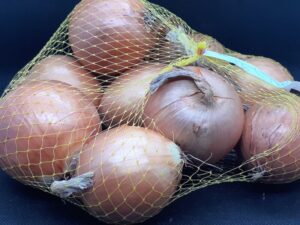
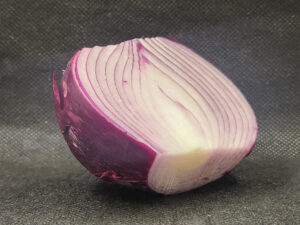
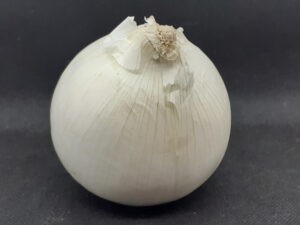
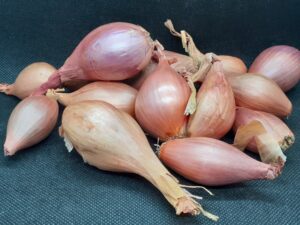
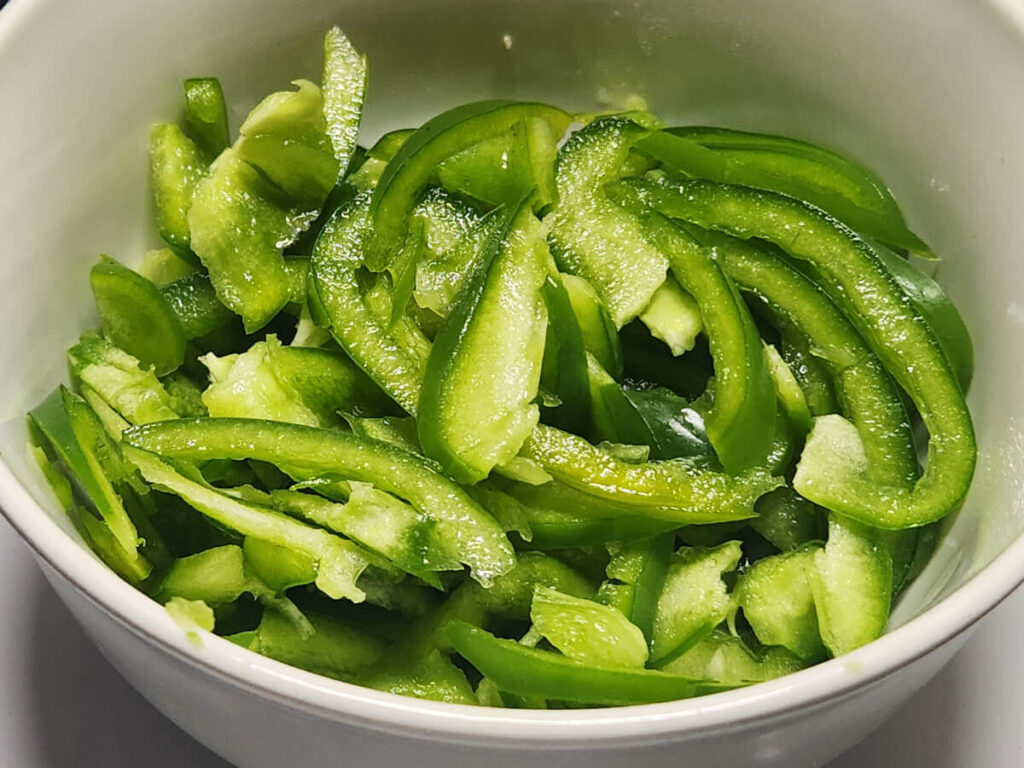
For certain pizzas I prefer the onions sliced into slivers. To do this, slice the ends off the onion and then slice in half. Slice half of the onion in half again across the width, then slice into slivers end to end. You can also do this with peppers.

Mushrooms
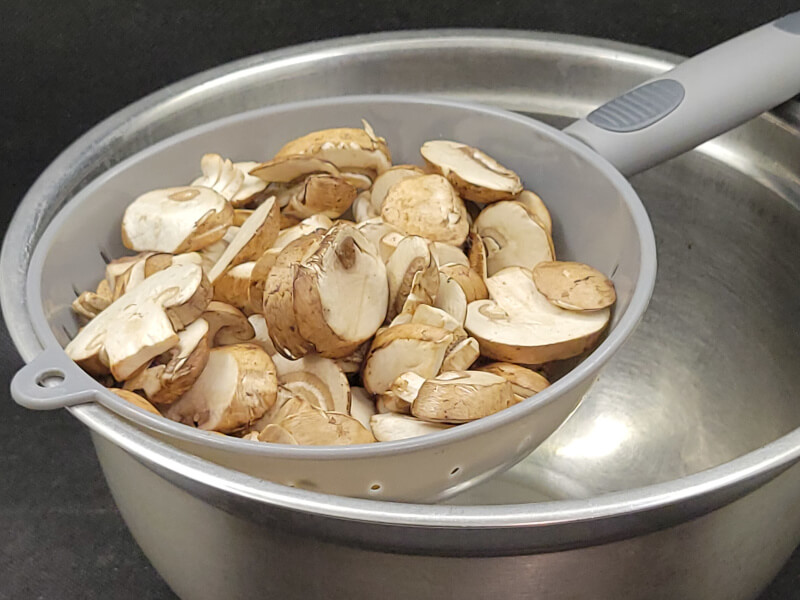
Quickly wash the mushrooms well before slicing them by hand or with a food processor fitted with a slicing blade. You want to wash the dirt off, but you don’t want the mushrooms absorbing too much water.
For larger pieces, quarter or thick-slice the mushrooms. You can sauté them in ghee first or add them directly to the pizza. Try other varieties too, such as Cremini or Portobello.
Peppers
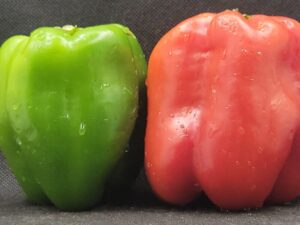
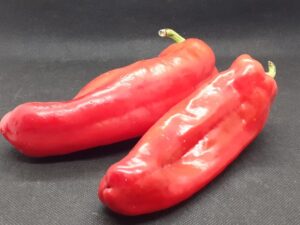
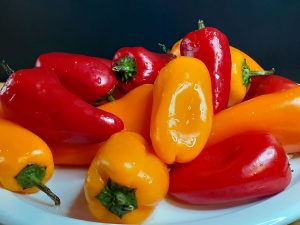
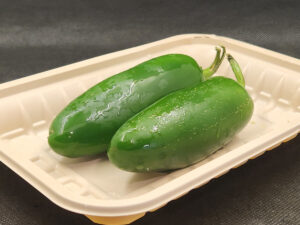
Prepare the peppers just like onions. Slice them, dice them, or cut them into thin rounds. I prefer them diced or thinly sliced. You can also add specialty peppers such as jalapeños, serrano peppers, long red sweet peppers, or banana peppers.
Tomatoes
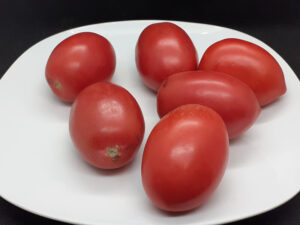
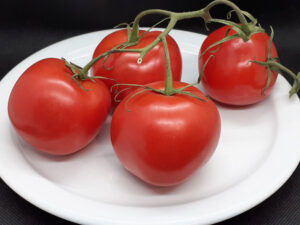
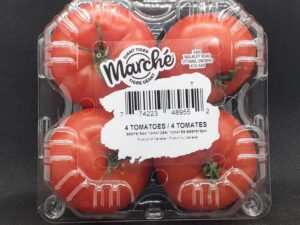
Tomatoes are either thinly sliced and left whole or sliced in half, or the tomatoes are diced and then rinsed to remove the seeds. Fleshy tomatoes like beefsteak, Roma, or even cherry tomatoes sliced in half all work.
Olives
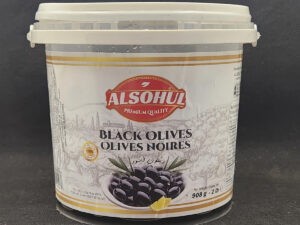
Both sliced green & black olives. You can also go with torn olives. These are whole olives with the pit. The flesh is torn off to remove the pit, leaving behind chunky pieces of olives.


Pineapple
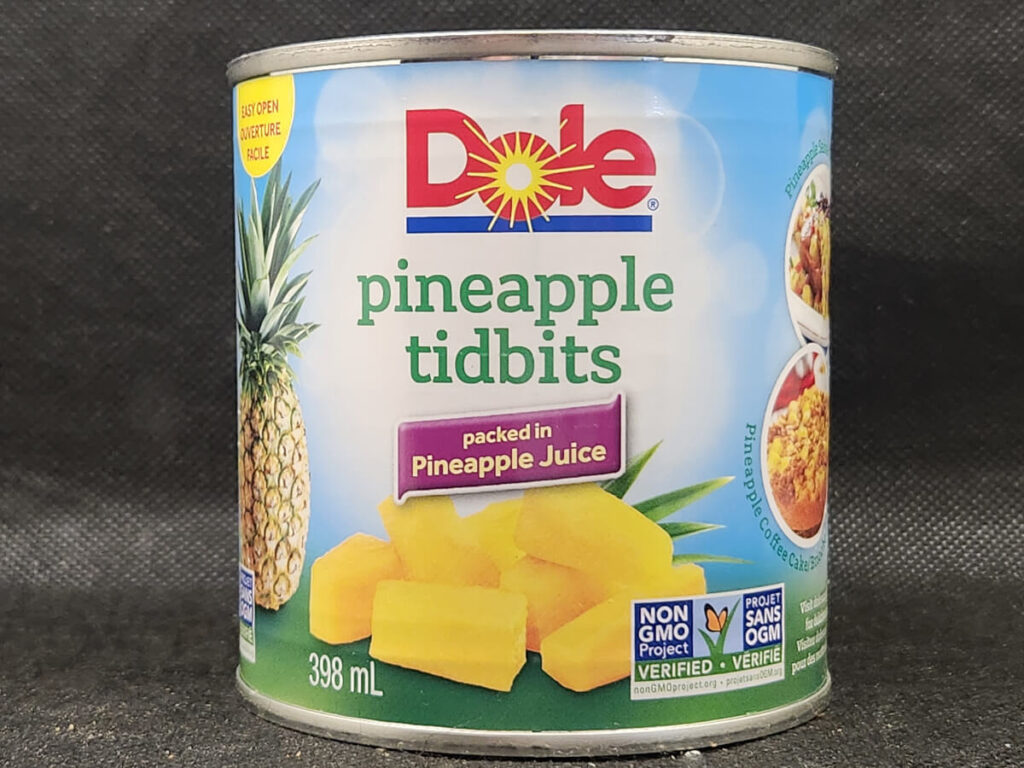
Pineapple chunks or tidbits from a can or from a whole pineapple sliced and diced into tidbits or pieces.
How much Pizza Toppings
How much pizza toppings to add for a particular pizza depends on how many different toppings are being added to the pizza. The more toppings you add, the less of each topping you need. This is because you want primarily a balance of flavors. Additionally, you don’t want to add too much, which would weigh the pizza down and possibly not cook all the way through or come out soggy.
Just the same as your cheese, most of the toppings are around the outer perimeter edge. So start your toppings and cheese or cheese and toppings on the outside edge and work your way in.

Order of Pizza Toppings
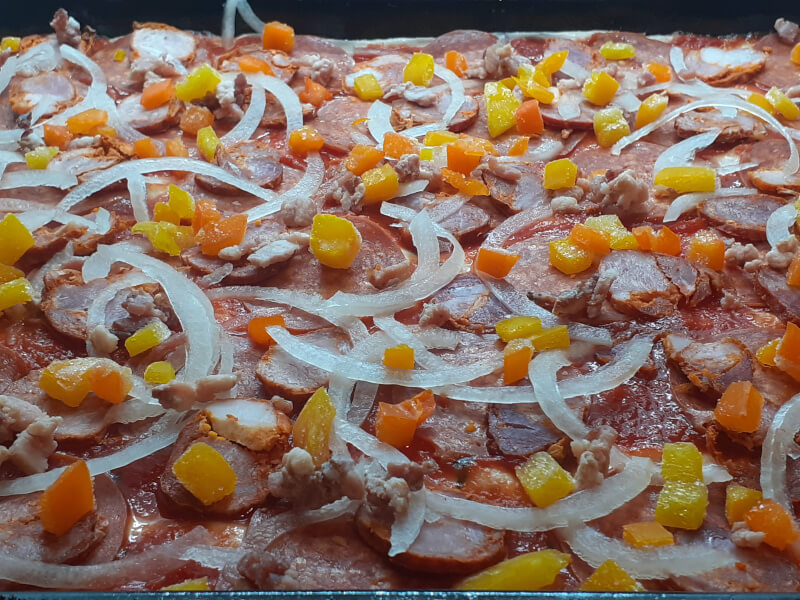
Build your pizza from the flattest toppings to the chunkier toppings. Start with flat meats, then bulkier meats, followed by the vegetables. Pizzerias organize their make lines around this same sequence to keep the topping process consistent.
Start with flat meats such as pepperoni, ham, salami, and bacon. Then add bulkier toppings like Italian sausage and ground beef, followed by the vegetables.
Pizza toppings under or over cheese
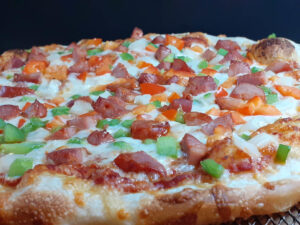
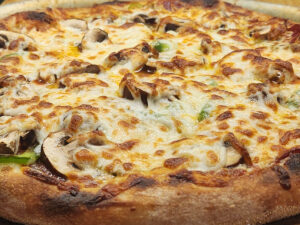
Pizzerias have debated this for years, but many now place the toppings on top of the cheese. This makes the pizza easy to identify, protects the cheese, and lets the topping juices add moisture. A drizzle of olive oil can also boost moisture and help create those desirable brown spots on the cheese.
Others prefer cheese on top because it traps the topping juices in the sauce and helps hold the toppings in place. You could also do cooked toppings under the cheese and uncooked toppings over the cheese.
Ultimately, the choice comes down to preference. Older pizzerias often placed the cheese on top, while many modern pizzerias put the cheese down first and add the toppings afterward.
Olive Oil on Cheese
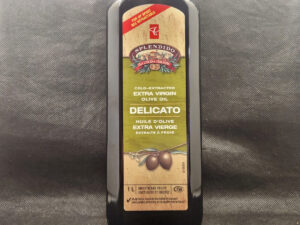
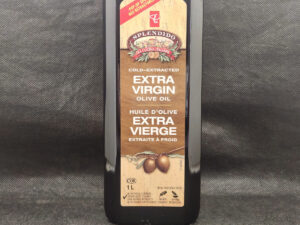
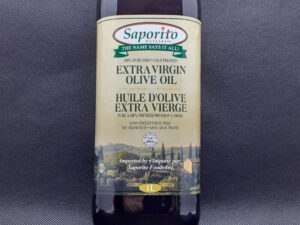
I really do like the addition of an olive oil drizzle on the pizza. You can also flavor the olive oil with black pepper, chili flakes, garlic, and so on. Traditionally in Italy, the olive oil is drizzled in a spiral shape over the cheese before going into the oven. The below Splendido olive oils have a spout on them for drizzling, which is a really neat feature.
Pizza Shakes
Pizza shakes are a blend of ingredients that can be sprinkled over the pizza to add more flavor. Common ingredients added to pizza are red chili flakes and shredded hard cheeses like Parmesan, Parmigiano Reggiano, Romano, etc…
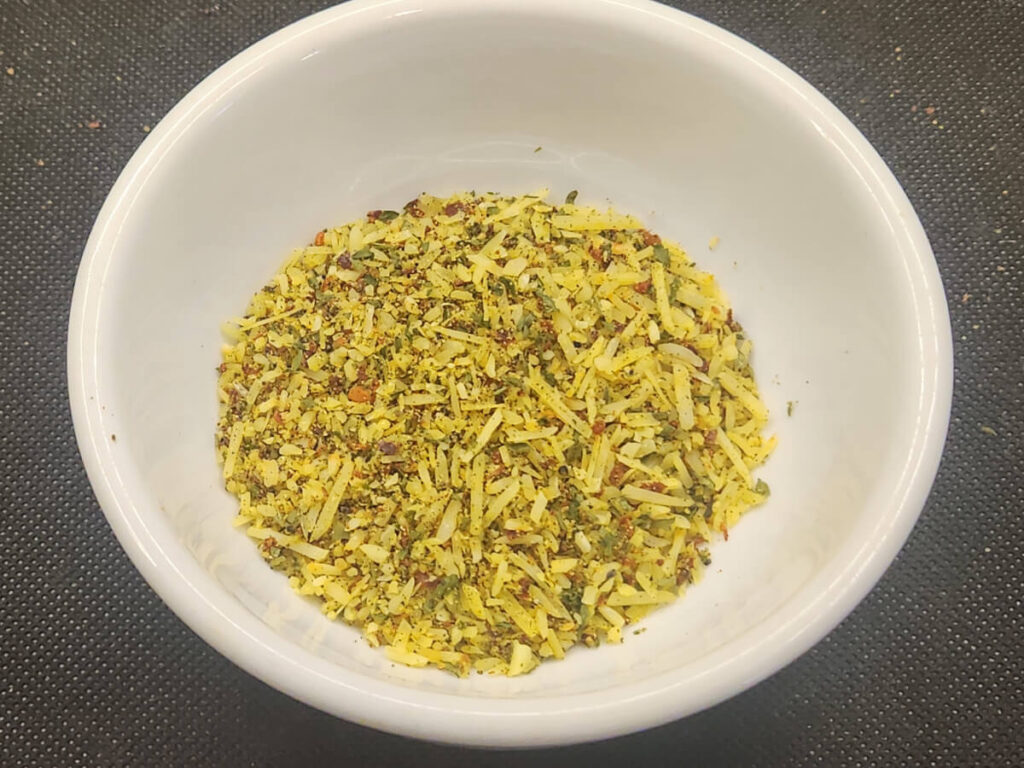
One such Pizza Shake that I really enjoy is listed below. The cheese makes up the bulk of it.
Pizza Shake
- Parmigiano Reggiano, or a cheese blend of parmesan, asiago, and romano
- Aleppo
- Parsley
- Butter Popcorn Seasoning
- Onion Seeds
Pizza Combinations
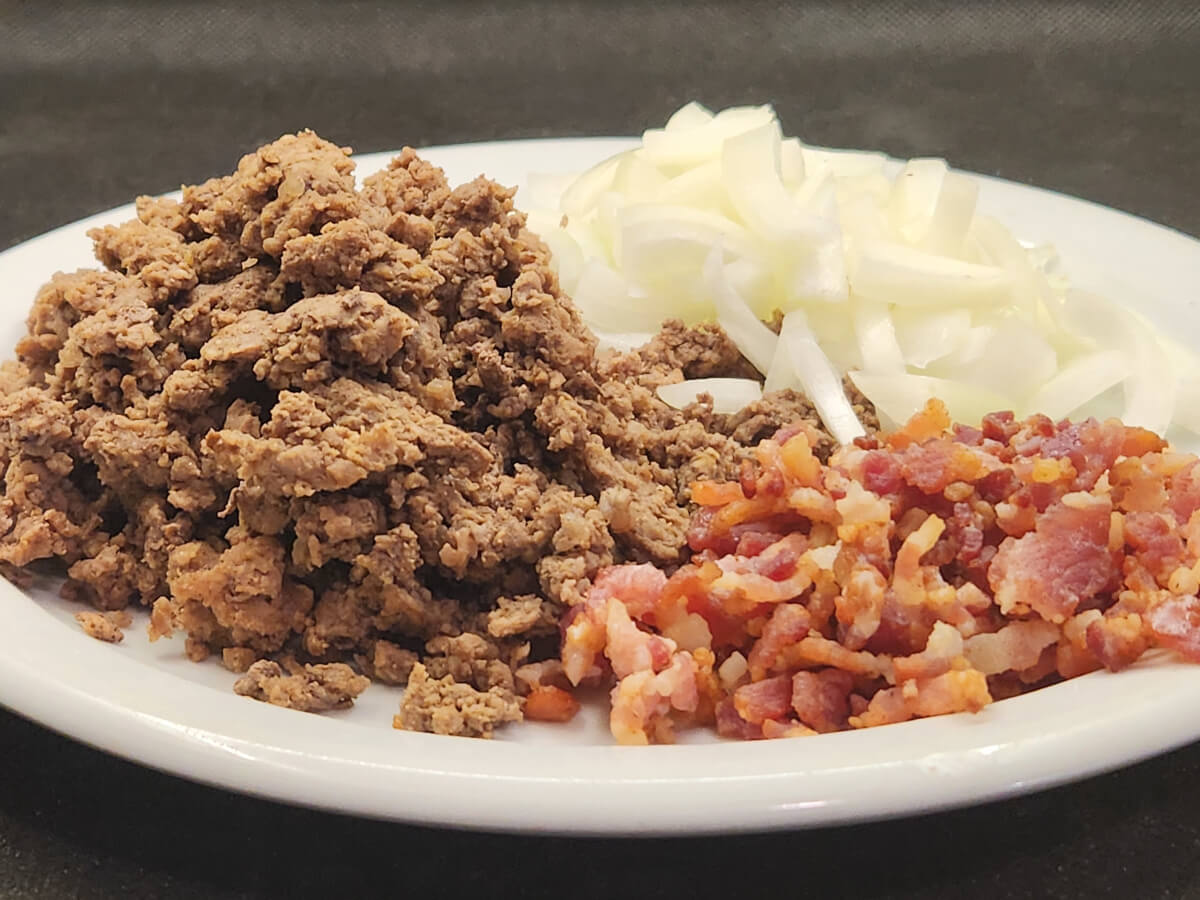
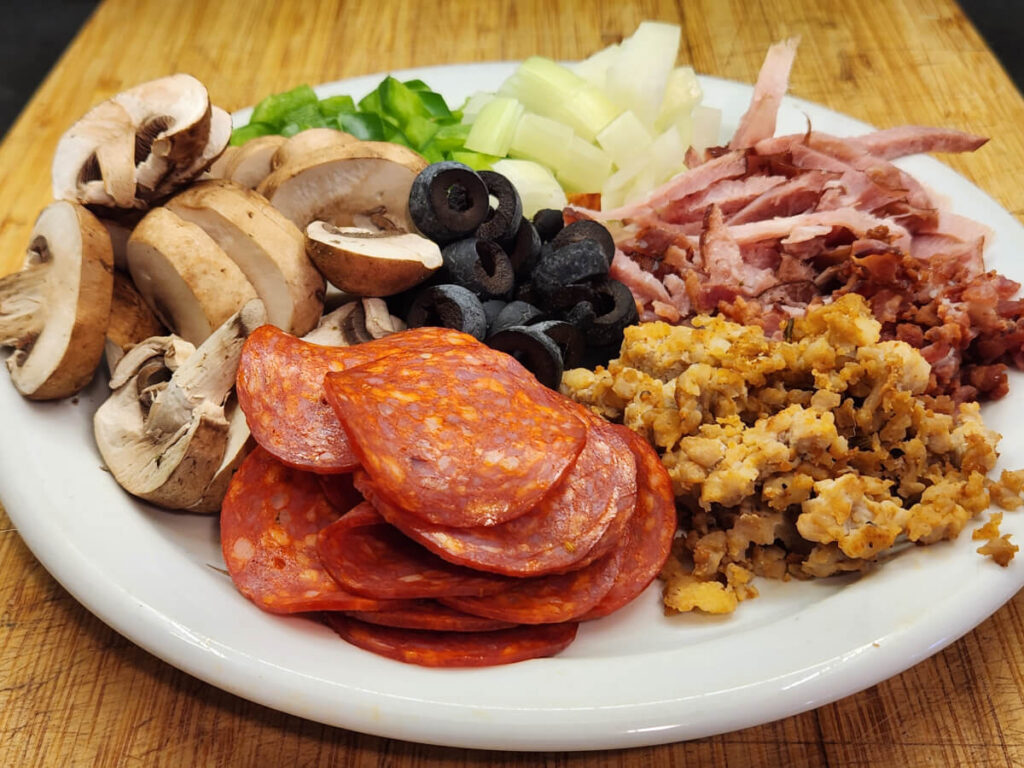
Other ideas are below and what has been made right here at JAHZKITCHEN. It shows the various topping combinations all together on a plate. If you’re making a bunch of pizzas, this is really useful to keep track of what you are making and stay organized. Just assemble all the toppings you want for each pizza on its own plate and pop them out one at a time.
PKS Pizza
One of my favorites is the PKS Pizza made with pepperoni, bacon, and Italian sausage. With or without onions & olives.

Cheeseburger Pizza
Bacon, Ground Beef, Onions. With or without mushrooms. Also known as the Cheeseburger Pizza. For the Cheeseburger Pizza, I like the onions sliced into slivers. A bit bulkier than thinly sliced onions.
Canadian Classic
Pepperoni, bacon, and mushrooms are what make the Canadian classic pizza.

Maritime Classic
Pepperoni, green peppers, and mushrooms make the Maritime Classic Pizza.

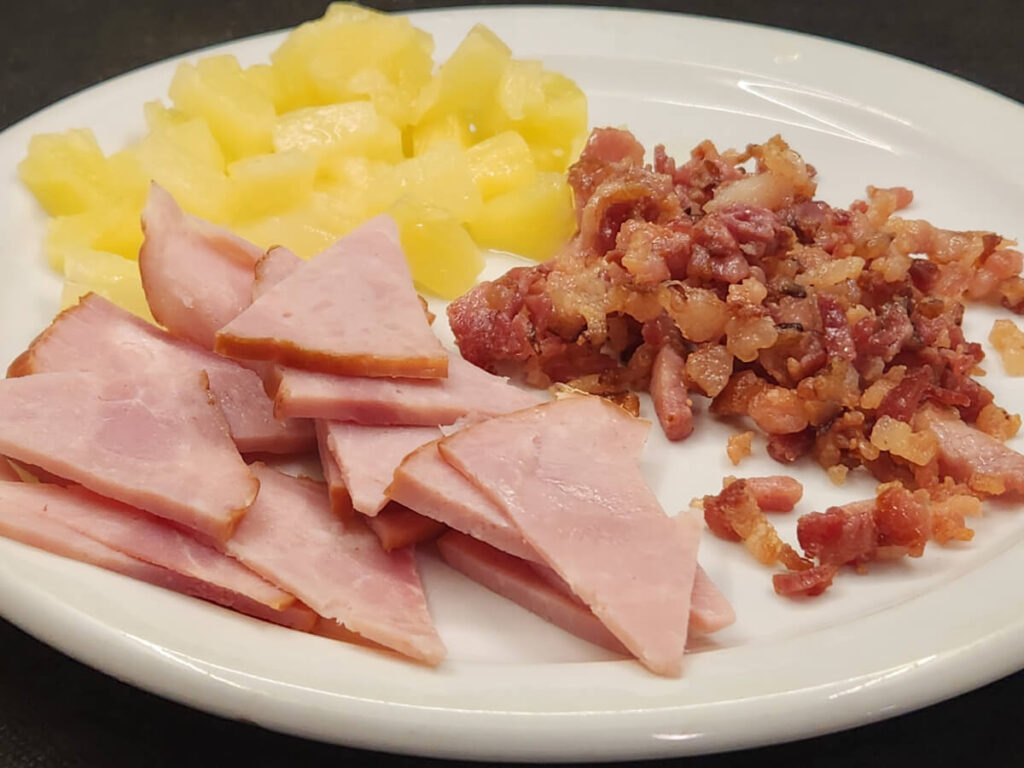
Hawaiian
A Canadian Hawaiian pizza is either bacon or ham with pineapple. However, for me, it’s got to have both ham & bacon.
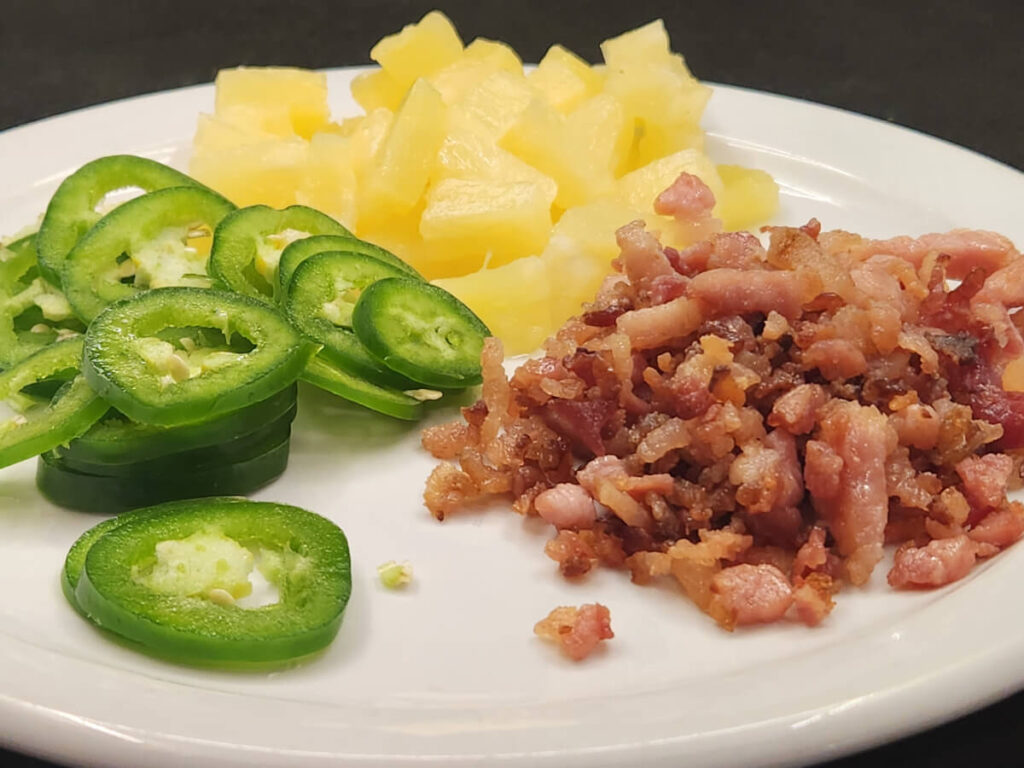
KNJ
A KNJ pizza is a very tasty pizza with a bit of heat. Made with bacon, jalapeños, and pineapple.
The Works
This Works Pizza is topped with pepperoni, ham, bacon, Italian sausage, onions, mushrooms, peppers, and black olives. The ham can be swapped out with ground beef or salami. The bacon can be regular bacon bits or Canadian bacon.
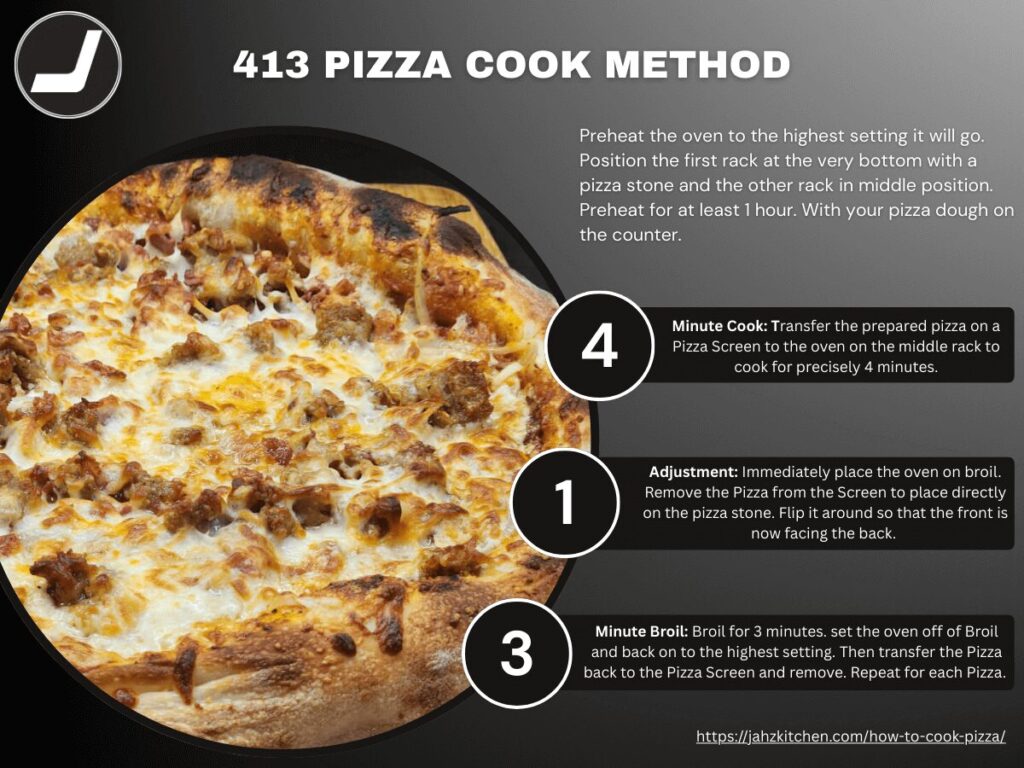
413 Pie Cook Method
Now that you know how to prepare the toppings and assemble your pizzas, it’s time to cook them, and the 413 Pie Cook method is a technique used for homemade pizzas in the oven to produce takeout quality at home.
Bagel Crust Pizza
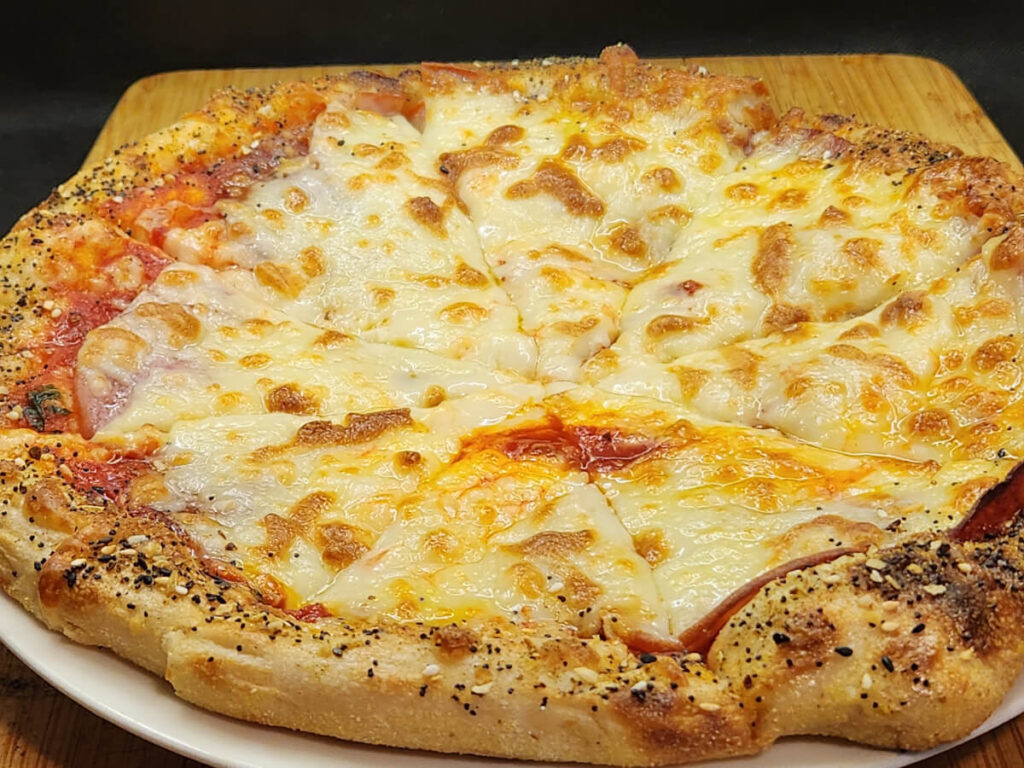
A bagel crust pizza is another topping you can add to finish the pizza and give you that bagel bite in a pizza! After the pizza is cooked, the crust is brushed with garlic sauce, and everything bagel is sprinkled all the way around the crust.
There are so many more pizza combinations that have been made right here on JAHZKITCHEN. Some with different pizza doughs, sauces, and cheeses. Check out our Pizza category below to see more and enjoy your Pizza Night!
