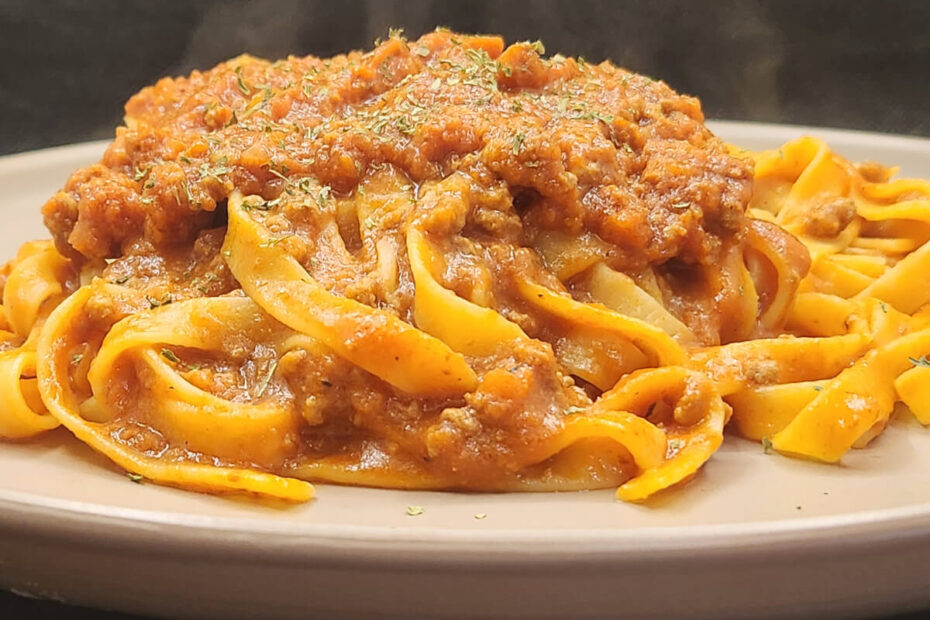
We’re making a big pot of Bolognese sauce and serving this with some tagliatelle pasta for an incredible plate of Ragu alla Bolognese. Although the Bolognese can be served with other broad pastas like pappardelle and even short sturdy and rigged pastas like Rigatoni or Penne Rigate. This recipe makes a large batch of Ragù (about, 2500g or a bit more) and requires patience and time to develop the rich brothy flavors in a good bolognese sauce. With plenty of leftovers to make other bolognese-based dishes.
Ragu alla Bolognese Ingredients
Pasta, Pasta Water (Water & Sea Salt), Bolognese (EVOO, Onion, Carrot, Celery, Tomato Paste, Wine, Ground Beef, Ground Pork, Sea Salt, Black Pepper, Passata, Water, Milk or Cream).
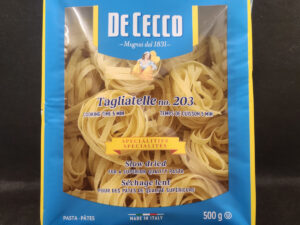
Pasta
With this type of dish, what we’re looking for is any broad pasta. This covers pasta like tagliatelle or pappardelle. Although, short pastas like rigatoni or penne rigate can be used too. Really any kind. The key is to thin out the Bolognese or Ragu sauce to use with various types of pasta.
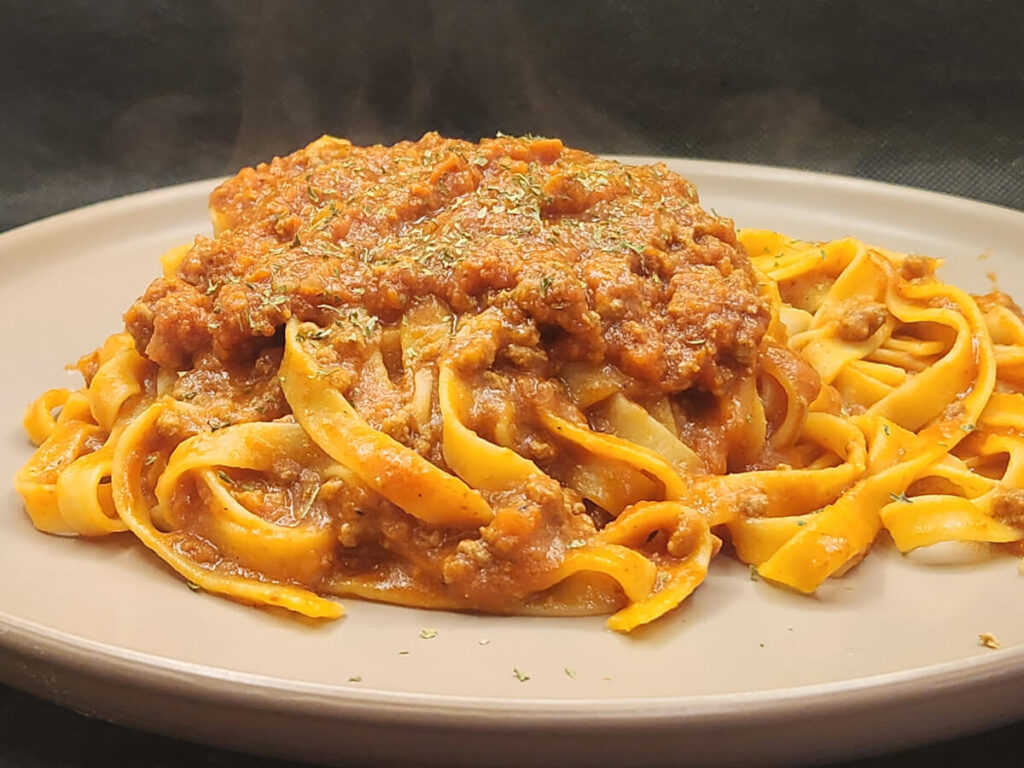
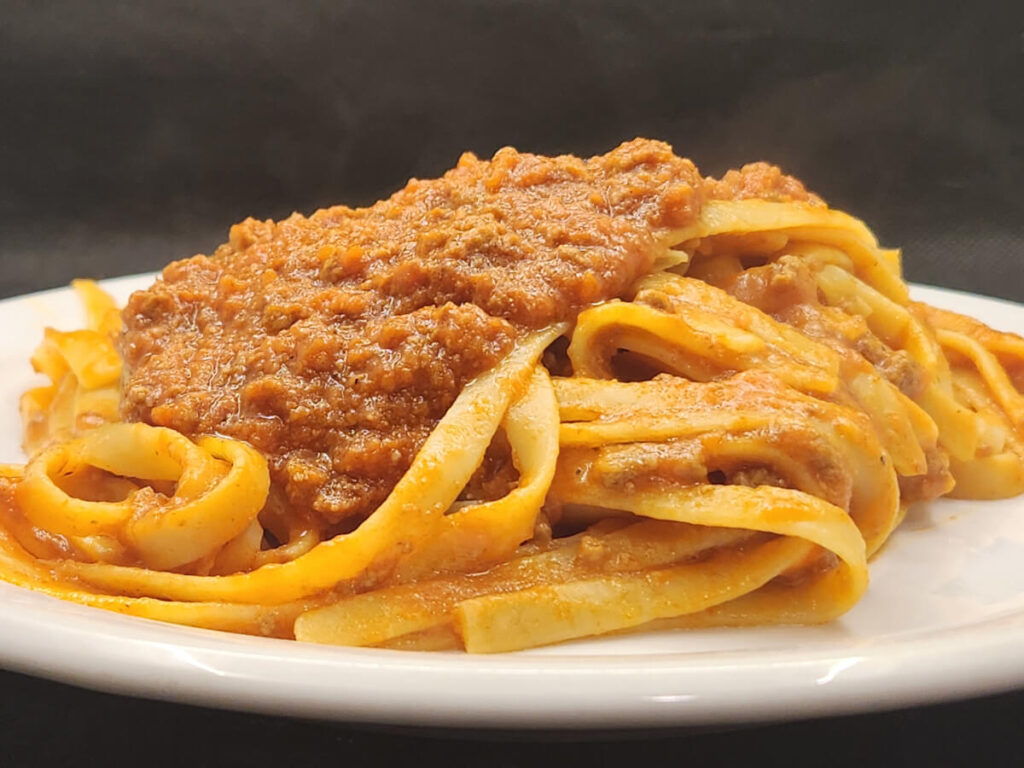
Tagliatelle al Ragù
Made with 500g of Tagliatelle Pasta boiled in salted water and pan tossed with Ragù also known as Tagliatelle alla Bolognese, when the ragu is specifically a bolognese sauce.
Fettuccine al Ragu
Using Fettuccine Pasta instead for a Fettuccine al Ragu. This dish is made with 450g of Fettuccine and tossed in 450g of Bolognese sauce in the pan. Then topped with additional Bolognese sauce heated in the pan after plating the pasta.
Spaghetti al Ragu
Although there is no such dish called Spaghetti Bolognese, and Bolognese is not typically served with Spaghetti because the spaghetti is too thin to hold the sauce. You can certainly thin out the Bolognese or Ragù sauce and serve it with Spaghetti just the same.
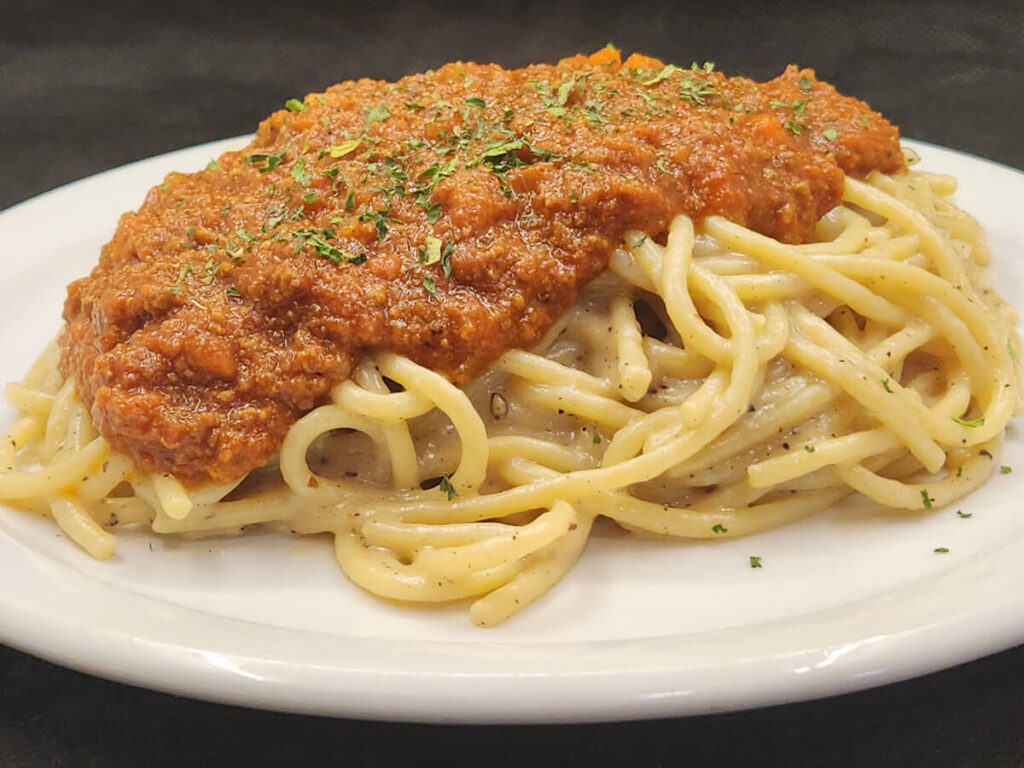
Cacio e Pepe with Bolognese
Almost like the Butter Parmesan Spaghetti. This is Cacio E Pepe with Bolognese sauce instead of a Tomato sauce. The Cheesiness and Black Pepper in the Cacio e Pepe is so complimentary to the Bolognese Sauce. The dish comes together beautifully.
How to Boil Pasta
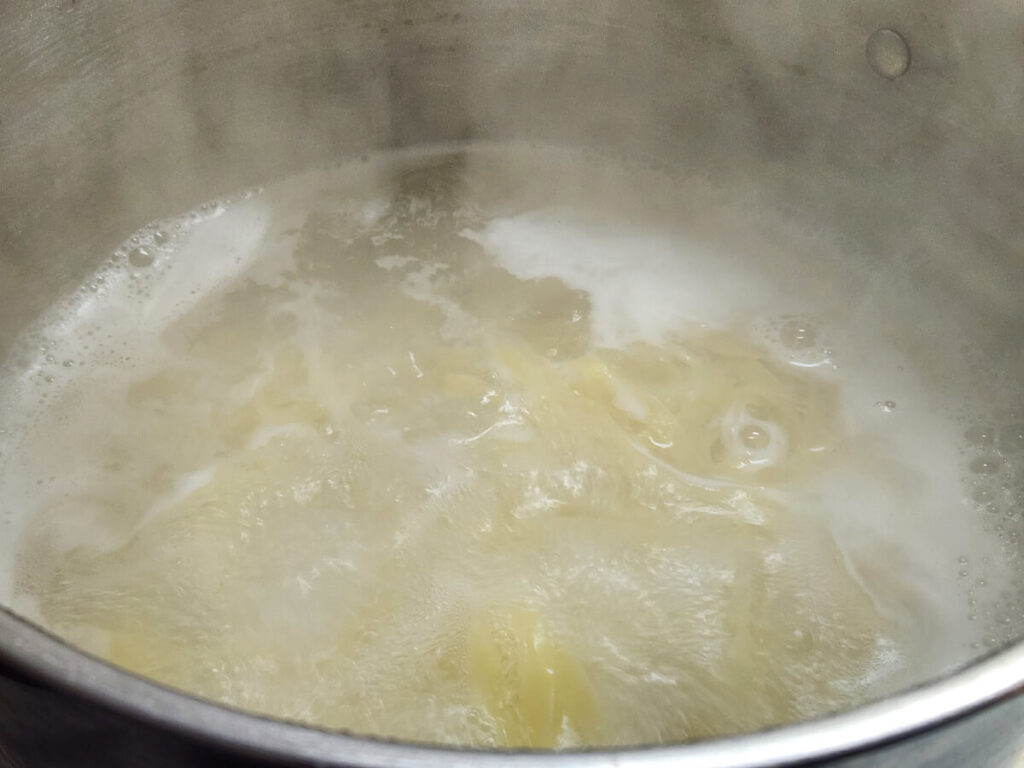
Boil the dry pasta in 16 C of Water with 2 Tbl of Sea salt until al dente. From here it goes into the pan with sauce to toss aggressively to rub off the starches and create a thickened sauce that adheres. Pasta water is added as needed to adjust the consistency.
While the type of pasta (tagliatelle) I used for this recipe stated to boil for 5 minutes. I found it took 8–9 minutes before it was transferred to the pan with sauce to mix. Although this was the whole package of Pasta and not just a round. No matter the type of pasta, cook until al dente and transfer to the pan.
Bolognese vs Ragu
Ragù is a category of Italian meat sauces that are simmered slowly to develop depth and richness. While Bolognese is a type of Ragu. Ragù alla Bolognese is a specific regional variation that originated in Bologna, Italy. Traditionally, it is served with fresh tagliatelle and the dish is called Tagliatelle al Ragù. When paired with other pasta shapes, it is typically referred to as “pasta name” al ragù.
Bolognese Sauce
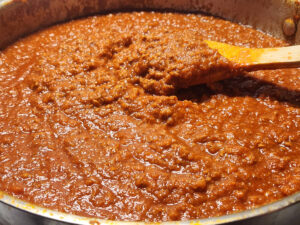
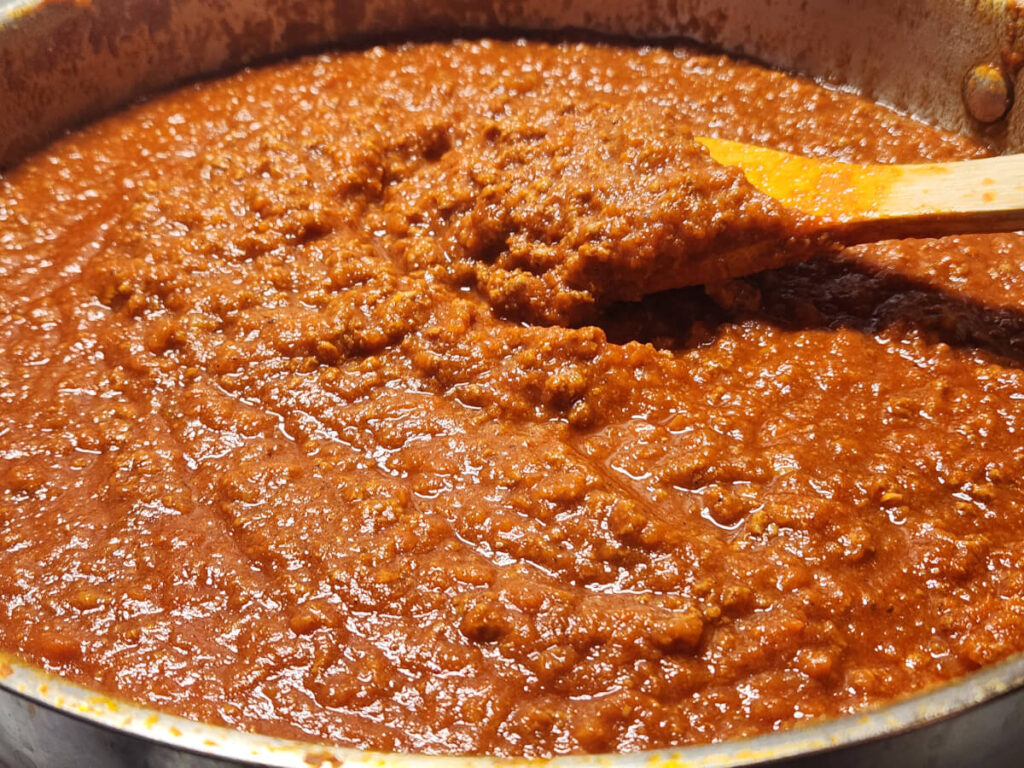
Bolognese Sauce is a type of ragu. It takes a lot of time to prepare the Bolognese sauce, and this is because you want it to simmer for at least 4 hours to create that deep beefy broth taste enhanced with the soffritto.
Also, when creating the Bolognese sauce, you can include or omit the wine, based on preference. I tend to include it, and it does add to the sauce. While white wine can be used, it is better with red wine. This Bolognese sauce can also have the Black Pepper increased or added to taste.
The meat sauce is the combination of Bolognese sauce mixed with Pasta & Pasta water to create the final sauce. It should adhere to the pasta and even bits of meat sticking to the pasta.
This recipe make about, 2500g of Ragù or slightly over. So there are plenty of leftovers to make this dish again. The Bolognese sauce also freezes really well, so you can portion out the sauce and freeze. Just use Pasta water to adjust the consistency when tossing in the pan with the pasta.
How to make Bolognese
We’re just making a thinner Bolognese sauce and for that reason, we add 3 extra cups of water to keep it thin but still simmer for at least 4 hours to create those deep rich flavors that are only achieved with a nice long low simmer.
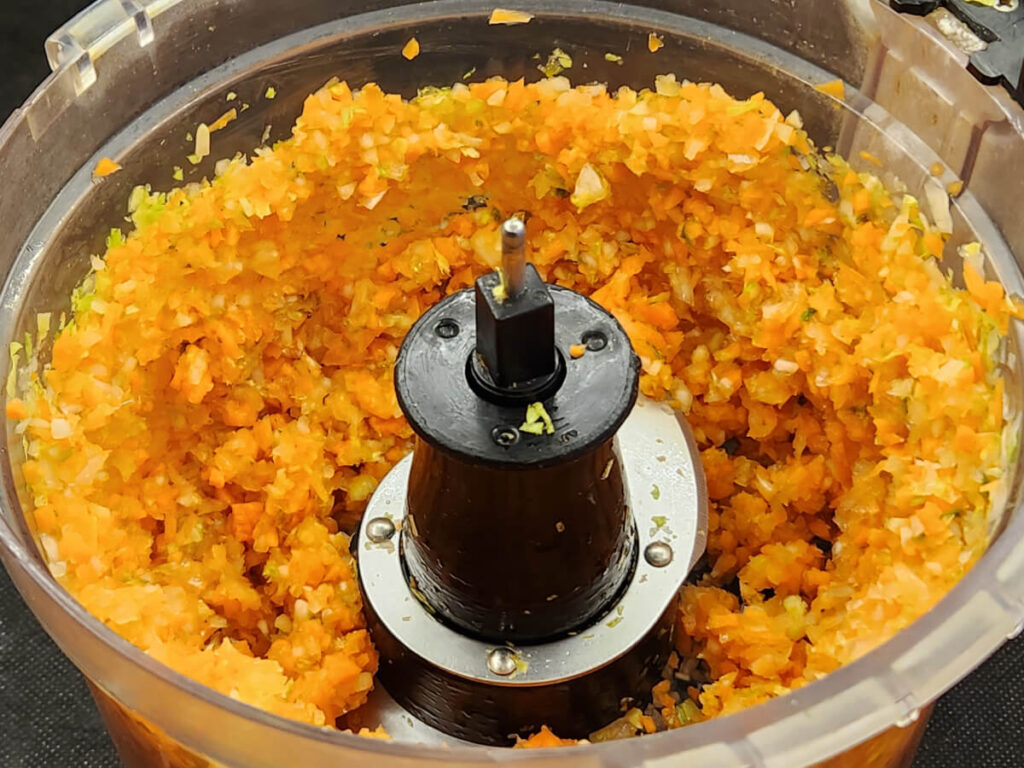
Soffritto
Place roughly chopped Onion, Carrot and Celery into the food processor and process until they are in small pieces.
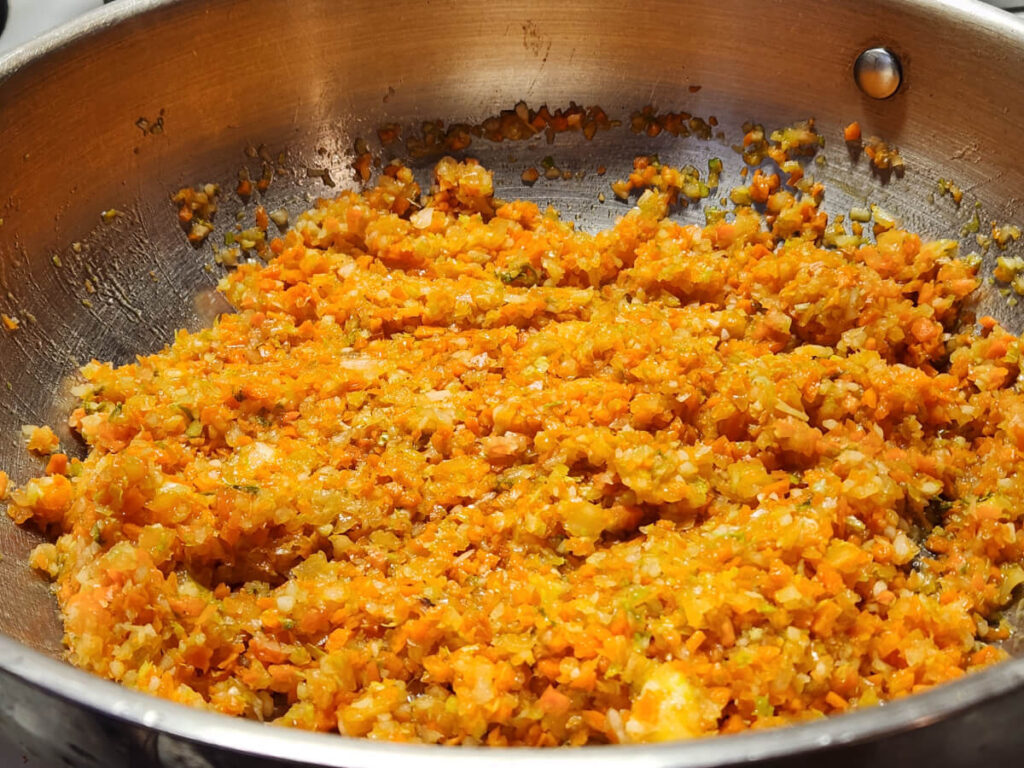
Cooked Soffritto
Empty the Soffritto into a sauce pot with EVOO or a 50/50 mix of EVOO & Butter over medium heat and cook while mixing for about 10 minutes.
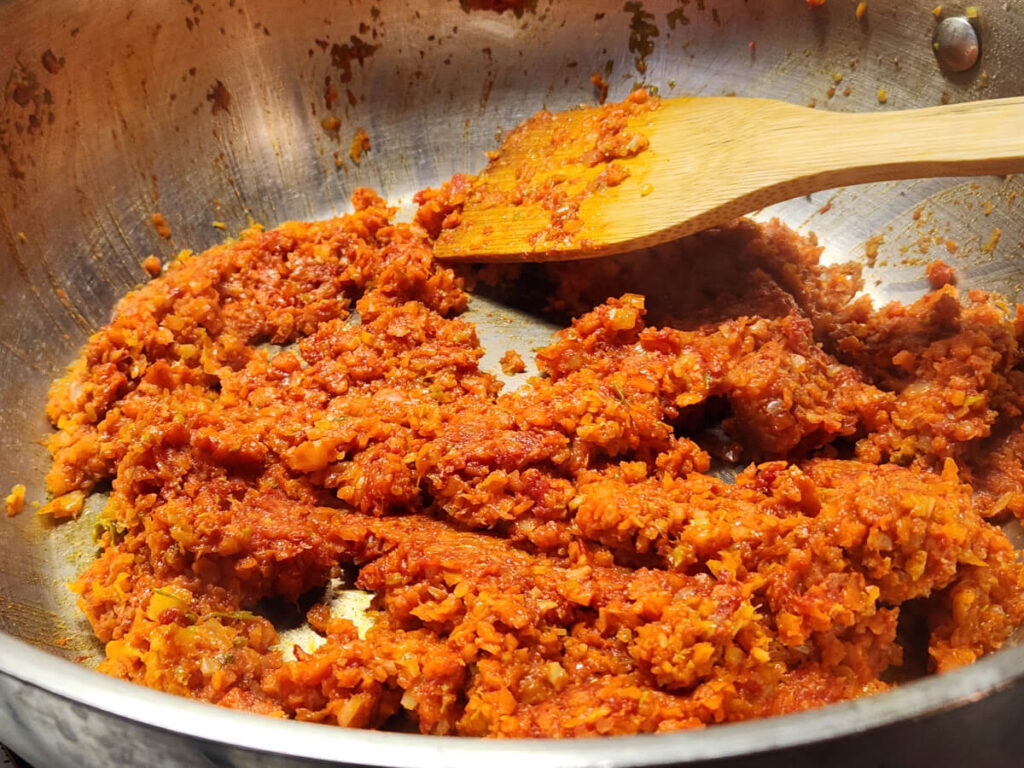
Tomato Paste
Add tomato paste and mix it in very well.
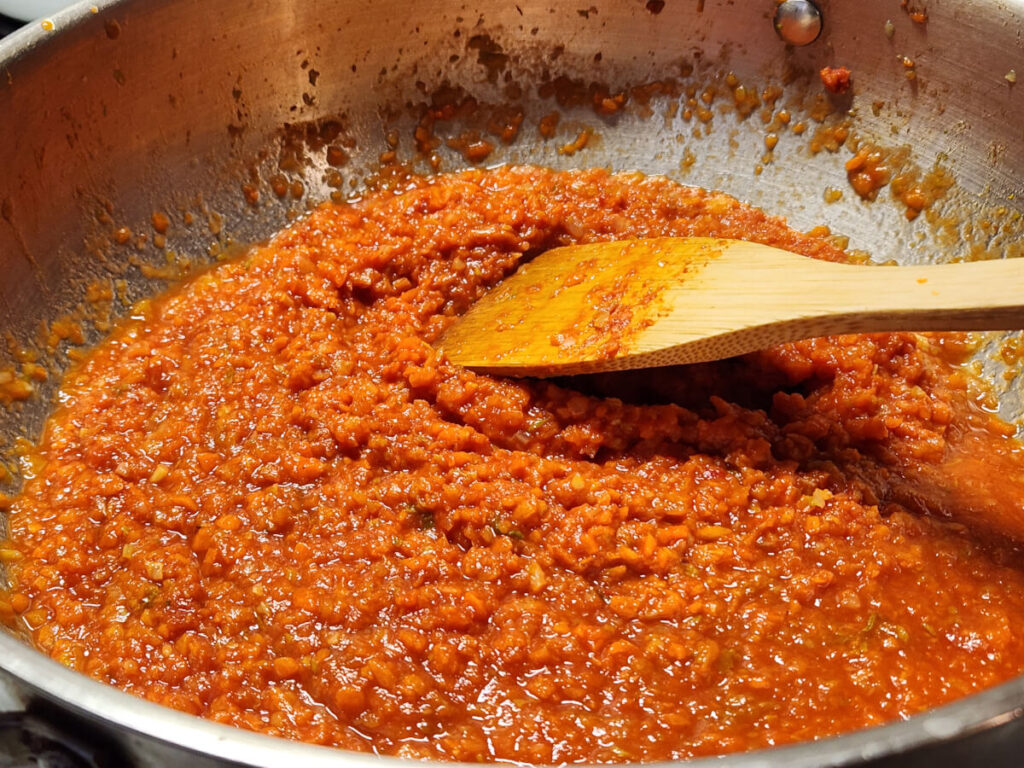
Wine
Add either White or Red Wine and continue to cook until reduced by half.
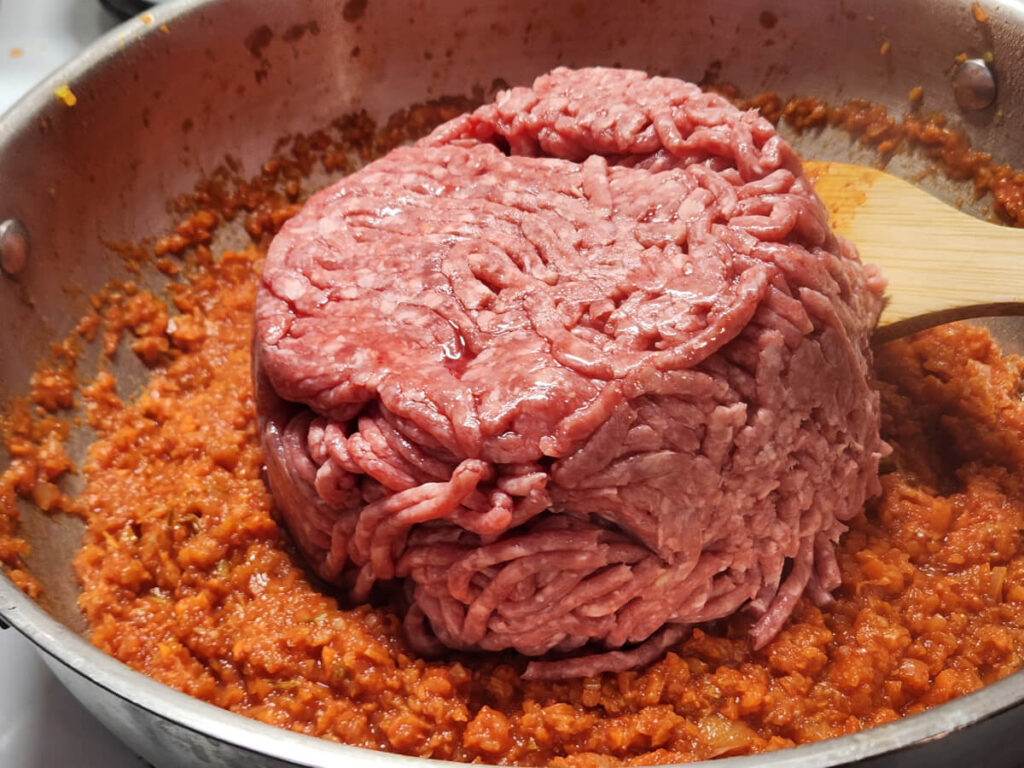
Meat
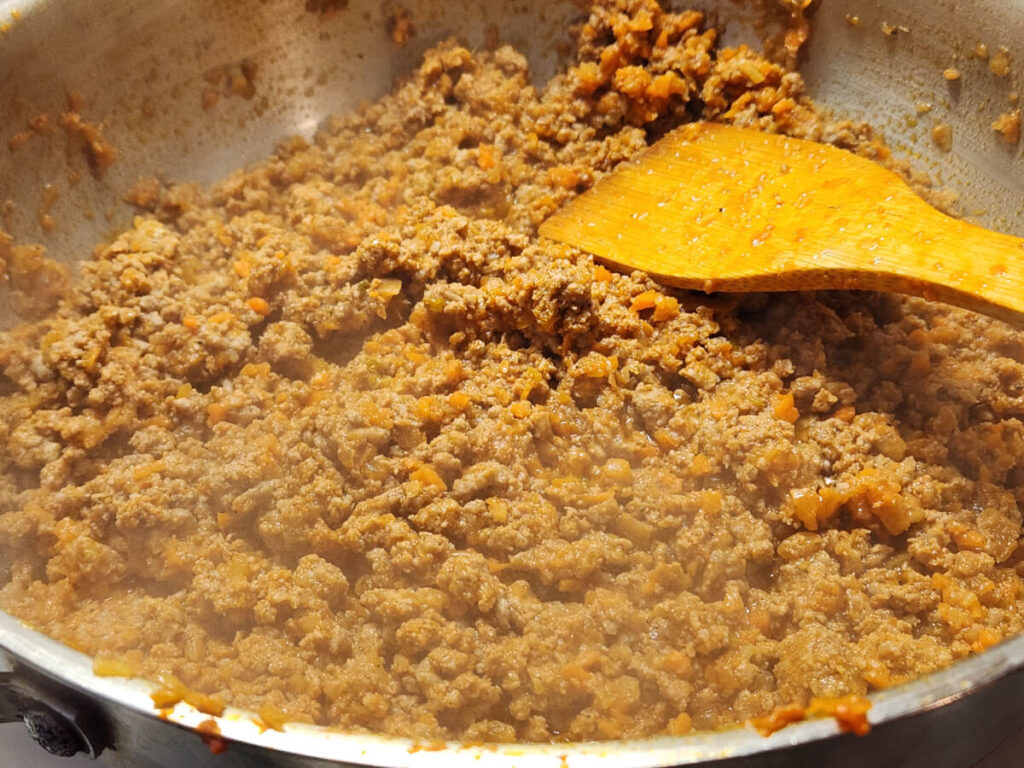
Add the meat along with Salt & Pepper and break it down while mixing.
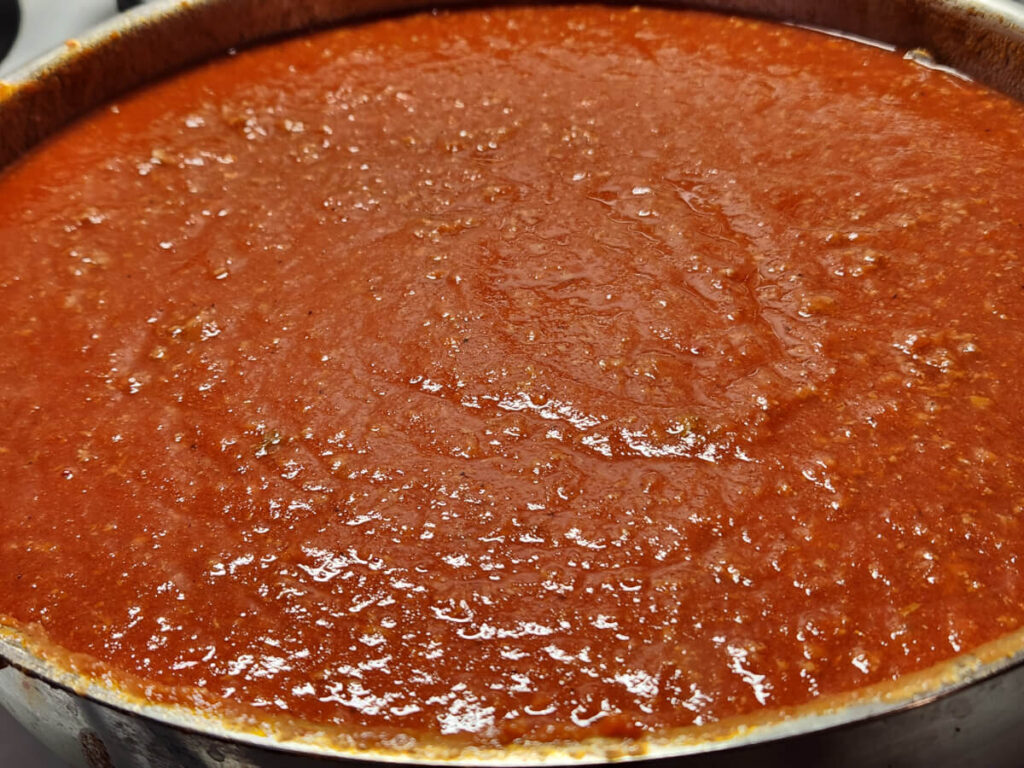
Sauce
Empty the passata in and add 8 Cups of water. Use 1 cup out of the 8 cups of water for each bottle to get all the sauce. Just pour it in, place the cover on, shake and empty into the pot. Give it a good mix and bring to a boil over max heat. Once it starts to boil, reduce the heat to low and simmer.
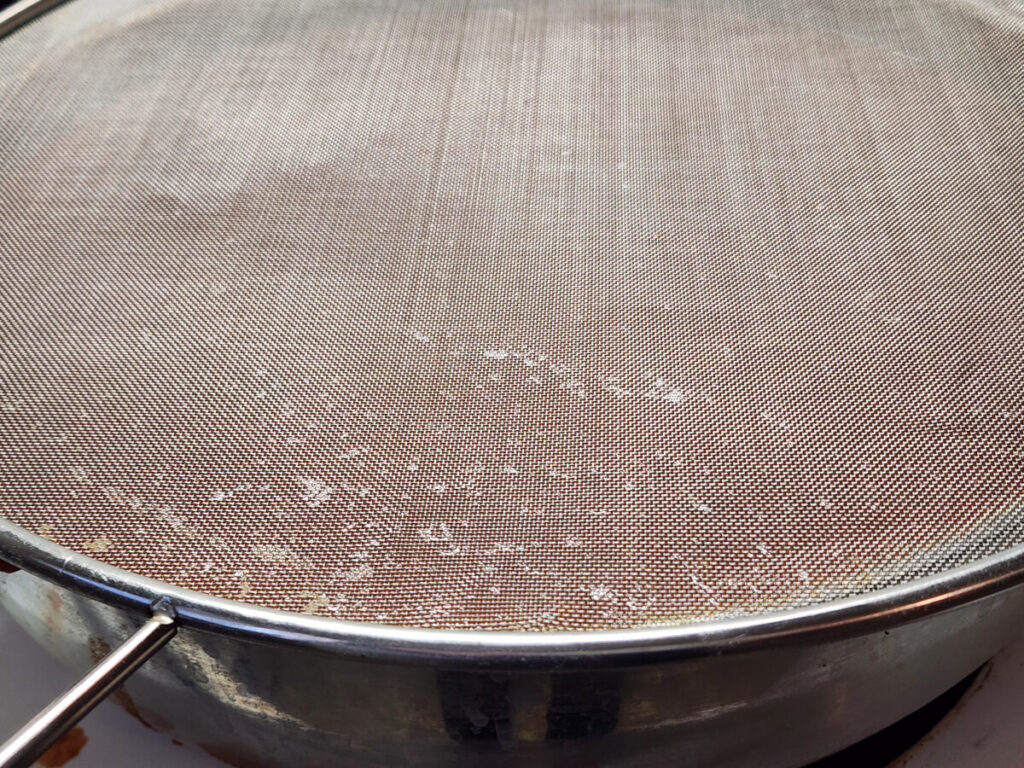
Prevent any splattering of the sauce by using a splatter screen or partially covering the pot with a lid. Give it a mix every once in while during cooking.
Add cream very last, mix well and remove from heat. Anywhere from 1/2 C to 1 Cup, based on preference.
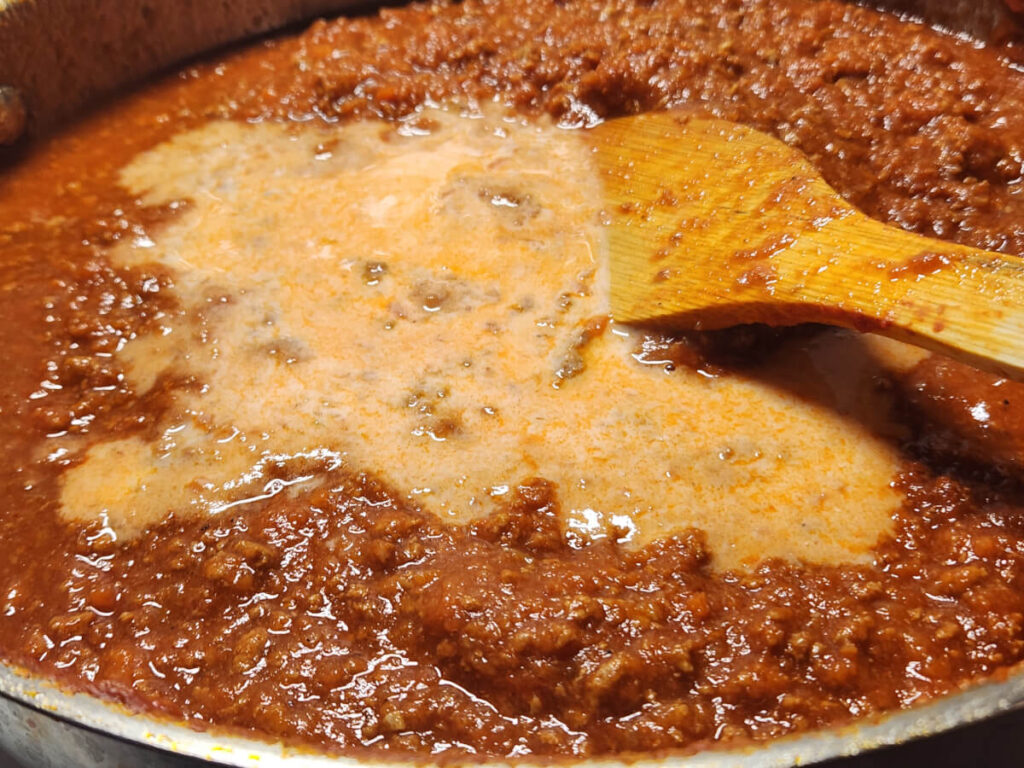
When to add dairy to Bolognese
Some sources state that the dairy needs to be added to the meat, and before adding wine. Because the dairy actually helps to tenderize the meat. Even before adding tomato paste in some cases. When the Dairy is added at this stage, it is cooked until completely evaporated. Then wine, followed by tomato paste and passata.
I’ve tried it both ways and don’t notice any difference. I mean, the long simmering already tenderizes the meat, that’s not the issue. For me, adding dairy is about rounding out the flavors and less to do with tenderizing the meat. I tend to default, adding dairy last. Although I do experiment in this area from time to time.
Pasta Serving Size
Weigh out about 100 g or slightly more of pasta and use about 100g to 150g of Bolognese sauce per serving. Water will be added to increase the sauce volume. With more sauce ladled over top to work out to about 200g of Ragù Sauce per 100g of Pasta for a serving. This, of course, is just a guideline, and you can use however much of either you desire.
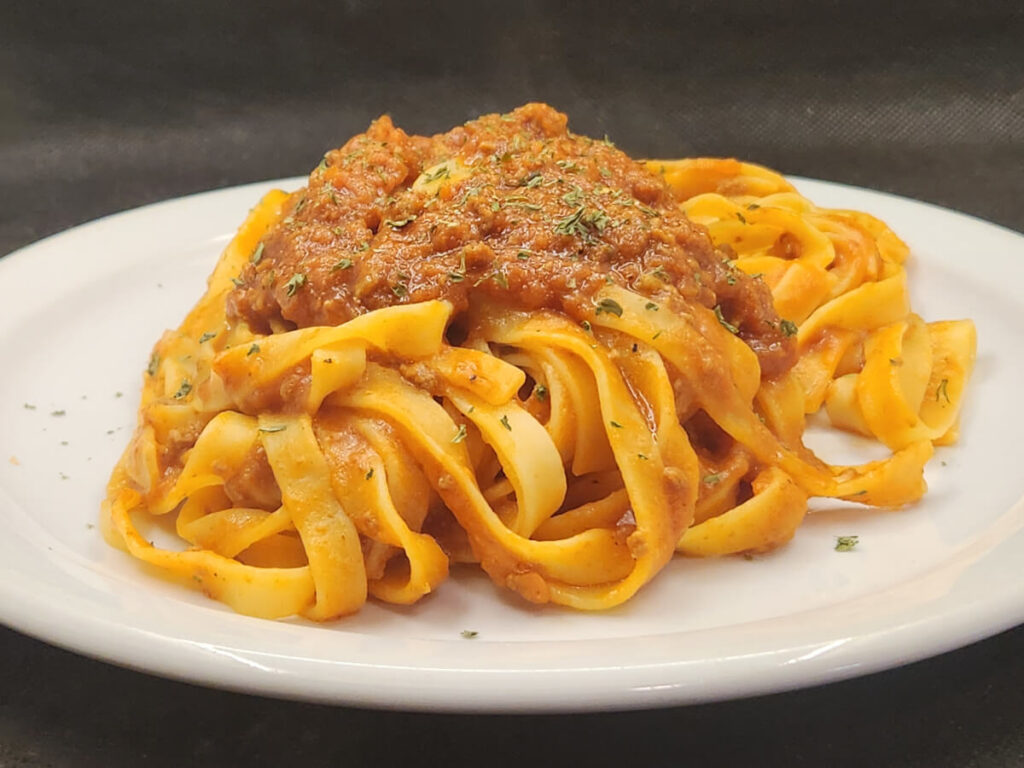
Pan Pasta
One of the key elements to a good pasta dish is the aggressive tossing of the Pasta and some pasta water to create a creamy sauce that adheres to the pasta. Once your Ragù sauce is made and portioned out for however many servings you are making. Place the Ragù into a pan and heat over medium low heat until the pasta is done.
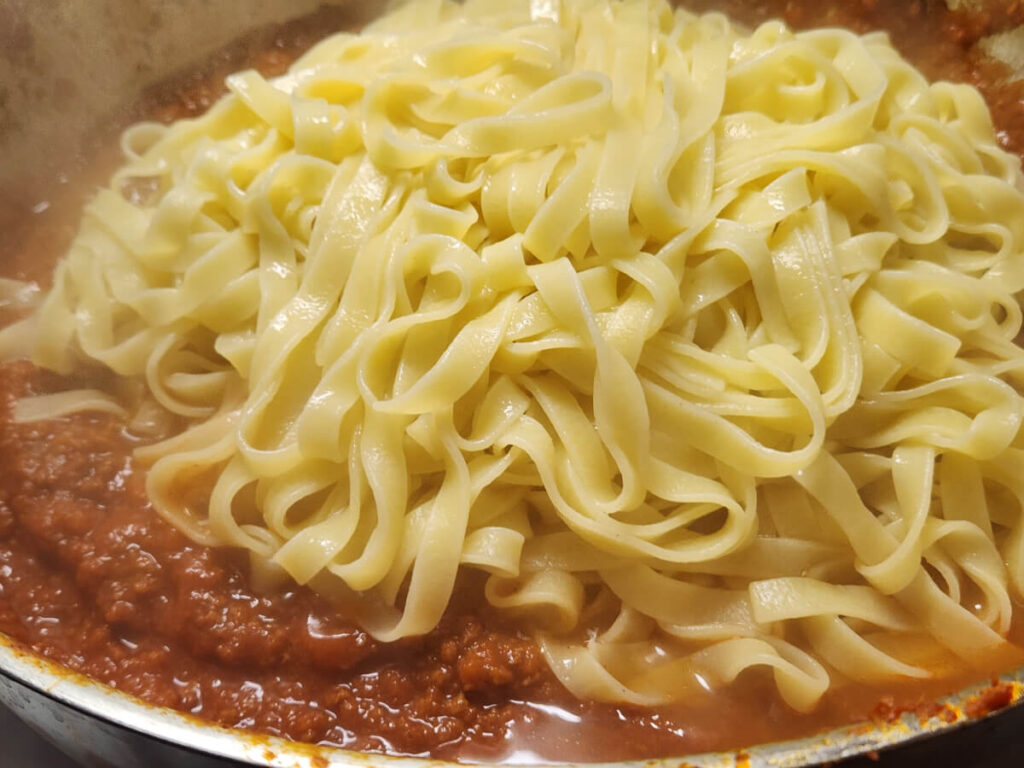
With tongs, pick up all the pasta and transfer to the pan with the portioned out ragù sauce. No need to drain out any carry over water. Just pick it up and transfer directly the to the pan. Add about an extra 1/2 to 1 Cup of pasta water and aggressively mix to rub the starches off and thicken the sauce. Push the pasta aside to gauge the consistency of the sauce and whether it is sticking to the pasta or not. Adjust as you see fit, adding more water if needed, or aggressively mixing more to thicken. I tend to shake the pan back and forth while mixing to thicken the sauce.
Once ready, plate the Pasta and any sauce left behind can be ladled over top. You can use more ragù sauce to place in the pan after the pasta has been removed to heat and ladle over the pasta before serving.
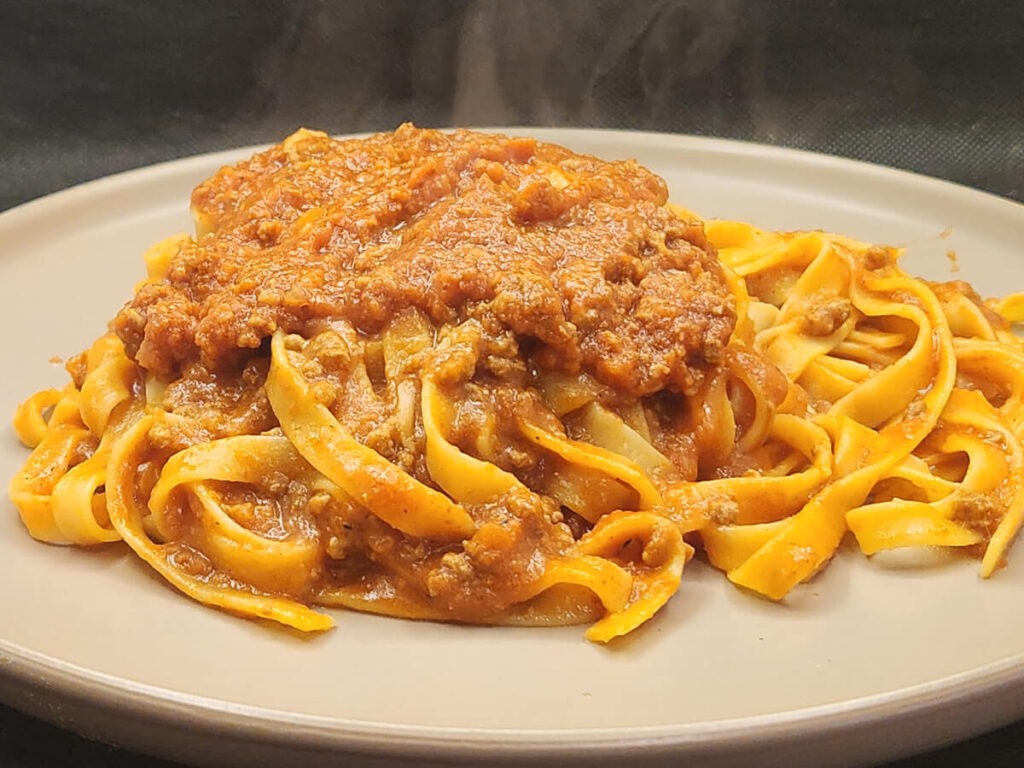
Garnishing Ragu alla Bolognese
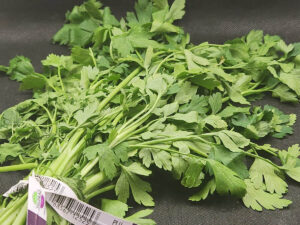
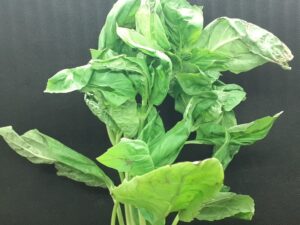
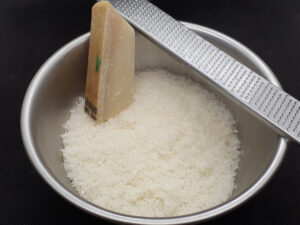
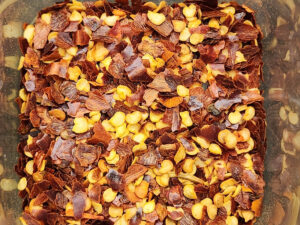
Garnish with a sprinkle of Parsley or Basil, freshly grated Parmigiano. Some Red Chili flake can be added too, for some heat.
Ragu alla Bolognese Side Dishes
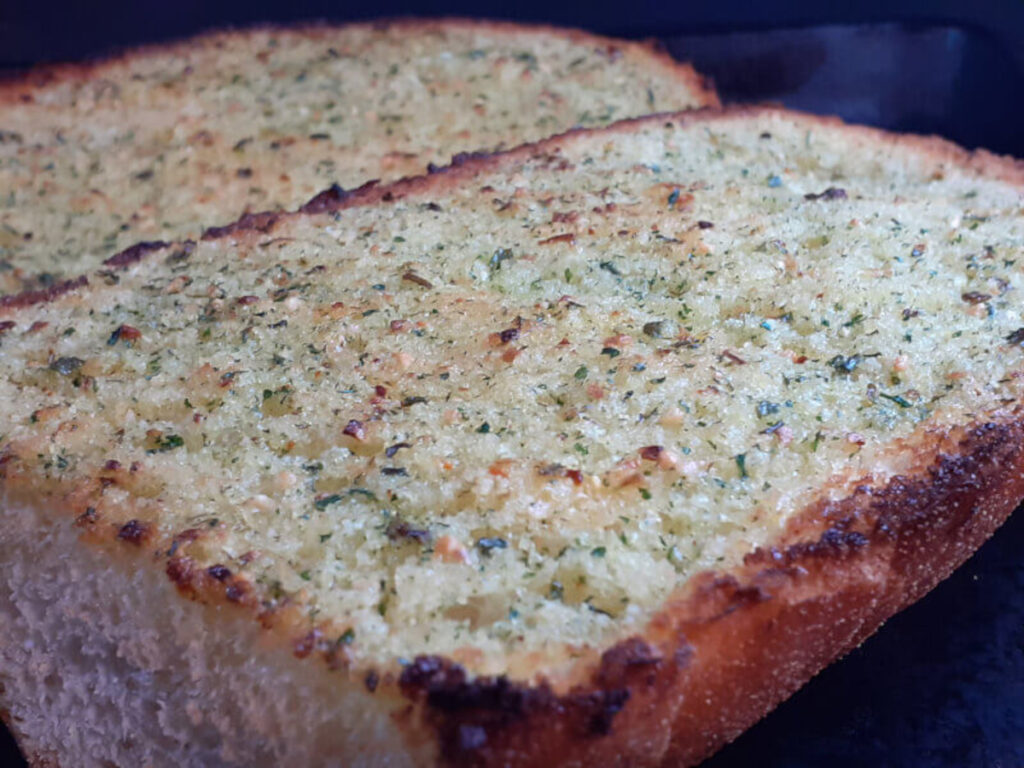
A good size piece of Garlic Bread is just perfect! Although, you could serve with Bread Sticks or Cheesy Garlic Fingers, or a Caesar salad.


Ingredients
- 1 lb Pasta - 400g to 500g
Pasta Water
- 16 C Water
- 2 Tbl Sea Salt
Bolognese
- 1/4 C EVOO - or 2 Tbl EVOO & 2 Tbl Butter each
- 1 C Onions, Carrots, and Celery - each, range from 112 – 150g of each vegetable
- 1/2 C Tomato Paste
- 1 C Wine - preferrably red, white works too though
- 1 lb Ground Beef & Ground Pork - each
- 2 tsp Sea Salt
- 1 tsp Black Pepper - or more for some heat
- 2 x 680 ml Passata
- 8 C Water
- 1/2 C Whole Milk or Cream
Instructions
- Bolognese Sauce: Weigh out your onion, carrots and celery and run through a food processor with both the shredder and blade to almost puree it. In a large saucepot over medium heat, add olive oil and the vegetables. Cook for 10 minutes stirring once in a while, do not let brown. Add in the tomato paste to cook for a few minutes mixing well. Then add wine and reduce to half. Add in the meats with salt & pepper and break apart while mixing and cooking. Cook until only the fat remains.Empty the passata into the saucepot with water. Use some of the water to rinse out the passata jar and empty into the saucepot. Mix well and bring it to a boil. Once it starts to simmer, lower the heat to low. Keep it at a gentle simmer partially uncovered or with a splatter screen for 4 hours or longer until thick. Stir occasionally and more frequently as the sauce thickens. Once the sauce is thick, add in your milk or cream and cook a few minutes. Make any final adjustments with the salt & pepper if needed and remove from heat.Weigh out 800 g of bolognese sauce and place into a large pan of skillet large enough to hold all of the pasta and sauce.
- Pasta: On the back burner, bring the salted pasta water to a boil. Add the pasta and mix and continue to boil until the pasta is just al dente.
- Pan Pasta: Just as the pasta is done, heat over medium heat, the weighed out bolognese sauce and pick up the pasta with tongs and transfer directly to the bolognese sauce in the pan. Agressively mix the pasta around until the sauce thickens and clings to the pasta, about 3-5 minutes. Plate and serve. Optionally with feshly grated parmigiano on top.
Notes
Browse More Recipes!
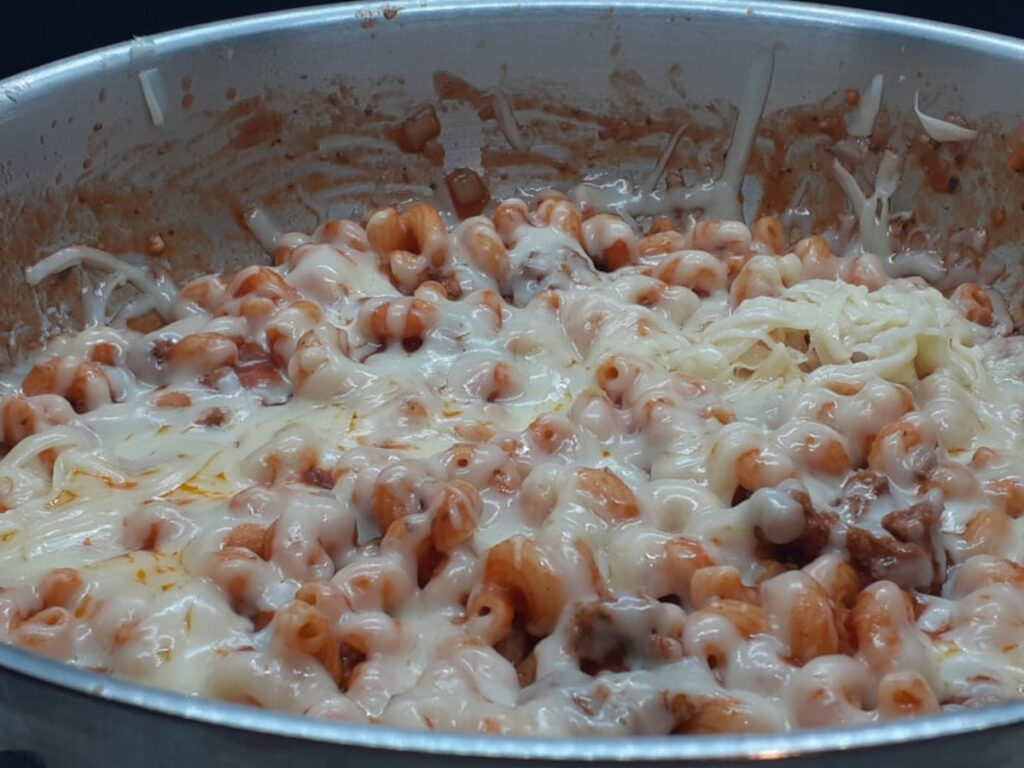
Pizza Pasta
Any kind of Pasta served with Pizza Pasta Sauce & any Pizza Toppings you want to include with Cheese. Make a…
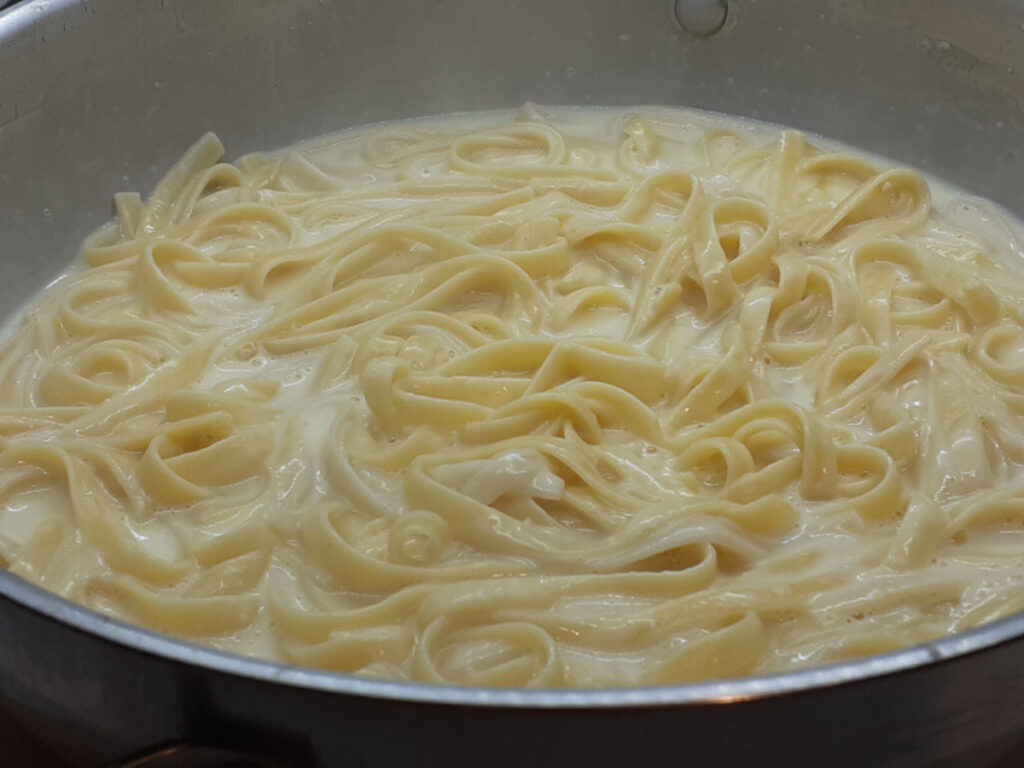
Fettuccine Alfredo
Boiled Al Dente Fettuccine carried over from the pot to a pan of Creamy Buttery Rich Homemade Alfredo Sauce to finish…
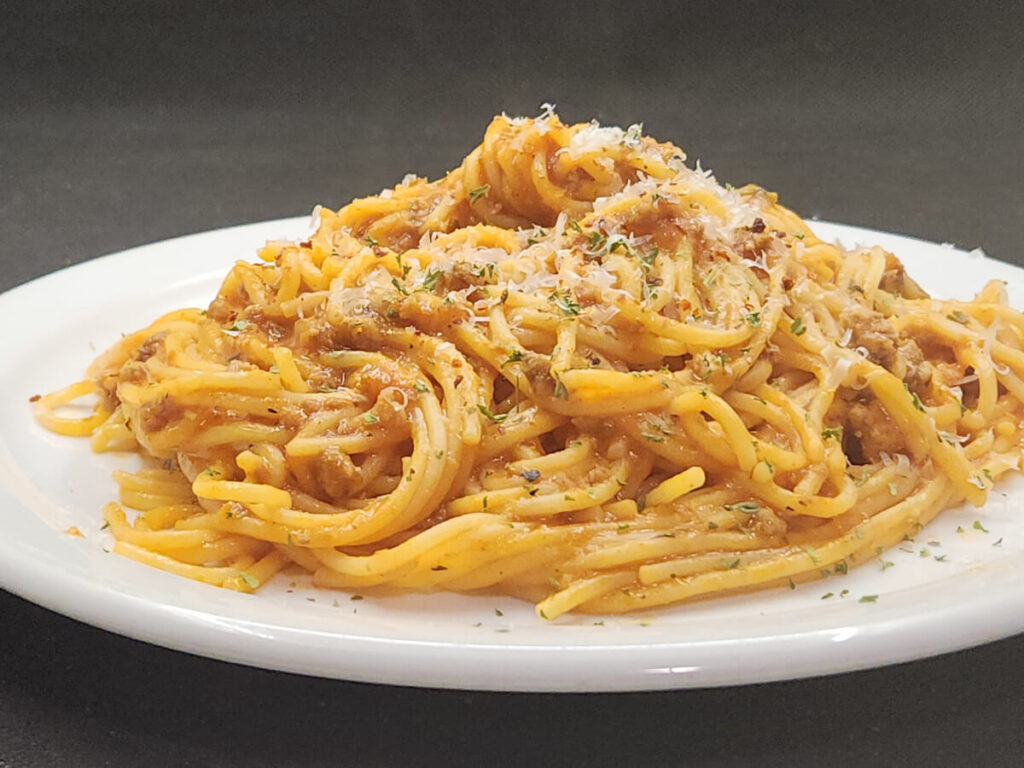
Pan Olive & Parmigiano Spaghetti
This Pan Olive & Parmigiano Spaghetti, rich with the aroma of Olives, Parmigiano, and fresh Herbs, is pure Sunday comfort, filling…
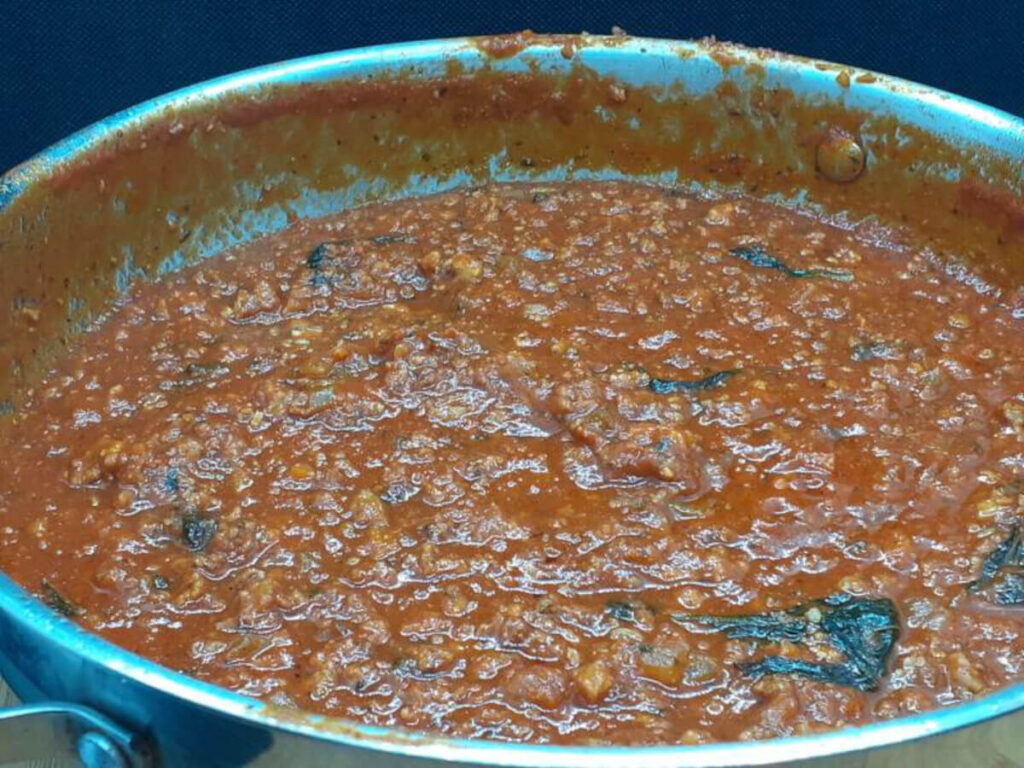
Pasta Sauce
Ragu style Pasta Sauce simmered for 2 hours or more to develop the concentrated flavors for your favorite Pasta dishes. Made…
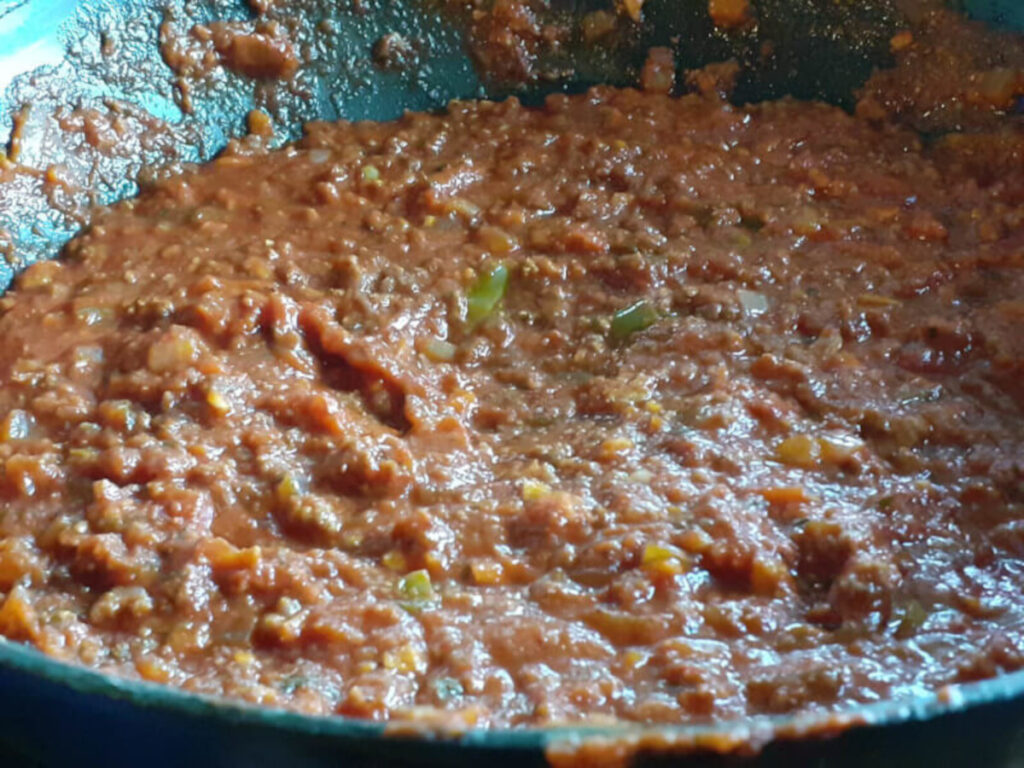
Lebanese Pasta Sauce
Lebanese Pasta Sauce is a Tomato based Sauced seasoned with Baharat/Bharat Seasoning or Seven Spice for a Lebanese take on Spaghetti…