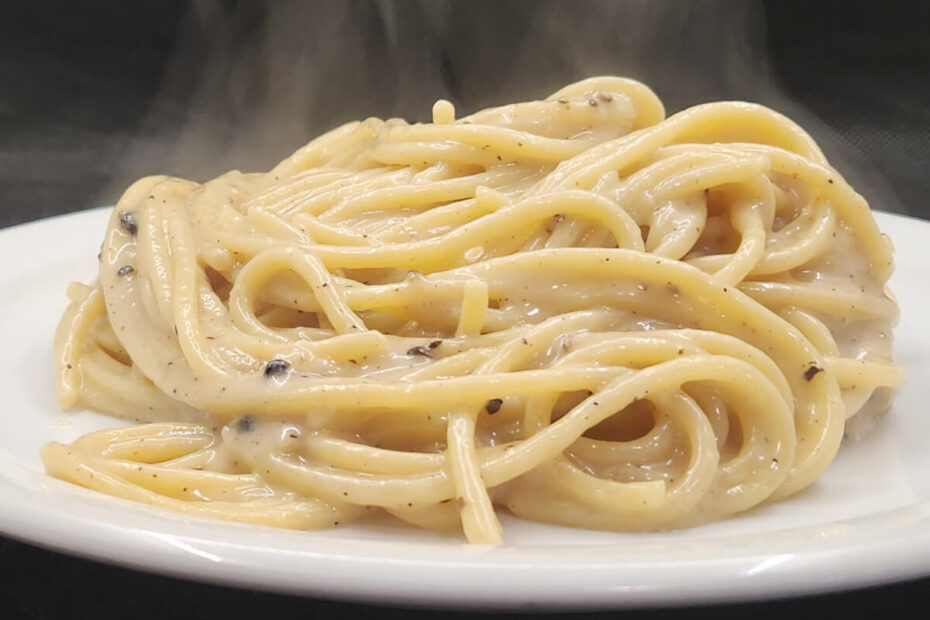
Cacio e Pepe is not only such a satisfying luxurious meal. It also makes for an excellent creamy side dish with various meats. It’s also the perfect dish to learn the Italian techniques in creating a pan pasta dish that opens the door for other Italian Pasta dishes. Such as Carbonara, Pasta alla Gricia, Amatriciana, all employing the same technique. While Cacio e Pepe only consists of four ingredients. It really is the technique that creates an outstanding dish and we got all the tips to help you create your quick plate of Creamy Italian Cheese Pasta, in about 20 minutes.
What is Cacio e Pepe
Cacio e pepe is a classic Roman Pasta dish that translates to “Cheese” & “Pepper”. It’s a simple and indulgent dish that relies only on four ingredients (Pasta (Tonnarelli, Bucatini, or Spaghetti), Cheese (Pecorino), Crushed Black Peppercorn and Salted Pasta Water) that comes together for an Italian style of Mac & Cheese. The Cheese Sauce is created from the emulsification of Pasta water, Starches and Cheese.
Technically Cacio e pepe is only made with Pecorino. With the word “Cacio” referring to Pecornio Cheese. If made with Parmigiano which is often done, it is called Cacio e Parmigiano or perhaps you could go Parmigiano e Pepe or Formaggio e Pepe. Although many still call it Cacio e Pepe (Cheese & Pepper). Parmigiano Reggiano is very often used instead or combined 50/50 with Pecorino. This is also one of the dishes (Pasta alla Ruota) you see being prepared in a large Cheese Wheel.
Cacio e pepe ingredients
Pasta, Sea Salt, Crushed Black Peppercorns, Parmigiano Reggiano.
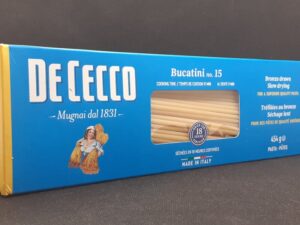
Cacio e Pepe Pasta
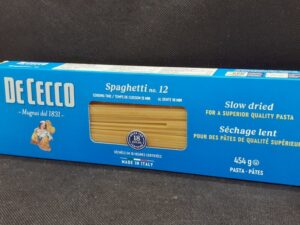
Tonnarelli Pasta is traditionally used, but can be hard to find. It can be substituted with a thick hallow pasta like Bucatini or with just the use of Spaghetti. The key thing here with the type of pasta is that it is bronze cut. This is because bronze cut pasta has a rough exterior that allows sauce to cling more readily.
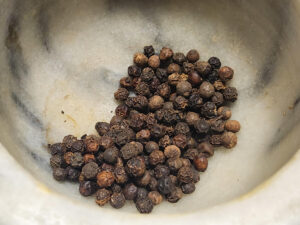
Cacio e Pepe Black Peppercorn
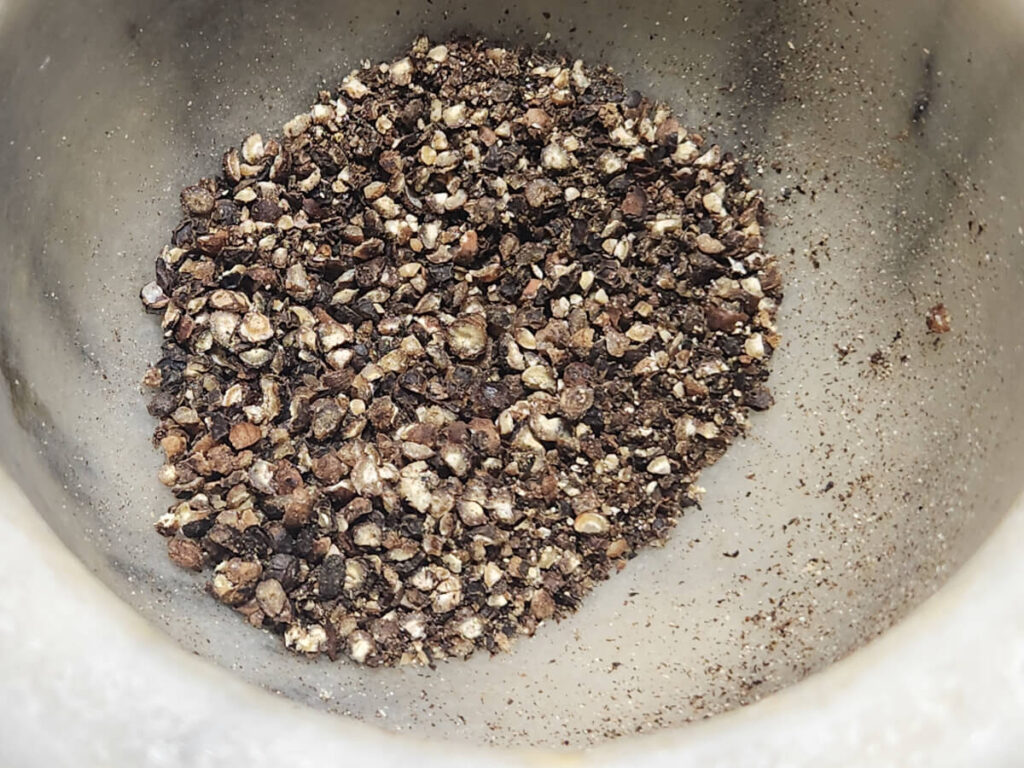
Use store bought crushed black peppercorn or whole Black Peppercorns that are crushed and toasted before adding pasta water to simmer in order to soften the Black Pepper. Crunchy bits of Black Peppercorn just isn’t desired.
Crush them in a Ziploc bag with a rolling pin or use a Mortar & Pestle and crush them, don’t grind them. You are trying to keep them in large pieces.
Cacio e Pepe Cheese
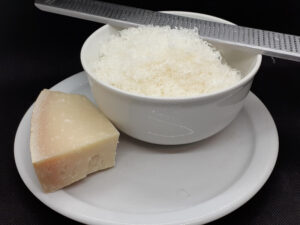
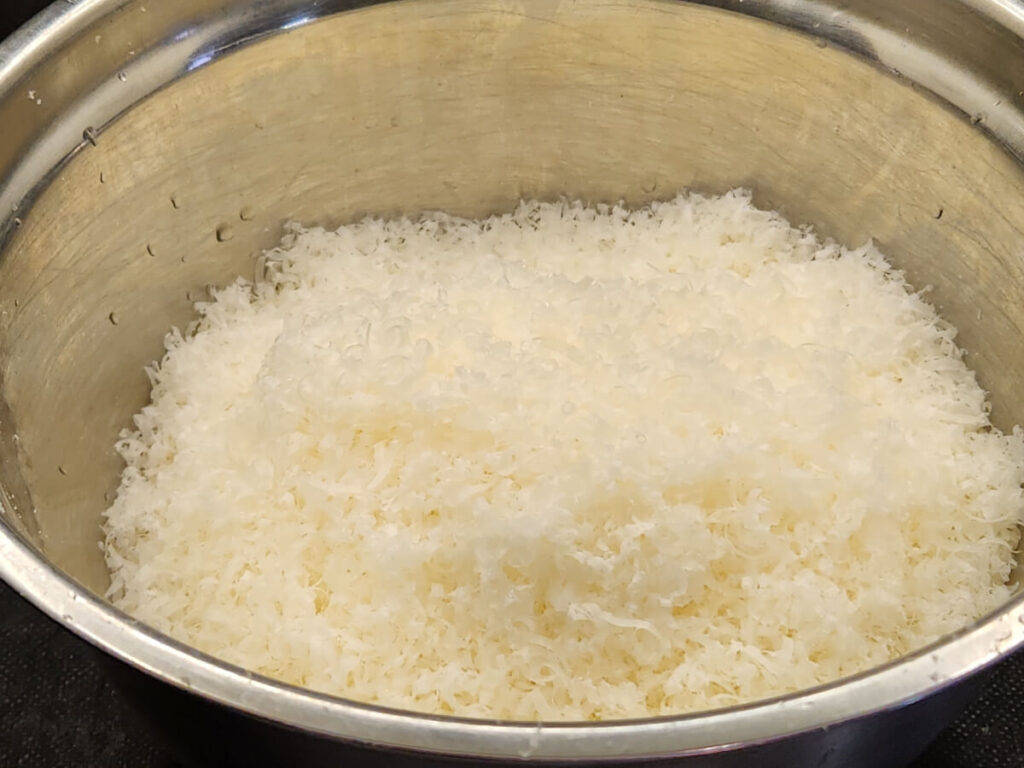
Traditionally, aged Pecorino Romano DOP is used for authentic Cacio e Pepe. Although, Parmigiano Reggiano is a good substitute and is commonly used. Another option is 50/50 Pecorino & Parmigiano Reggiano.
I most often buy Parmigiano Reggiano for other dishes and so use this to make Creamy Cacio e Pepe. Either one you use, finely grate it and weigh out with a digital scale. Set it aside until ready to add.
Pecorino Romano vs Parmigiano Reggiano
While both are a hard cheese and look similar, they cook up or dissolve very differently. Parmigiano Reggiano is extremely forgiving. While Pecorino Romano is very sensitive to heat.
Both Cheeses also taste different with Pecorino being more bold and salty. Also whenever using Pecorino, you will want to temper the bowl of freshly grated Pecorino with a bit of cooled down Pasta water until a cheese sauce is created. Then only add it to the Pasta in the pan with the heat shut off and after it has cooled some. Else if the heat is too high, the cheese will go stringy or otherwise the Cheese sauce breaks.
Parmigiano is much more forgiving and adding a bit at a time to mix in and repeating this step until the cheese is used up is perfectly fine whenever using parmigiano, not so with pecorino, it needs to be tempered with Hot Pasta Water between 145-165F/63-74C. Some will mix it in on low heat, just the same as using parmiginao, but even here if it stays too long, it can break and go stringy insted of creamy.
Pasta Water
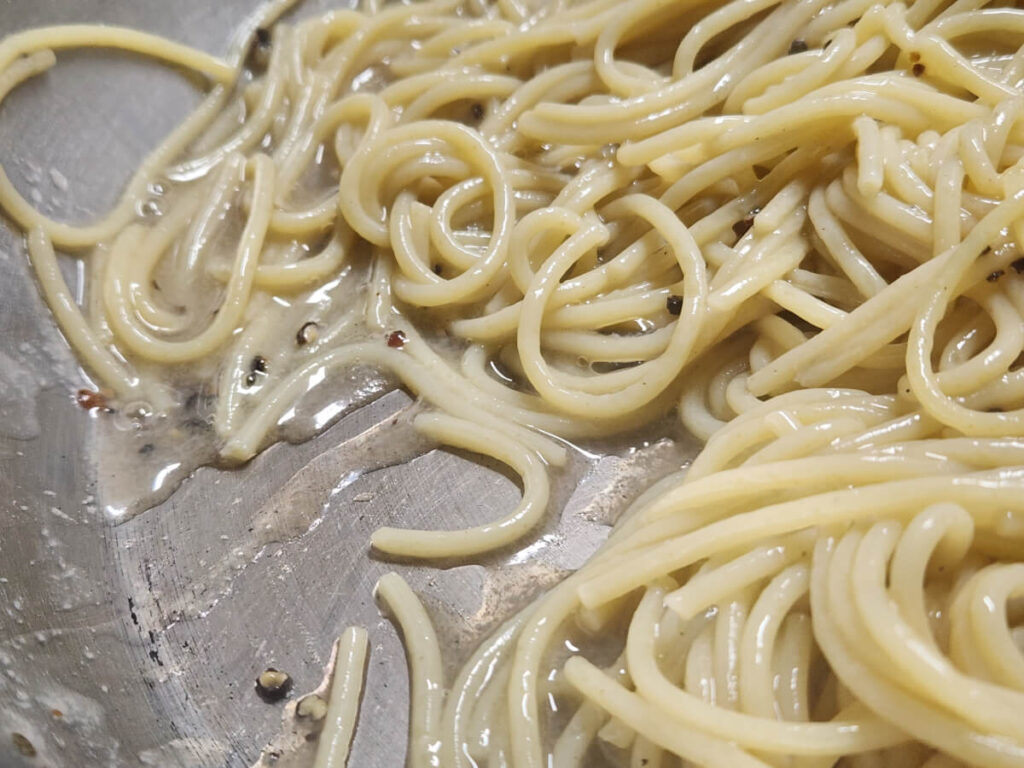
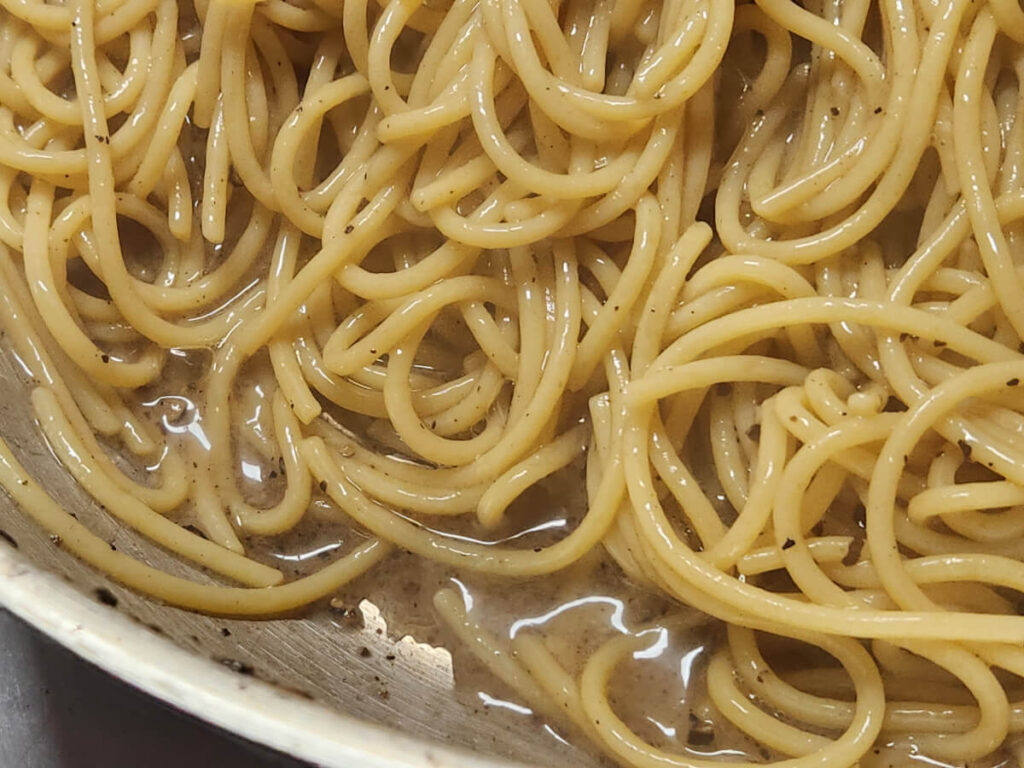
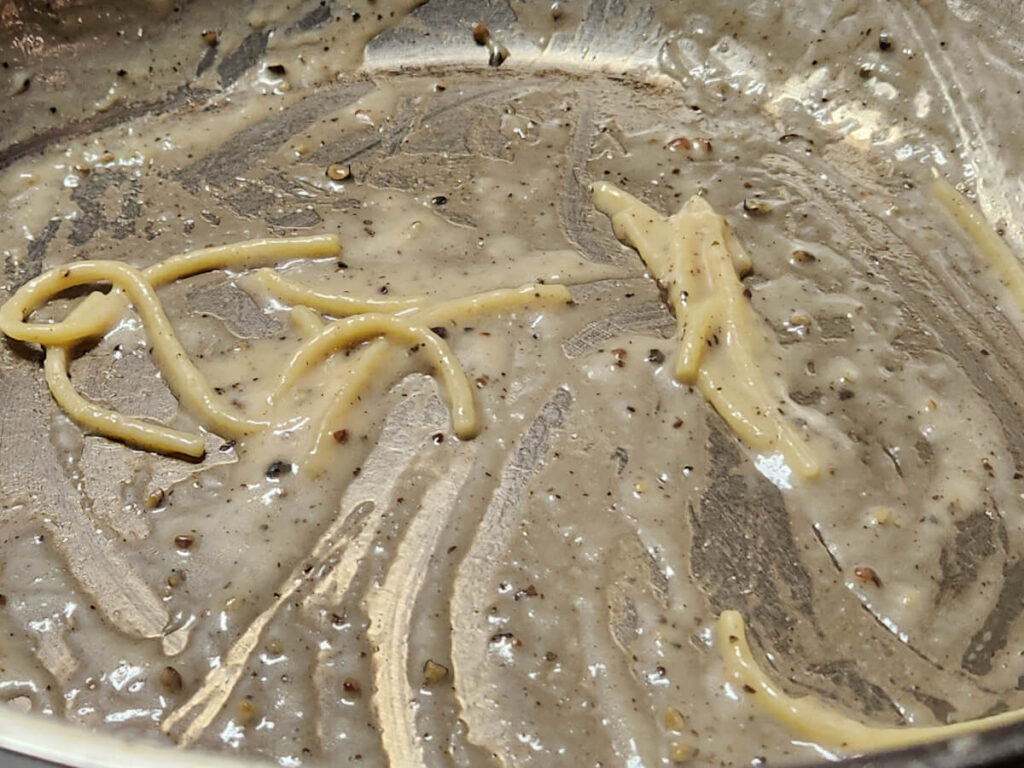
It’s not really the Starchy Pasta Water, well sort of. The majority of the starch comes from when the Pasta is in the pan and being mixed around aggressively. You can see it with just Al Dente Pasta & Pasta Water added to the skillet and vigorously mixed. The sauce, with nothing else, becomes creamy. This is from the rubbed off starch on the surface of the Pasta.
The below image is just mixing the boiled pasta aggressively in pasta water, no cheese or anything else is added. You can see the pasta water has thickened into a gelatinous sauce.
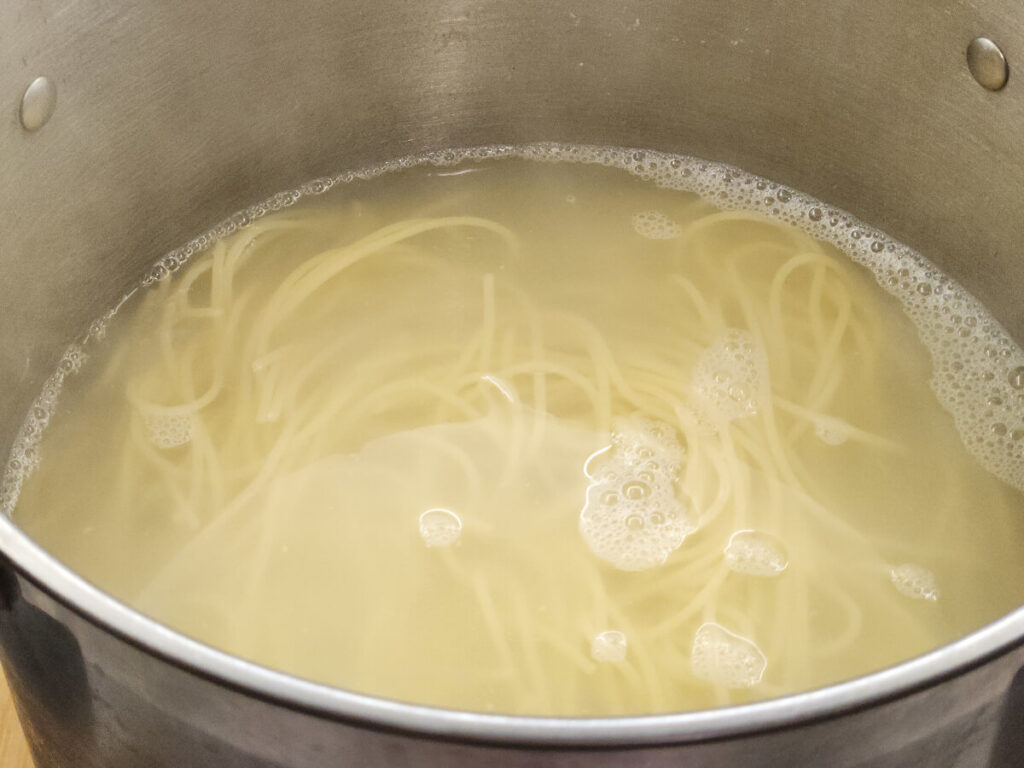
The Pasta itself is boiled in 16 Cups of Water with salt added. However for Cacio e Pepe, we drop the salt content down a bit. Because the Cheese added will also contain salt.
Sea Salt
Salt is added to the pasta water in order to season the Pasta. While we usually add 2 Tbl of Sea Salt to 16 Cups of Water for boiling pasta. Whenever making Cacio e Pepe with Parmigiano we only need half the amount or 1 Tbl. This is because a lot of cheese is going to be added and the cheese itself will contain salt.
Cacio e Pepe Ratios
These are the ratios I use per serving or 100g of uncooked Pasta. The Pasta to Cheese ratio is 2:1. Although this can be adjusted based on preference. A lot of recipe use a 4:1 ratio or 25% Cheese to Pasta by weight.
- Pasta Water – 4 Cups of Water & 3/4 tsp Sea Salt.
- 100g of Pasta
- 1/2 tsp of freshly crushed Black Pepper, more for hotter
- 25g to 50g of Parmigiano Cheese. Pecorino using the lower end or the 4:1 ratio, because it is saltier and Parmigiano using either or somewhere in between.
- With Pasta water to adjust the consistency
Cacio e pepe serving size
As a general guide use 100g of Pasta with 25g-50g of Cheese per serving. I generally use 400g – 454g of pasta for 4 servings. Whether it is served as a main course or side dish. Although as a side dish, this can be stretched out to 5 or more servings.
How to Make Cacio e pepe
While Cacio e Pepe only contains Pasta, Cheese and Black Pepper, so you wouldn’t think there is much to it, there are a couple of different ways Cacio e Pepe is made. However, the key points are listed below for best results.
- Start with Salted Water for the Pasta. Not too much, the cheese added will also contain salt. Pecorino more so than Parmigiano.
- The use of Crushed Black Peppercorn needs to be toasted before adding some pasta water in order to soften, about 5 minutes.
- You need to emulsify the starches from the Pasta with the Pasta water, before the cheese is even added. About 3 minutes of mixing aggressively.
- Cheese is added last and off heat, with more Pasta Water to adjust the consistency and achieve a creamy, luscious sauce. Add the cheese a handful at a time.
- If using Pecorino then temper the bowl of finely grated pecorino with pasta water. The Pasta water temperature must be between 145-165F/63-74C. You should be able to dip your finger and hold it there without it being too hot. While parmigiano is extremely forgiving, these temps really matter a lot when using Pecorino. Empty the Pecorino Cheese sauce into the pan off heat and mix.
- The ratio for Pasta to Cheese is for every 100 g of Pasta use 25- 50g of Cheese. More can be served on top. Use less Pecorino that Parmigiano, because Pecorino is saltier.
Boil the Pasta in Salted water
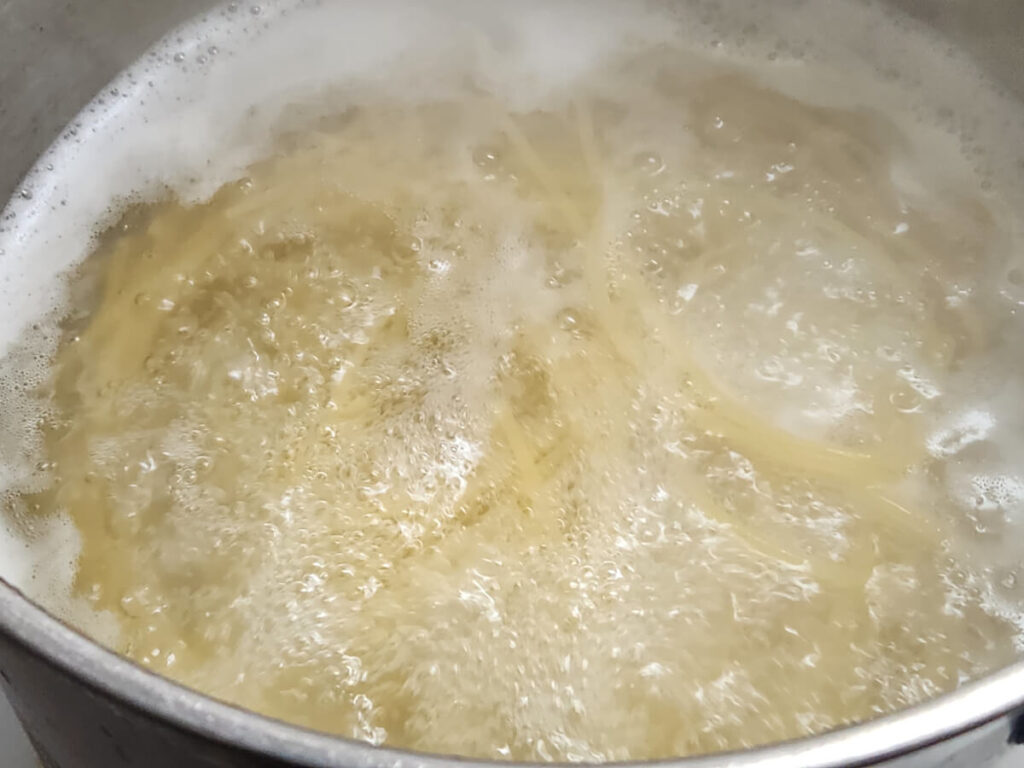
Fill a pot up with 16 C of water and 1 Tbl of Sea Salt and bring to a boil on the back burner. Once boiling, add the pasta and mix every so often for about 13 minutes or until Al Dente.
Toasted & Softened Black Peppercorn
When about 5 minutes of the Pasta cook time remains, place a pan over medium heat and add in the Crushed Black Peppercorn to toast until aromatic, just a few seconds.
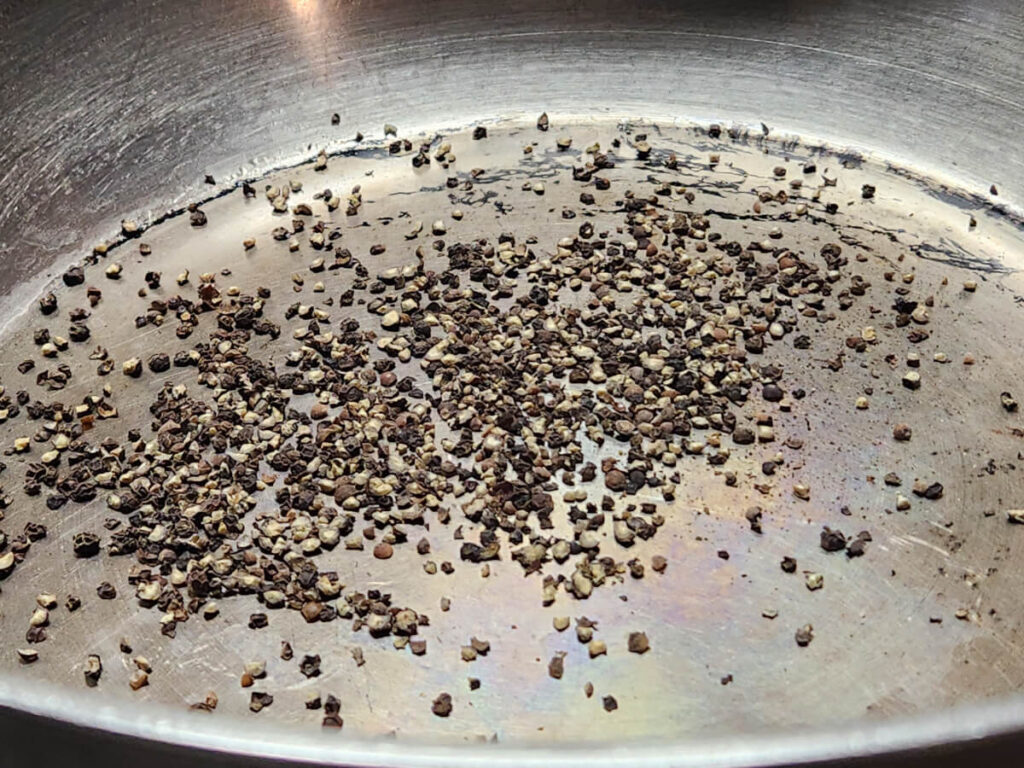
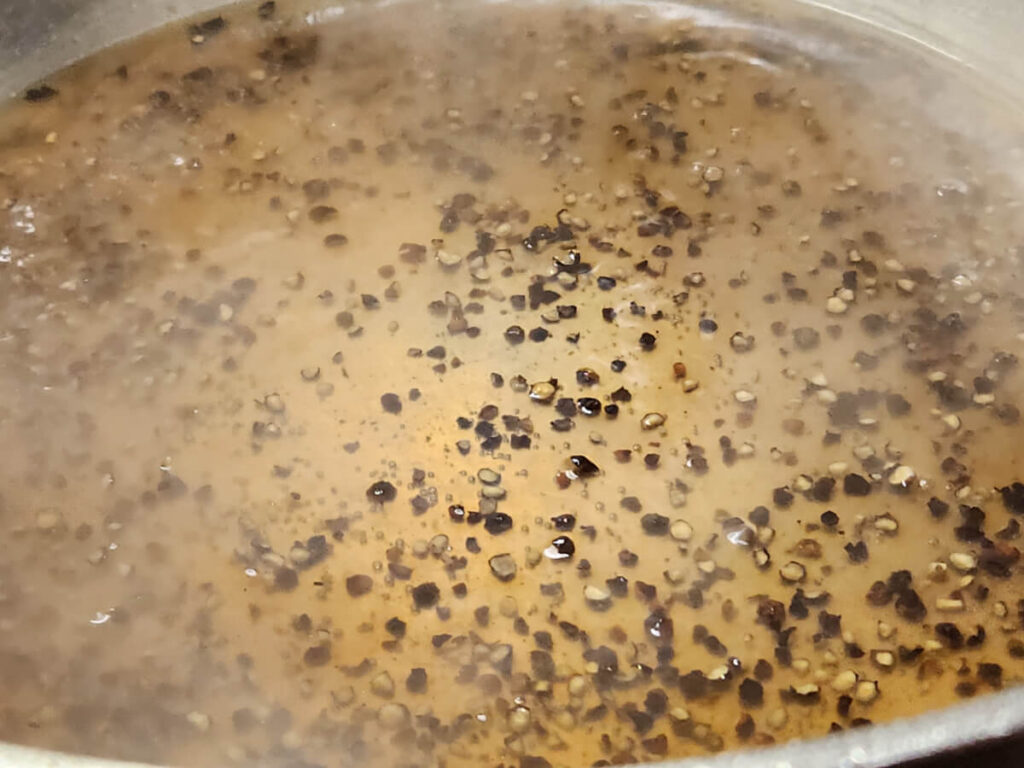
Then add in 1 Cup of the Pasta water and mix. Keep it here over medium heat to await the pasta. This will soften the peppercorns and flavor the water.
Pasta Starch Sauce
Transfer the Pasta straight from the pot to the pan with the Black Peppercorns. Any excess water carried over doesn’t matter.
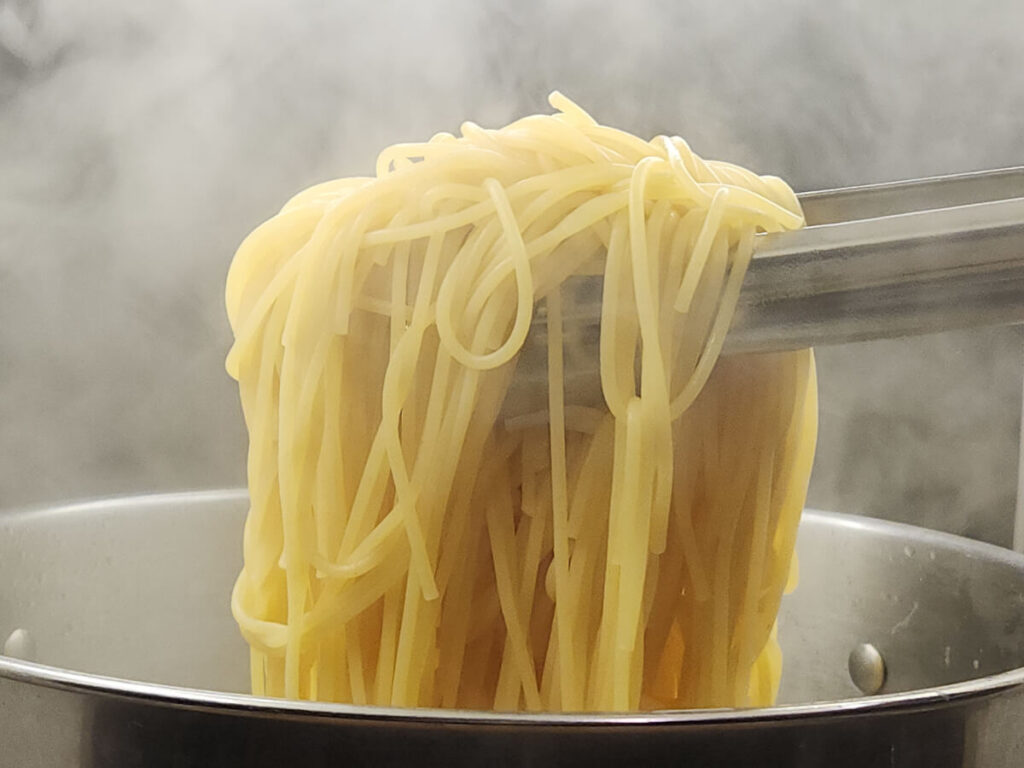
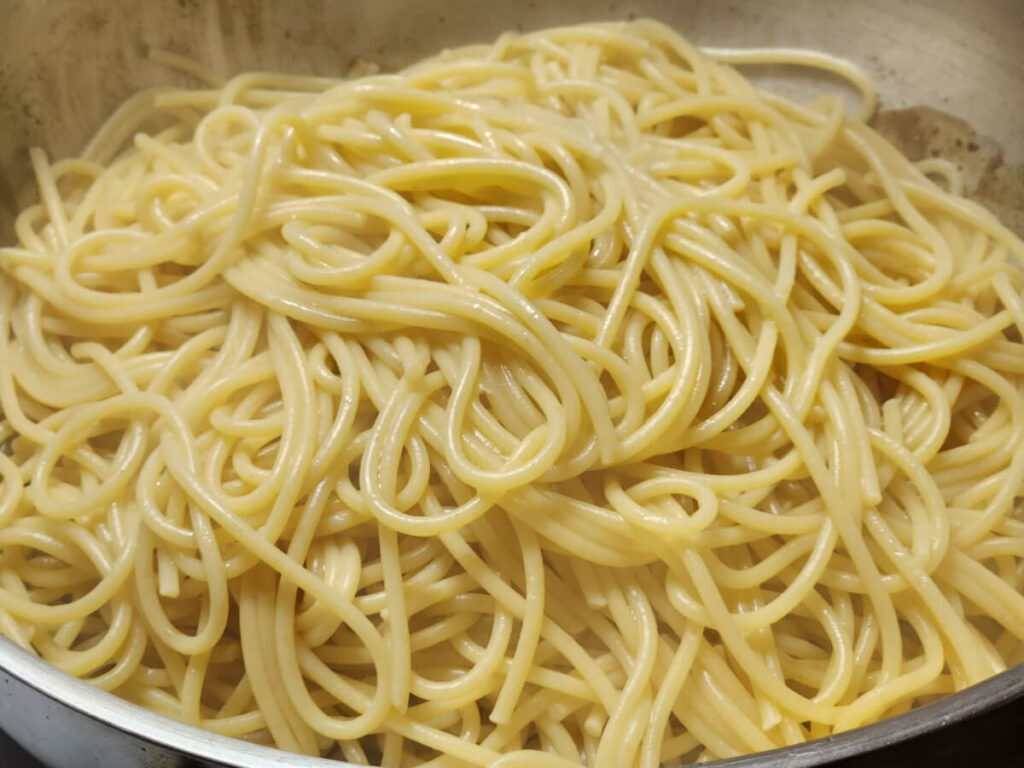
Add another 1 C of the pasta water and mix with Tongs very aggressively to rub the starches off of the pasta and create a slightly thickened sauce. This will take about 3 minutes. The Black Peppercorn will cling to the side of the pan while mixing. Just pick up some pasta with the tongs to scrape it off the sides. Once the sauce thickens a bit it will all hold together.
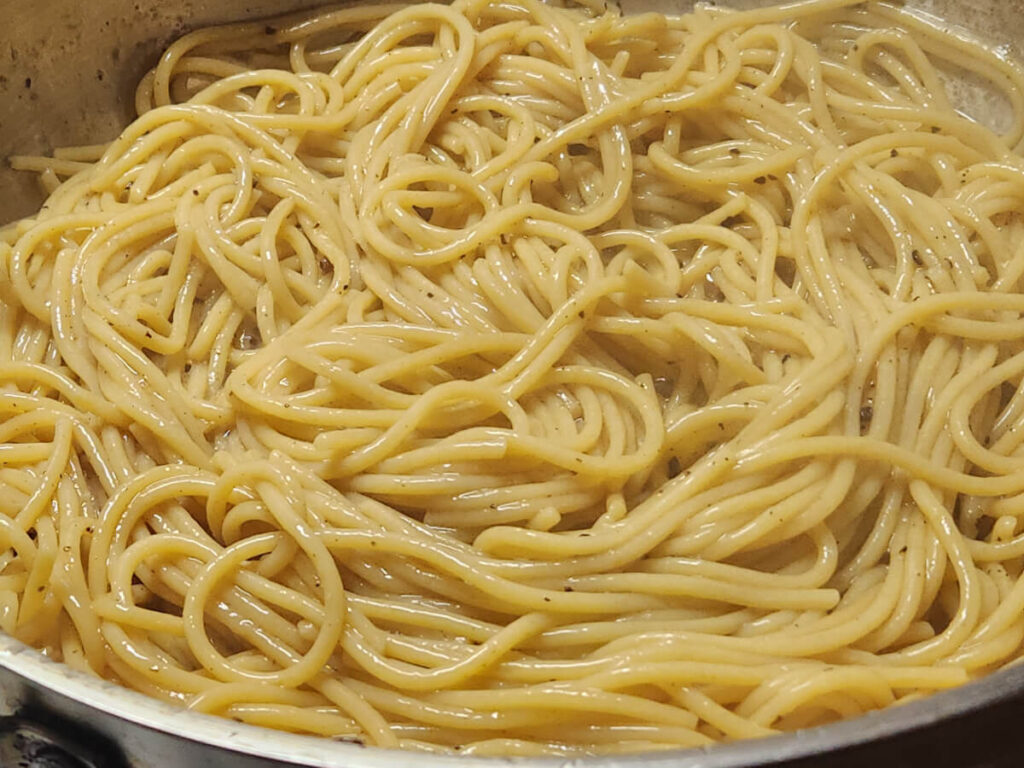
You should be able to move the pasta aside and check on the sauce and whether it needs to be mixed more or more water added. You’re looking for a slightly thickened sauce but still relatively thin, because the Parmigiano added later, will thicken it more.
Adding the Cheese
Add a handful of Parmigiano at a time and mix it in agressively, before adding more. The cheese will help thicken the sauce more and you will need more pasta water to adjust the consistency for your preference.
If using Pecorino, then set the pasta aside off heat after you have thickened the pasta water. Add pasta water to the bowl of freshly grated Pecorino a little at a time while mixing to create a cheese sauce. Then add the Pecorino Cheese sauce to the pasta to mix well. Using more pasta water to adjust the consistency.
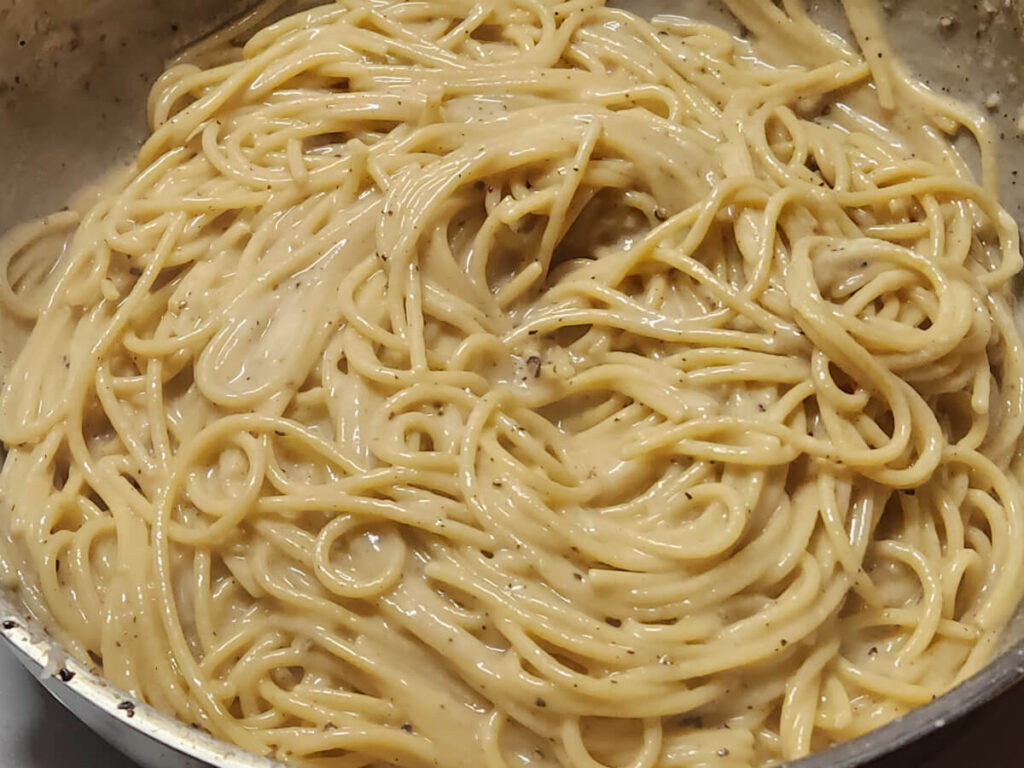
Move the pasta aside to see how it has formed, whether it is thick enough and creamy or whether it needs more pasta water. You should see the sauce thickened, creamy and adhering to the pasta. Make it as creamy as you want.
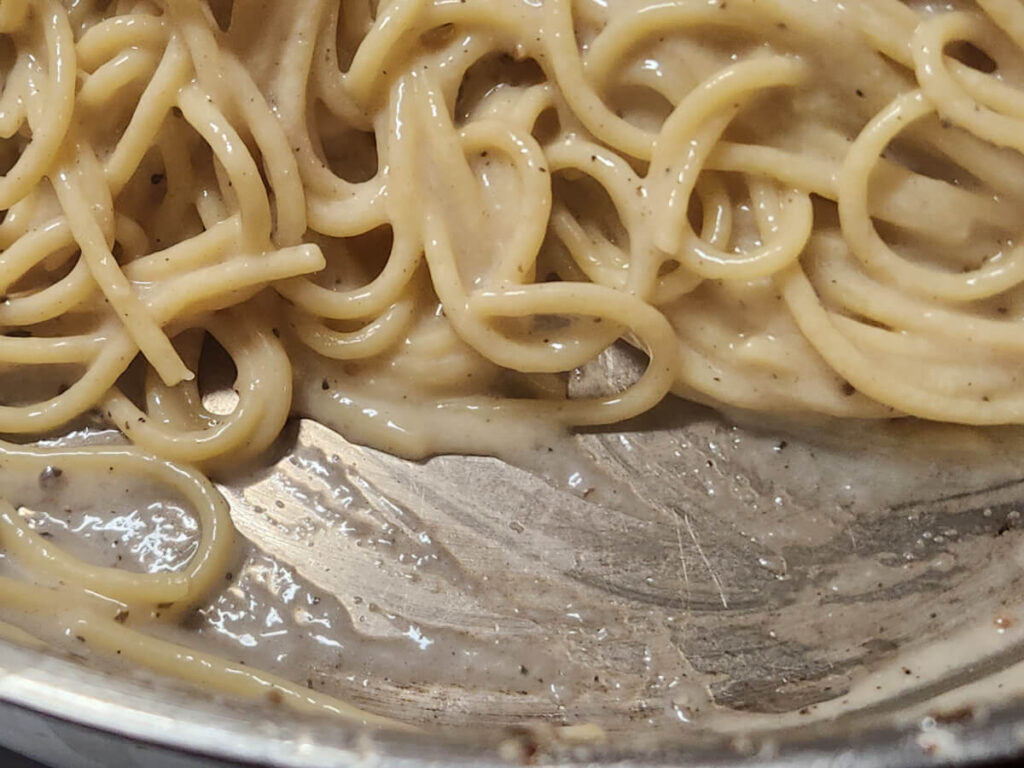
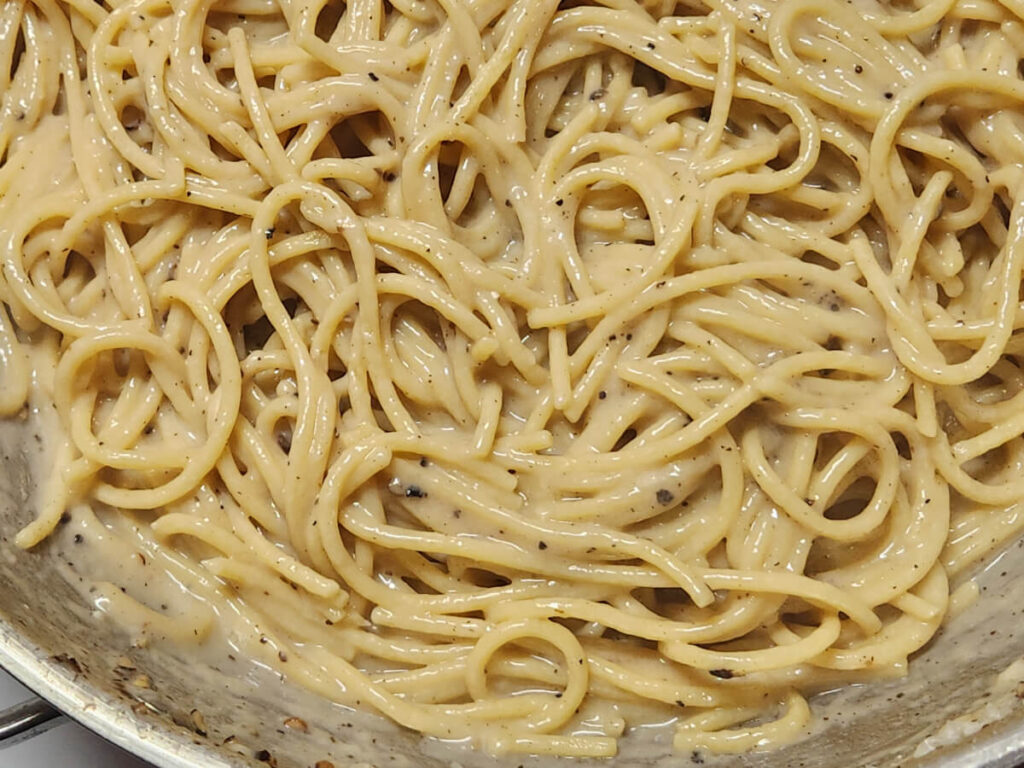
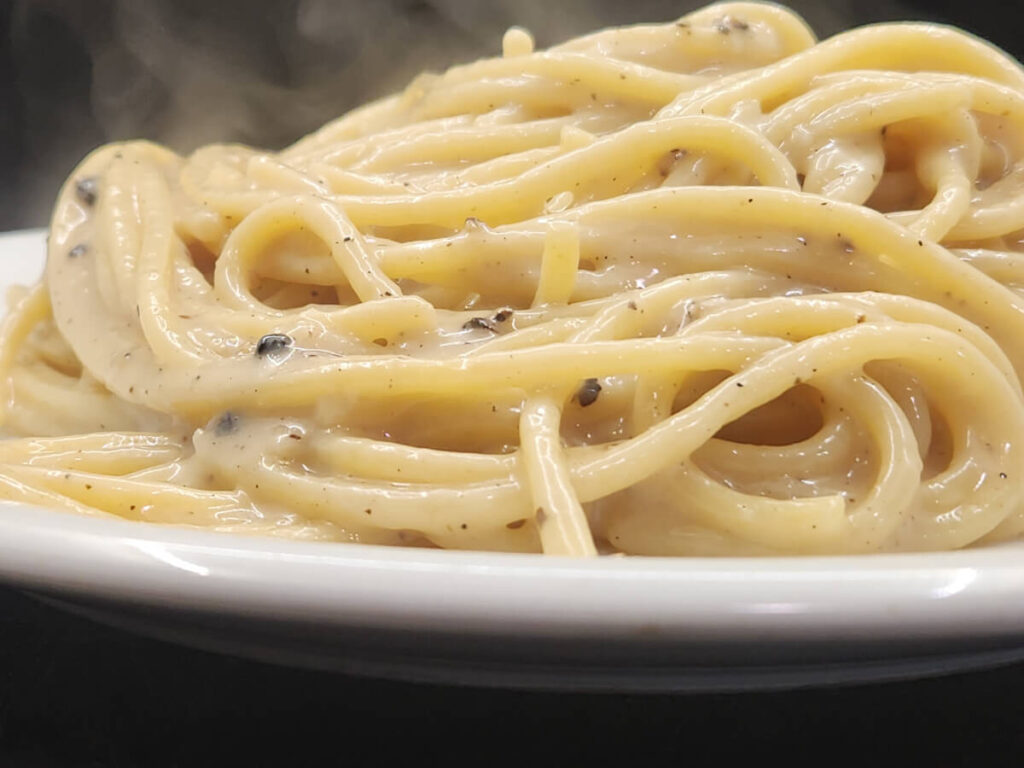
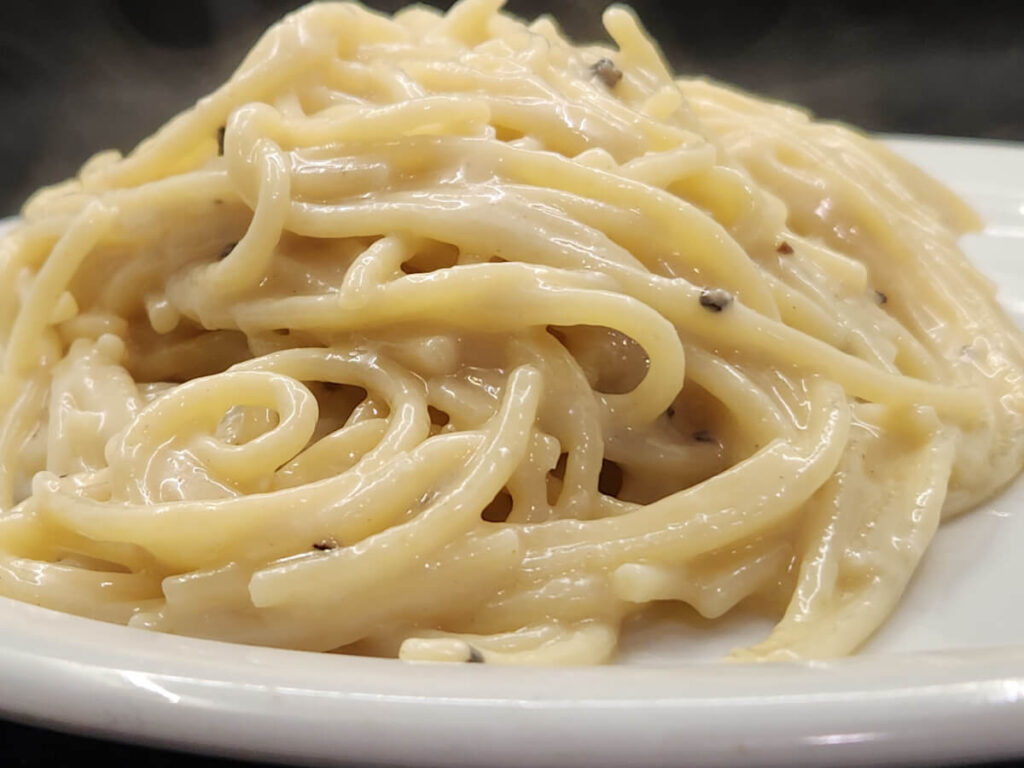
When plating up all the Cacio e Pepe, that pan should look like this. Which is testament that you have created a good saucy Cacio e Pepe. It’s a Creamy Sauce that adheres or clings to the pasta.
Creamy Cacio e Pepe
Adjust the Cacio e pepe sauce with adding in more pasta water while agressively mixing. Keep in mind that when this dish is served, it cools down and thickens more. So get your preferred consistency by making adjustments and serve right away. The cheese sauce should cling to the pasta and be creamy. Not dry which indicates not enough pasta water and not a thin sauce which indicates too much pasta water or not enough emulsification. Cacio e Pepe should be visibly creamy.
Cacio e Pepe Addins
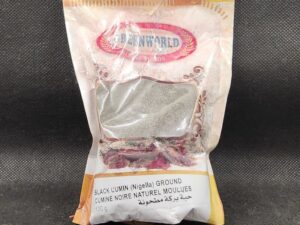
There are a few Addins that can be used. The most common one is the use of butter or olive oil. Another is a bit of lemon zest. Occasionally, crushed red pepper are added for extra heat. Crushed Onion seeds work very well with Cheese and the black specs blend right in with the Black Pepper. It gives Cacio e Pepe that little something that is hard to identify.
Cacio e pepe derived dishes
Cacio e pepe is a mother dish to which other dishes are derived from. This is why Cacio e Pepe is such an excellent dish to master. Because once you do, other italian pasta dishes come with ease.
Pasta Alla Gricia
Pasta Alla Gricia is Cacio e Pepe with Guanciale or Bacon added. To make this dish, chop up some Guanciale or Bacon and cook it crisp while boiling the pasta. Drain out the excess grease to use for other recipes and set aside the bacon until the pasta is added. A bit of crispy Guanciale or Bacon can be used to garnish as well.
Carbonara
Carbonaro is Pasta Alla Gricia with an egg mixed in to create a super Creamy sauce. Pasta Alla Gricia uses Guanciale. Although Bacon is sometimes used in place for Carbonara.
Amatriciana
This dish is derived from Pasta alla Gricia with the addition of Tomato Sauce or Passata, even crushed San Marzano tomatoes.
Serving Cacio e Pepe
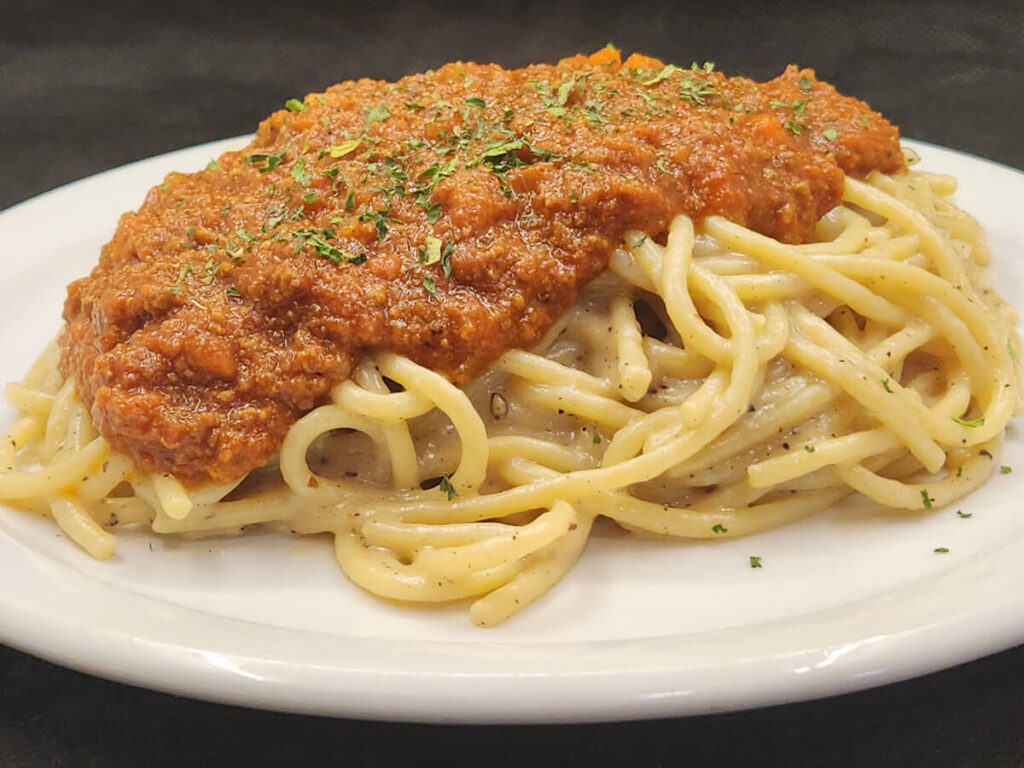
This can be served as a main dish with a side of Garlic Bread, Twisty Bread or even Garlic Fingers. Another main dish serves Bolognese on top. It can also be served as a side dish. Some examples are below.
Meatballs & Pasta
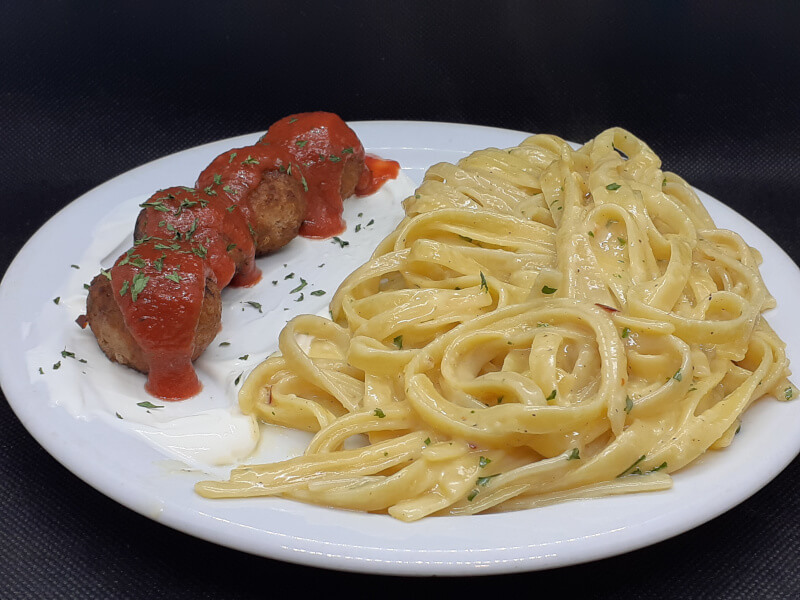
Meatballs served on Sour Cream or Béchamel with Red Sauce and a side of Pasta. While the below image uses Garlic Butter Pasta, Cacio e Pepe works wonderfully here too.
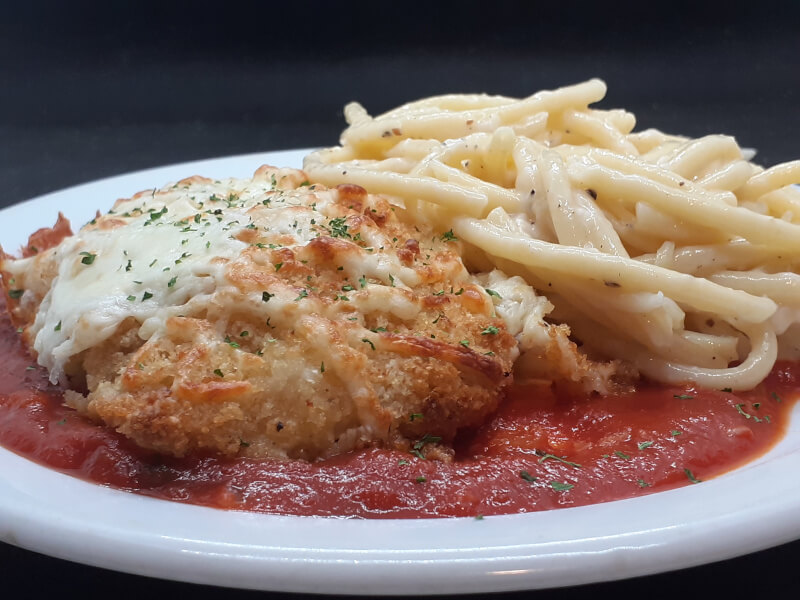
Chicken Parmesan
Cacio e Pepe is an excellent side with Chicken Parmesan. The combination is just so good.
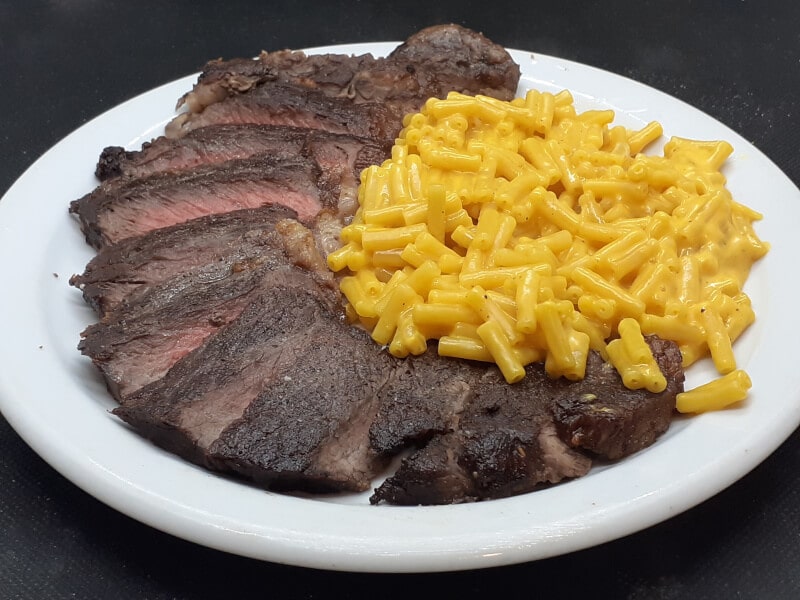
Steak & Cheese Pasta
Steak with a Cheese Pasta is perhaps one of my favorite combinations and while the below image is with KD Mac & Cheese, Cacio e Pepe works exceptionally well too.
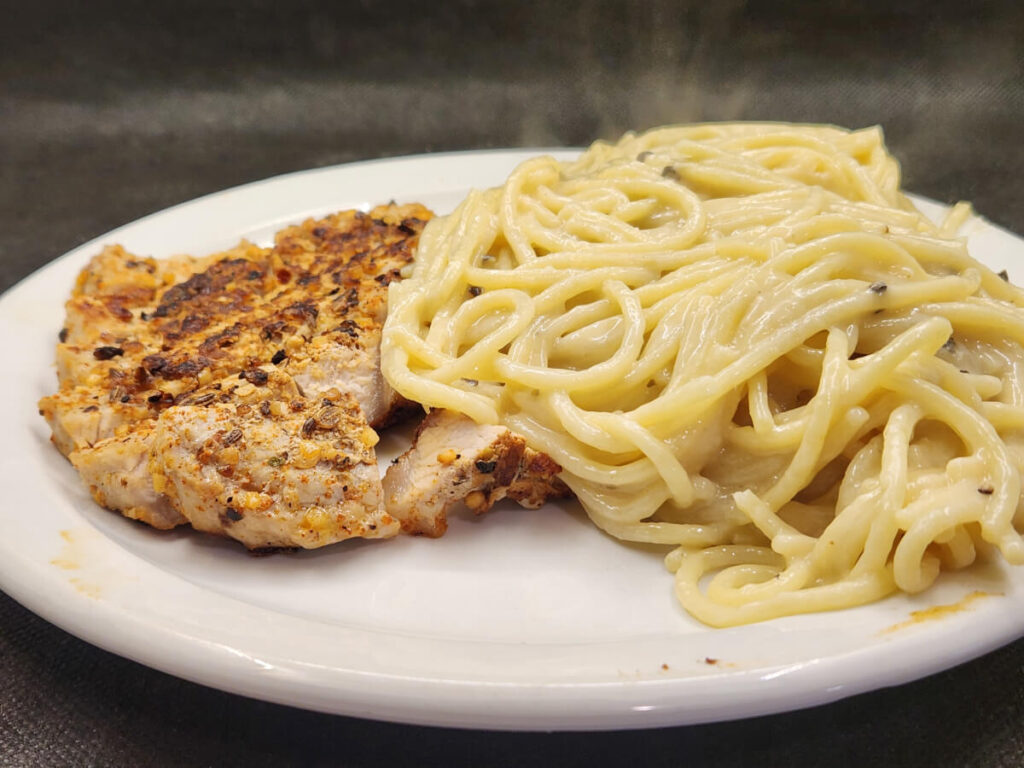
Pork Chops & Cacio e Pepe
Season Pork Chops and sear to serve with a side of Cacio e Pepe. It’s such an awesome dish to pair with meats. The below pork chop was a seasoning I was working on and wanted to test. This was exceptional, the pepper in the pork chop seasoning was very complimentray to the Cacio e Pepe.

Ingredients
- 454 g Pasta - Tonnarelli, Bucatini, or Spaghetti
- 227 g Parmigiano Reggiano – finely grated - Anywhere from 25% to 50% of the Pasta weight. See notes for using Pecorino
- 1 Tbl Crushed Black Peppercorn - Or more for hotter
Pasta Water
- 16 C Water
- 1 Tbl Sea Salt - Use 1/2 Tbl if using Pecorino Cheese
Instructions
- Pasta Water: Bring the Pot of Pasta Water to a boil on the back burner. While it comes to a boil, Finley grate the Cheese, weighing out on a digital scale. Weigh out your Pasta in a tall glass and set aside. Once the water is boiling, add the pasta and cook until Al Dente, about 13 minutes.
- Softened Black Peppercorn: When 5 minutes of the pasta cook time remains, heat a pan or skillet over medium heat. Crush the Whole Black Peppercorns and toast just until aromatic. Then add 1 Cup of Pasta Water and mix. Keep it here until ready for the pasta. The water will soften the peppercorns and mostly evaporate.
- Starchy Sauce: Shut the heat off for the boiling pasta and grab the Pasta out with tongs, carrying over some pasta water into the pan. Keep the heat at medium and mix very aggressively until you get a thickened sauce. Add more pasta water if needed. It should be a bit thin, which will be thickened again by the cheese added. This will take about 3 minutes of mixing.
- Cheese: Shut the heat off and set aside the pan. Sprinkle a handful of parmigiano on top and mix aggressively. Repeat until all the cheese is used up. Add more pasta water if needed to adjust the consistency. The cheese sauce should be creamy and cling to the pasta. Serve right away, optionally with more grated cheese on top.
Notes
Browse More Recipes!
Butter Chicken Pasta
Butter Chicken Pasta is a follow-up meal using the leftover Butter Chicken Sauce or freshly made and serves it as a…

Canadian Goulash
Warm up with a hearty serving of Canadian Goulash or a GMT which I like to call it. It’s a comforting…
Tuna Casserole
Quick & Easy Tuna Casserole topped with a Cheese Blend or Crumb topping and baked in a casserole dish or single-serve…
Pan Olive & Parmigiano Spaghetti
This Pan Olive & Parmigiano Spaghetti, rich with the aroma of Olives, Parmigiano, and fresh Herbs, is pure Sunday comfort, filling…
Garlic Butter Pasta
This Garlic Butter Pasta dish uses Garlic Butter with a few changes, Parmigiano Reggiano, any long Pasta with Pasta Water to…